Crisis looms in NDC as OK Movement clash with pary chairman, Head of Operations resign over campaign council list

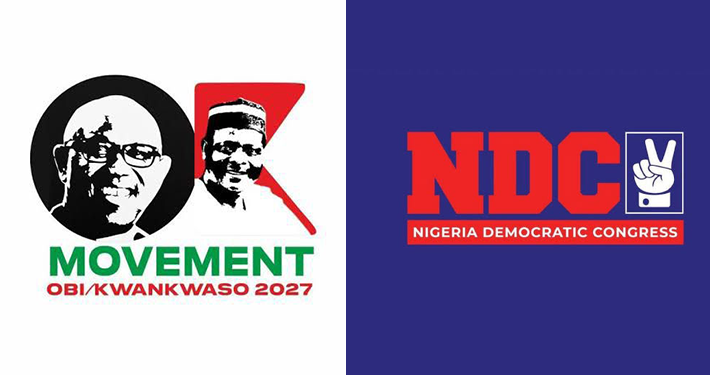
The Obidient-Kwankwaso (OK) Movement has been hit by a fresh development following the resignation of its National Head of Operations, Hon. Engr. Francis Nnoli, amid an ongoing disagreement over the movement’s structure, political direction and relationship with the Nigeria Democratic Congress (NDC).
Nnoli’s resignation comes days after the movement rejected the NDC leadership’s disavowal of its 59-member presidential campaign council, insisting that it does not require the personal approval of any party official to carry out its organisational activities.
The latest development has brought renewed attention to the question of how the OK Movement intends to coordinate its activities with the NDC as the party prepares for the 2027 general elections.
In his resignation, Nnoli reportedly expressed concerns about the movement’s direction, structure and political positioning, particularly the need for support organisations established around a political ticket to maintain a clear understanding of their relationship with the party and its candidates.
He stressed that his decision was not motivated by personal disagreements or individual ambition, but by his conviction that political support structures must operate with a clear understanding of the mandate they seek to advance.
Of particular concern to the former operations chief was the publicly reported position attributed to John Ughulu, who was named National Director-General of the OK Movement.
Ughulu had reportedly maintained that the movement was an independent organisation, had no formal relationship with the NDC, did not require the party’s endorsement or alignment, and could operate independently without taking directives from its leadership.
The position has raised questions about the extent of coordination between the movement and the NDC, whose presidential and vice-presidential candidates for 2027 are Peter Obi and Rabiu Kwankwaso.
OK Movement rejects NDC’s disavowal
The controversy began after the OK Movement unveiled its 59-member presidential campaign council on Thursday, naming Ughulu as National Director-General and Saadatu Sani as National Secretary.
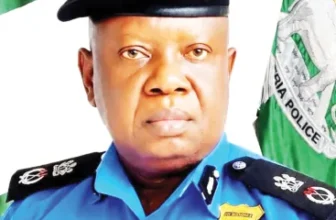
However, NDC National Chairman Cleopas Moses distanced the party from the council in a statement issued on Saturday, urging the public to disregard it.
Moses maintained that the party’s candidates were subject to the authority and discipline of the NDC, adding that only the party’s leadership had the power to constitute and announce a presidential campaign council.
Responding on Sunday, Sani rejected the chairman’s position and urged him to familiarise himself with the party’s constitution before making what she described as “unguided assertions”.
She said the movement recognised the supremacy of political parties within constitutional and statutory limits but maintained that it remained an independent organisation with its own leadership and internal processes.
“The OK Movement does not require the personal validation or approval of any individual before exercising its legitimate organisational functions in accordance with established processes,” Sani said.
She added that the movement remained committed to campaigning for the NDC’s presidential and vice-presidential candidates, as well as other candidates it had resolved to support.
Movement insists on independence
Sani described the OK Movement as a grassroots-based organisation that does not depend on financial sponsorship from any individual or political office holder to operate.
She also maintained that the group was not seeking political appointments or positions within the NDC as a condition for its support, insisting that its principles remained central to its activities.
According to her, the movement had established a nationwide grassroots structure, with internal membership records indicating approximately 2.5 million registered members and coordinators, supported by relevant data.
Sani described the organisation as a long-term political movement rather than a temporary support group created solely for an election cycle.
“We speak for Nigerians who are demanding a better political system, economic opportunity, accountability and a government that places citizens at the centre,” she said.
She also addressed allegations concerning Ughulu and his reported involvement in the Lagos State primaries, saying the matter required clarification.
While pledging to defend members whose integrity was questioned, Sani said the movement would not engage in personal insults or defamatory exchanges.
She called on Moses to withdraw statements the movement considers defamatory and apologise to both the organisation and Ughulu.
“The OK Movement will not compromise its standards. The OK Movement will not surrender its independence. The OK Movement will not be intimidated,” she added.
Nnoli’s resignation raises questions
Nnoli’s resignation has introduced a further dimension to the disagreement, particularly over the balance between organisational independence and party authority.
His stated concerns centre on the need for political support structures to maintain a clear understanding of their relationship with the political party, its candidates and the broader mandate they seek to advance.
The development comes at a critical period for the OK Movement, which has positioned itself as a grassroots platform supporting Obi and Kwankwaso ahead of the 2027 presidential election.
With the NDC publicly distancing itself from the movement’s campaign council and Nnoli now resigning from his national operations position, questions remain over how the organisation will manage its internal structure and its relationship with the party going forward.
The unfolding disagreement has placed the movement’s claims of independence, its campaign strategy and its coordination with the NDC under renewed scrutiny as preparations for the 2027 elections gather momentum.