
TL;DR:
- Digital communities in Nigeria, organized around shared interests and causes, demonstrate their power through online mobilization and real-world change, exemplified by #EndSARS. They utilize platforms like WhatsApp, Facebook, Twitter, Instagram, and YouTube for coordination, advocacy, cultural sharing, and news dissemination, influencing Nigerian society profoundly. However, misinformation, low digital literacy, and cultural dilution pose significant challenges that require deliberate efforts in media literacy and community moderation to ensure meaningful and trustworthy engagement.
When a hashtag shut down streets across Lagos, Abuja, and Port Harcourt in October 2020, it became impossible to argue that online conversations lack real power. The #EndSARS movement showed that digital communities in Nigeria are not secondary channels for idle debate; they are organizing tools, news networks, and cultural platforms rolled into one. This article walks you through exactly how these communities work, who participates in them, and what you need to know to engage safely and effectively, whether you are in Lagos or in a rural community in Akwa Ibom State.
Table of Contents
- Understanding digital communities in Nigeria
- Driving social engagement and real-world change
- News, trust, and the problem of misinformation
- Safeguarding and exchanging Nigerian culture
- A nuanced take: Optimism, risks, and what really matters
- Stay informed and get involved: Next steps for engaged Nigerians
- Frequently asked questions
Key Takeaways
| Point | Details |
|---|---|
| Mobilization power | Digital communities can turn online conversations into major real-world social actions in Nigeria. |
| News and misinformation | While they spread news quickly, digital groups are prime sites for misinformation—fact-checking is crucial. |
| Cultural preservation | Virtual communities help preserve and share Nigerian culture, but there’s a risk of losing authenticity. |
| Digital divide | Connectivity issues and digital literacy still limit widespread participation, especially in rural areas. |
Understanding digital communities in Nigeria
Digital communities are online groups where people gather around a shared interest, identity, cause, or location. They are not the same as social media in general. You can have a social media account and never truly belong to a community. A community involves ongoing conversation, mutual support, and collective identity. In Nigeria, these communities form on platforms like Facebook, WhatsApp, Twitter (now X), Instagram, YouTube, and increasingly on local forums like internet communities in Nigeria.
Who participates in these communities? The short answer is: more Nigerians than you might expect, including in areas that are often overlooked. Research from rural Akwa Ibom State found that 48.3% of respondents participate in social media discussions on community development to a high extent, and 56.4% of community groups use platforms like Facebook and WhatsApp highly for mobilization. Those numbers should reshape how you think about the urban vs. rural digital divide in Nigeria.
“Over half of community groups in rural Akwa Ibom State use social media platforms for mobilization, signaling that the digital revolution in Nigeria reaches far beyond city centers.”
The types of digital communities active in Nigeria include:
- News and current affairs groups: Where breaking stories are shared and debated in real time
- Civic and activist communities: Organized around causes like police reform, education access, or environmental justice
- Cultural and entertainment groups: Where music, Nollywood updates, and Yoruba, Igbo, or Hausa heritage content circulate
- Professional networks: LinkedIn groups, tech hubs, and entrepreneur forums for business connections
- Faith-based communities: Churches and mosques using WhatsApp and YouTube to extend their reach beyond physical gatherings
Here is a snapshot of platform usage patterns among Nigerian digital community members:
| Platform | Primary use in Nigerian communities | Engagement level |
|---|---|---|
| Group organizing, private news sharing | Very high | |
| Public debates, community pages, event promotion | High | |
| Twitter/X | Public campaigns, trending topics, political commentary | High |
| Cultural content, entertainment, influencer-led causes | Moderate to high | |
| YouTube | Educational content, religious programs, Nollywood | Moderate |
Understanding these platforms and how Nigerians use them is the foundation for everything else. You cannot engage meaningfully in a digital community without knowing which tool does what. Choosing to participate in online discussions on the right platform for your goal makes a real difference in reach and impact.
Driving social engagement and real-world change
With a foundation in the platforms and participation levels, let’s examine how these communities spark collective action, turning online voices into ground-level change.
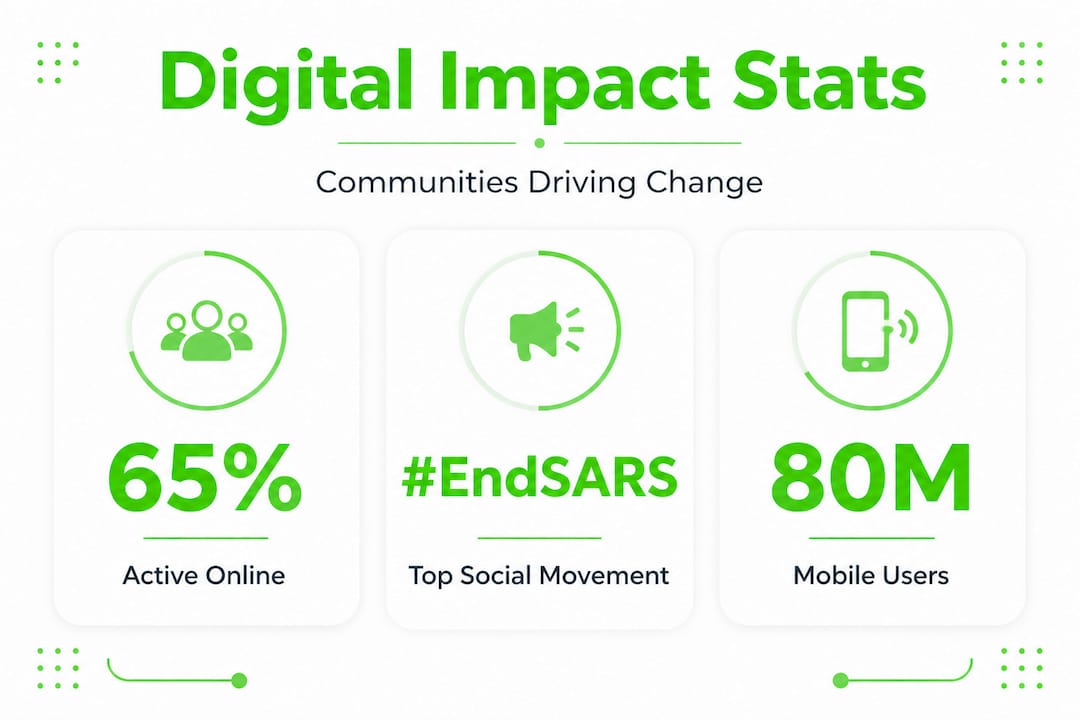
The clearest Nigerian example remains #EndSARS. What started as scattered complaints about police brutality by the Special Anti-Robbery Squad grew into a coordinated national movement within days. Twitter, Facebook, WhatsApp, and Instagram all played distinct roles: Twitter created national and international visibility through trending hashtags, WhatsApp handled ground-level logistics like protest routes and first-aid locations, and Instagram humanized the movement through photos and video testimony. The result was genuine offline mobilization and, ultimately, the official disbandment of SARS.
Each platform contributes differently to social media’s impact on real-world outcomes:
| Platform | Strength in campaigns | Nigerian example |
|---|---|---|
| Twitter/X | Trending visibility, press attention | #EndSARS national and global reach |
| Private coordination, trusted small groups | Protest logistics, fundraising | |
| Community building, older audiences | Local government advocacy pages | |
| Emotional storytelling, youth engagement | Survivor testimonies, artwork |
The typical journey from online post to offline action in Nigeria follows a recognizable sequence:
- A trigger event occurs: A video of police brutality, an unjust policy announcement, or a community disaster surfaces online
- Initial sharing begins: One or two influential accounts share the content; it spreads through personal networks on WhatsApp and Twitter
- Community discussion forms: People start posting reactions, adding context, and identifying systemic causes rather than isolated incidents
- Calls to action emerge: Petitions, crowdfunding campaigns, and protest announcements begin circulating
- Offline mobilization follows: People show up physically at agreed locations, armed with information they received digitally
- Feedback loops sustain momentum: Live updates from the ground are shared online, drawing more participants and media attention
Pro Tip: If you want your digital activism to produce real results, focus your energy on WhatsApp groups for trusted coordination and Twitter for public amplification. These two platforms serve different but complementary functions. Using only one limits your reach and your ability to organize safely.
Influencers and social change matter here too. Nigerian celebrities and micro-influencers who lend their platforms to causes can shift a campaign from niche to national overnight. But influencer involvement also carries risks, including opportunism and message dilution, which is why grassroots organizing through WhatsApp remains the backbone of sustained campaigns.

News, trust, and the problem of misinformation
After social mobilization, digital communities also serve as primary channels for news, making the question of trust and fact vs. fiction more urgent than ever.
Millions of Nigerians now get their news first from WhatsApp forwards, Facebook posts, or Twitter timelines before any traditional media outlet covers a story. This is a genuine shift in how information moves. It gives communities speed and democratizes reporting. It also creates serious problems.
Misinformation in Nigeria’s digital space is not occasional; it has become routinized. Research identifies the main risks as:
- Fake news: Fabricated stories that look credible, often designed to provoke fear or outrage
- Political propaganda: Deliberately misleading content tied to elections, ethnic tensions, or government narratives
- Ethnic provocation: Content designed to inflame tensions between Nigerian communities
- Cyberbullying: Targeted harassment of individuals, often women and young people, within community spaces
- Digital divide effects: Rural and less educated Nigerians are more exposed to misinformation due to lower access to fact-checking resources
- Low fact-checking adoption: Most users do not verify information before sharing it
“Misinformation has become routinized in Nigeria’s digital communities, eroding social trust and creating an environment where verified news and fabricated content are increasingly difficult to distinguish.”
This trust erosion is one of the most serious long-term consequences of unchecked misinformation. When you cannot distinguish spotting fake news from reliable reporting, you lose confidence in all information, including legitimate news. This weakens civic participation and makes it harder to organize around real issues.
Cyberbullying is another dimension that receives less attention than misinformation but causes significant personal harm, particularly to young Nigerians who are most active in digital communities.
Pro Tip: Before sharing any news in a digital community, apply these three quick checks: (1) Can you find the same story from at least two unconnected Nigerian news outlets? (2) Does the headline match what the article actually says? (3) Is the source account verified or established? If you answer no to any of these, do not share. Slowing down for sixty seconds before forwarding can stop a false story from reaching hundreds of people. The role of news forums in curating reliable content is precisely why trusted platforms matter.
Safeguarding and exchanging Nigerian culture
Beyond news and activism, digital communities are redefining culture for Nigerians at home and abroad, offering new opportunities and presenting new risks.
Nigerian culture is extraordinarily rich and diverse, spanning hundreds of languages, musical traditions, visual arts, storytelling forms, and culinary practices. Digital communities have become powerful vehicles for sharing this diversity, both within Nigeria and globally. The Yoruba community offers one of the clearest examples: Yoruba heritage sharing through Facebook groups, YouTube channels, and Instagram pages has allowed language lessons, traditional music, proverbs, and fashion to reach Yoruba diaspora members in the United Kingdom, the United States, and Canada who might otherwise lose touch with their roots. Similar dynamics are visible with Igbo language pages and Hausa cultural communities online.
Positive impacts of digital communities on Nigerian culture include:
- Preserving oral traditions by recording and sharing stories, proverbs, and poetry in digital formats
- Building cultural pride among young Nigerians who discover their heritage through engaging content
- Connecting diaspora Nigerians with home communities through shared language and cultural reference
- Enabling smaller ethnic groups to document and share traditions that might otherwise fade without a digital record
- Giving African fashion, music (Afrobeats, Afropop), and film (Nollywood) a global stage
Concerns worth taking seriously:
- Cultural dilution occurs when online communities blend Nigerian traditions with Western trends without distinction
- Loss of local specificity happens when the nuances of a language or tradition are flattened for a broader online audience
- Generational tension arises when younger Nigerians engage with a simplified or entertainment-driven version of their culture rather than its depth
- Commercial pressure can reduce culture to content, prioritizing what gets engagement over what holds authentic meaning
“Virtual communities are actively extending African traditions across borders, creating digital spaces where preserving African cultures online is both a community practice and a personal responsibility.”
The balance here matters. Digital communities are not replacing cultural institutions; they are supplementing them. The challenge for Nigerian users is to engage in ways that deepen rather than dilute their cultural knowledge, by seeking out authoritative voices, learning languages rather than just consuming content, and supporting creators who take cultural accuracy seriously.
A nuanced take: Optimism, risks, and what really matters
Having mapped both potential and pitfalls, it is worth looking beyond buzzwords toward a clear-eyed view of where Nigerian digital communities must improve and where their greatest strengths lie.
Most popular articles about digital communities in Nigeria land in one of two camps: uncritical enthusiasm or alarmist concern. Neither serves you well. The reality is more textured. Digital communities have produced genuine, documented progress, from the #EndSARS reforms to rural development advocacy in Akwa Ibom. But expert analysis on digital Nigeria also highlights edge cases that are easy to overlook: rural users with low connectivity face barriers that limit genuine participation, digital literacy gaps mean that mobilization potential is unevenly distributed, and job displacement in media and adjacent sectors creates new economic anxieties.
Here are some honest lessons from Nigeria’s digital community experience:
- What works: Rapid information sharing during emergencies, civic campaigns with clear and urgent goals, and cultural content that builds diaspora connections
- What fails: Sustained policy advocacy after initial mobilization fades, nuanced debates in environments designed for quick reactions, and community governance without clear moderation rules
- Where the hope lies: Young Nigerians with rising digital literacy, local platforms that understand the Nigerian context, and community leaders who bridge online discussions with offline action
The most important insight is this: digital communities are only as strong as the critical thinking their members bring to them. You can have millions of followers and still spread harm if you share without verifying. You can have a small group of fifty people and shift local policy if you organize with focus and integrity.
Stronger participation in digital communities requires not just access but deliberate skill-building around media literacy, fact-checking, and constructive debate. These are learnable skills, and they are increasingly essential for any Nigerian who wants to engage meaningfully in digital life.
Stay informed and get involved: Next steps for engaged Nigerians
Understanding how digital communities work is only the first step. Knowing where to find reliable, relevant information is what keeps you engaged without burning out or getting misled.
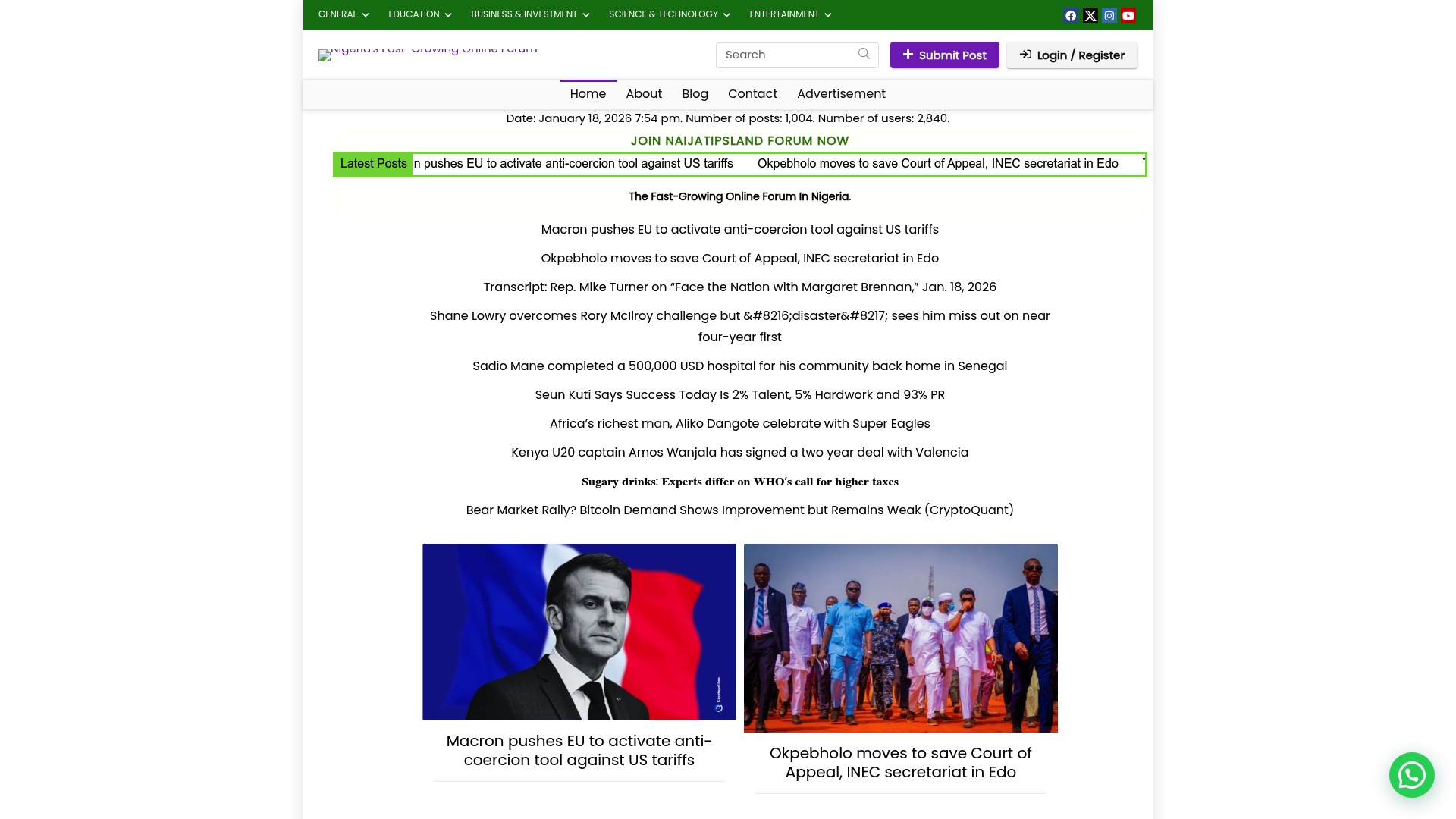
Naijatipsland.com exists precisely for this moment. Whether you want to follow breaking political stories, track entertainment updates in Nigeria, or stay current with economic news updates that affect your daily life, the platform brings everything together in one place built for Nigerian internet users. You can read, discuss, and contribute your own perspective in a community that understands the Nigerian context from the inside. Joining the conversation on a credible Nigerian forum is one of the most practical ways to sharpen your digital literacy while staying genuinely informed. Register, explore, and start participating today.
Frequently asked questions
What are digital communities, and how do they differ from social media?
Digital communities are online groups formed around shared interests, providing ongoing discussion and mutual support, while social media broadly includes all platforms for sharing and connecting without necessarily forming sustained community bonds.
How did the #EndSARS movement use digital platforms for real-world change?
#EndSARS used Twitter and WhatsApp to organize protests, spread verified information about police brutality, and coordinate logistics, demonstrating that coordinated online action translates directly into offline civic mobilization.
What is the biggest challenge facing digital communities in Nigeria?
Misinformation and low fact-checking are the most pervasive challenges, eroding trust across Nigerian digital communities and making it harder for users to distinguish reliable news from fabricated content.
How do digital communities help preserve Nigerian culture?
They allow Yoruba heritage and African traditions to be shared globally through videos, language lessons, and cultural content, though this also carries the risk of cultural dilution when content is oversimplified for wider audiences.
What can users do to avoid spreading fake news?
Always verify information with at least two independent Nigerian sources and apply basic fact-checking habits before sharing anything in a digital community group, especially content that provokes strong emotional reactions.