

TL;DR:
- Nigerian youth can effectively engage online by choosing respectful structures like debate forums over social media.
- Consistent practice, research, and clear argumentation are key to improving online debating skills.
- Handling toxicity involves emotional regulation, using platform tools, and understanding the impact of respectful discourse.
You want to speak up online, but the moment you type your opinion, someone attacks you personally, floods your reply with misinformation, or drowns your point in tribal insults. It is a frustrating reality for many Nigerian youths trying to engage in meaningful conversations on social media. Yet the demand for informed, confident voices has never been higher. This guide walks you through everything you need: choosing the right platforms, sharpening your skills, building solid arguments, handling toxicity, and measuring real growth. By the end, you will know exactly how to show up in online debates with clarity, confidence, and purpose.
Table of Contents
- Choosing the right platforms for effective online debate
- Essential skills and preparation for impactful debating
- How to build, present, and defend your arguments online
- Staying resilient: Handling toxicity, tribalism, and misinformation
- Reviewing your progress and growing as a debater
- Our perspective: The true impact of youth voices in Nigeria’s online debates
- Level up your online debate skills with Naijatipsland resources
- Frequently asked questions
Key Takeaways
| Point | Details |
|---|---|
| Platform matters | Choosing a well-moderated debate forum instead of chaotic public threads increases the chance for constructive dialogue. |
| Preparation sets you apart | Practicing argument structure and evidence use before joining debates builds both confidence and impact. |
| Resilience is essential | Managing emotions and recognizing toxicity helps you stay safe and focused in heated online environments. |
| Feedback drives growth | Regularly reviewing your posts and asking for critique accelerates learning in online debates. |
Choosing the right platforms for effective online debate
Platform choice shapes your entire debate experience. The wrong environment can crush your confidence before you even get started, while the right one can sharpen your thinking fast.
Mainstream social media platforms like X (formerly Twitter), Facebook, Instagram, and WhatsApp offer massive reach and real-time engagement. The #EndSARS hashtag was used 48 million times by 5 million users, proving that Nigerian youth can drive global conversations from their phones. But these platforms also carry high risks of toxicity, harassment, and misinformation. Arguments can spiral quickly, and moderation is often weak.
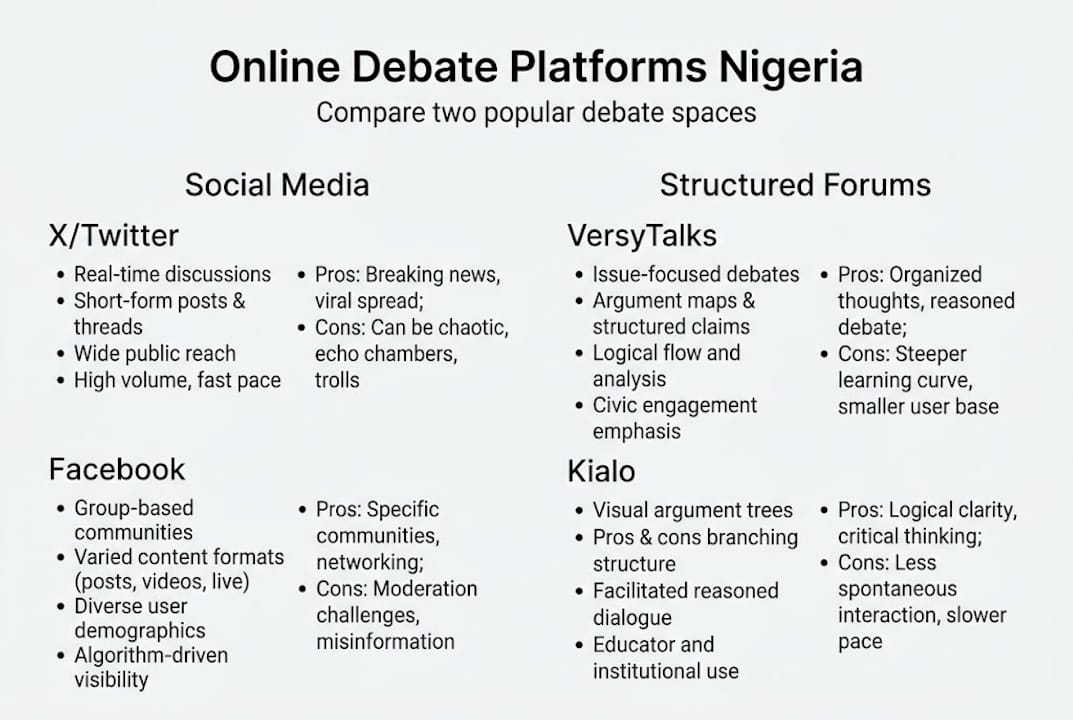
Structured debate forums like VersyTalks, Kialo, and Debate.org are built differently. They organize arguments in logical trees, enforce community rules, and reduce emotional pile-ons. Understanding why forums matter for skill-building will help you appreciate why starting there is a smart move. You can also explore forum alternatives if you want platforms with active Nigerian communities.
Here is a quick comparison to help you decide:
| Feature | Social media (X, Facebook) | Structured forums (Kialo, VersyTalks) |
|---|---|---|
| Ease of use | Very easy | Moderate |
| Audience size | Very large | Smaller but focused |
| Moderation | Weak | Strong |
| Toxicity risk | High | Low |
| Nigerian user base | Very active | Growing |
| Skill-building value | Moderate | High |
Key benefits of each type at a glance:
- Social media: Instant feedback, trending topics, massive Nigerian audience
- Structured forums: Organized arguments, respectful discourse, better for learning
- WhatsApp groups: Familiar and local, but often echo chambers
- Kialo/Debate.org: Logical structure, less emotional noise
Pro Tip: Start on structured forums to build your core skills without the pressure of viral backlash. Once you feel confident, move to high-traffic platforms like X where your voice can reach millions.
Essential skills and preparation for impactful debating
With a platform selected, it is time to prepare your skills and mindset for effective participation. Jumping into debates without preparation is like entering a football match without training. You will get outplayed fast.
The foundation of good debating is research. Before you post anything, understand both sides of the argument. Know what the strongest opposing view is, not just what you believe. Use credible Nigerian and international news sources to gather facts. A beginner’s guide to online discussions can help you understand the basics before you dive in.
According to debate training research, weekly practice of 2 hours using AI tools, solo drills, and community posting measurably improves debate performance. That is less than 20 minutes a day. Here is a practical preparation routine:
- Research both sides of a current topic before forming your position
- Practice solo drills by arguing a point out loud or in writing, then switching sides
- Use AI tools to stress-test your argument and find weaknesses
- Post in online forums and observe how experienced debaters respond
- Analyze strong arguments from others and note what makes them effective
- Request feedback from moderators or more experienced community members
Pro Tip: Spend 15 minutes daily picking a trending Nigerian topic and arguing both sides in writing. This builds critical thinking faster than any other method.
“Respectful, evidence-based participation doubles the likelihood of receiving a quality response, based on a study of over 3,000 participants.”
Understanding the impact of online discussions on real communities will also motivate you to engage more thoughtfully. And when you need help navigating disagreements, resources on arguing respectfully offer clear, practical frameworks.
How to build, present, and defend your arguments online
Once you are prepared, it is time to jump into the actual art of debating. This is where technique matters most. A well-structured argument is more persuasive than a loud one, every time.

Research on effective online debate emphasizes summarizing your opponent’s points first, addressing counterarguments directly, using evidence and real-world examples, and focusing on one strong point at a time rather than scattering your energy across many claims.
Follow these steps every time you enter a debate:
- State your position clearly in one or two sentences at the start
- Cite a credible fact or example that directly supports your claim
- Summarize your opponent’s view fairly before you challenge it
- Respond to their strongest counterpoint rather than the weakest one
- Stay calm and focused even when the conversation gets heated
Here is a quick reference table of debate do’s and don’ts:
| Do | Don’t |
|---|---|
| Use facts and credible sources | Make personal attacks |
| Acknowledge valid opposing points | Ignore counterarguments |
| Keep your reply concise | Write walls of text |
| Ask clarifying questions | Assume bad intent |
| Use “Yes, and” to build dialogue | Use all-caps or insults |
For political topics especially, knowing how to discuss politics online keeps conversations productive rather than explosive.
Pro Tip: If you feel your emotions rising while reading a reply, close the tab and come back in 10 minutes. Emotional replies almost always weaken your argument and invite more aggression.
Staying resilient: Handling toxicity, tribalism, and misinformation
Even with good preparation, the online environment can bring unexpected challenges. Nigerian online debates carry unique pressures, and knowing how to protect yourself is just as important as knowing how to argue well.
A survey found that 70.1% of 104 Nigerians believe social media increases tribal tensions. This is not surprising. Ethnicity, religion, and regional identity often get weaponized in debates about politics, economics, and governance. Recognizing these patterns early helps you respond strategically rather than emotionally. Understanding why topical debates matter for Nigerian youth gives you the bigger picture and keeps you motivated.
Watch out for these warning signs of bad-faith debates:
- The person shifts the topic every time you make a strong point (goalpost-moving)
- They misrepresent your argument to make it easier to attack (strawman)
- They use insults or tribal slurs instead of addressing facts
- They flood the conversation with unverified claims or screenshots
- They refuse to acknowledge any evidence, no matter how credible
“Emotional regulation and source credibility are your best shields in any online debate. You cannot control how others argue, but you can control how you respond.”
When you spot these signs, you have three options: redirect the conversation to facts, use platform tools like mute or block to protect your space, or simply walk away. Walking away is not losing. It is protecting your energy for debates that actually move forward. The ultimate guide to arguing online offers more strategies for navigating bad-faith conversations without burning out.
Reviewing your progress and growing as a debater
True growth comes from continuous learning and reflection. Many Nigerian youths focus only on whether they “won” a debate, but real improvement shows up in confidence, clarity, and civility over time.
Research confirms that daily 15 to 20 minutes of focused practice using AI tools, solo drills, and community feedback consistently builds measurable skills. The key is consistency, not intensity. Small daily steps beat occasional marathon sessions every time. You can explore more debate practice tips to structure your routine effectively.
Here is a simple reflection process to follow after each debate session:
- Review your posts and ask yourself if your argument was clear and evidence-based
- Ask for feedback from experienced users, moderators, or trusted peers in the forum
- Track which posts generate respectful engagement versus emotional reactions
- Identify one weak spot in your last argument and research how to address it better next time
- Set a concrete goal for your next debate, such as using two credible sources or staying calm through a difficult exchange
Recognize progress beyond winning. Are you more confident starting a thread? Are your replies getting more thoughtful responses? Are you less reactive when someone challenges you? These are real signs of growth. Build a sustainable practice by keeping your sessions short and regular. Burnout is the biggest threat to long-term improvement, so protect your energy and enjoy the process.
Our perspective: The true impact of youth voices in Nigeria’s online debates
Having covered the essentials, it is worth reflecting on something bigger: the unique value Nigerian youth bring to online debates goes far beyond winning arguments.
Change often starts in the comments section before reaching the streets. The #EndSARS movement did not begin in a government office. It grew from tweets, threads, and shared videos posted by young Nigerians who refused to stay silent. That is real power. And it carries real responsibility.
There is a common cynicism that says online debates change nothing. We disagree. As research shows, social media amplifies engagement significantly, and while toxicity is a real risk, respectful and evidence-based debate consistently yields quality outcomes even when minds do not change immediately. The value of online forums as training grounds for civic discourse cannot be overstated.
When you argue well online, you are not just scoring points. You are modeling civil discourse for thousands of observers who never reply. You are shaping how Nigerians think about issues. That is influence. Use it wisely.
Level up your online debate skills with Naijatipsland resources
Ready to put these lessons into practice? Naijatipsland is your next stop for safe, vibrant, and community-driven online discussions tailored for Nigerian youths.
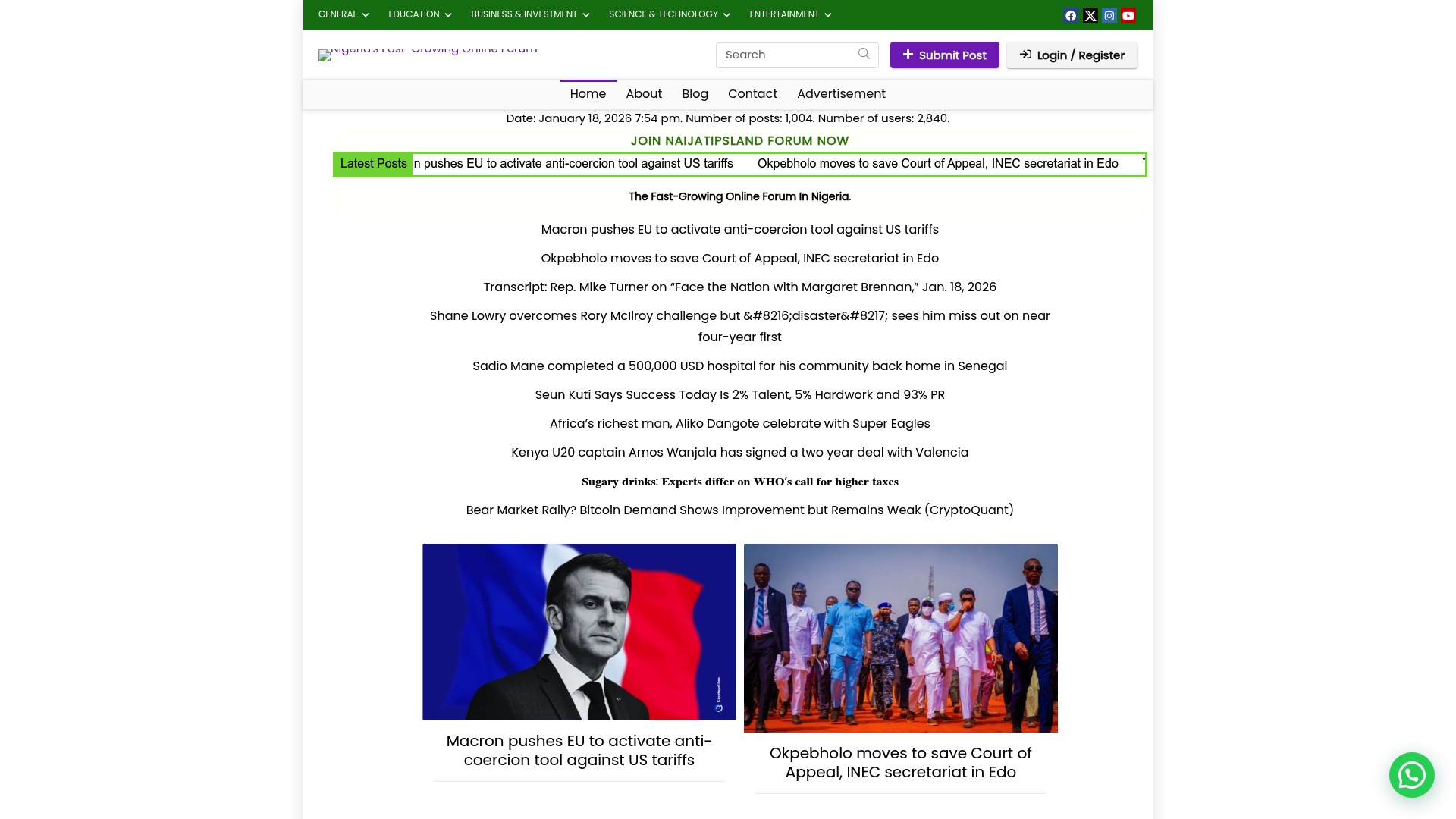
You can start a discussion on trending topics and get real feedback from an active Nigerian community. If you are new to forums, brush up on forum etiquette so you engage respectfully from day one. And if you want a structured starting point, the online discussion guide covers everything a beginner needs to participate with confidence. Share your debate wins, lessons, and questions. The community is here to help you grow.
Frequently asked questions
What are the best platforms for online debates in Nigeria?
Popular options include X/Twitter for current events and structured forums like VersyTalks or Kialo for respectful, organized debates. The #EndSARS movement demonstrated how powerfully youth-driven engagement on Twitter can shape national conversation, while structured forums offer better moderation for skill-building.
How can I make my arguments more persuasive online?
Structure your argument clearly, use credible evidence, and address your opponent’s point before making your own. Research emphasizes summarizing your opponent’s view, tackling counterarguments directly, and focusing on one strong point rather than many weak ones.
What should I do when a debate becomes toxic?
Stay calm, avoid engaging with trolls, and use platform tools like block or mute to protect your space. Emotional regulation and sticking to credible sources are the most effective ways to maintain your credibility when others lose theirs.
How often should I practice online debating to improve?
Practicing for 15 to 20 minutes daily using solo drills, AI feedback tools, and community forum participation can significantly boost your skills within weeks.