

TL;DR:
- Current affairs involve analyzing ongoing political and social events, not just reading headlines.
- Nigerian youth access current affairs mainly through newspapers, social media, quizzes, and influencers.
- Developing critical habits and verifying information helps avoid misinformation and turn awareness into action.
Every day, Nigerian Twitter (now X) explodes with trending hashtags, WhatsApp groups buzz with breaking news, and TikTok videos rack up millions of views on political controversies. Yet, despite all this noise, many young Nigerians are consuming information without truly understanding it. There is a real difference between scrolling through viral posts and actually following current affairs, which refers to political and social events happening now, covered in news programs and public discussions. This article breaks down what current affairs really means, where to find reliable updates, how to avoid common traps, and how to turn your awareness into real-world impact.
Table of Contents
- The meaning of current affairs
- How Nigerian youth access current affairs
- Common pitfalls: Fake news, echo chambers, and misinformation
- Turning current affairs into action: From discussion to impact
- Why mastering current affairs is the ultimate youth superpower
- Take your understanding of current affairs further
- Frequently asked questions
Key Takeaways
| Point | Details |
|---|---|
| Current affairs explained | Current affairs covers important political, social, and cultural issues happening right now in Nigeria and Africa. |
| Best information sources | Youth commonly use news sites, social media, quizzes, and influencers to keep up with the latest events and trends. |
| Stay critical | Verify stories from multiple sources to avoid fake news and ensure you’re getting reliable information. |
| Turn knowledge into action | Engage in discussions, join community initiatives, and use your understanding to make a positive impact. |
| Empowerment for youth | Mastering current affairs helps young Nigerians make better decisions and become voices for change. |
The meaning of current affairs
Now that we’ve set the stage, let’s clarify exactly what current affairs means in everyday life.
At its core, current affairs refers to political and social events happening now, often covered in news, TV programs, and discussions. But it goes well beyond just reading headlines. Current affairs includes the context behind events, the debates they trigger, and the long-term effects they have on communities and governments.
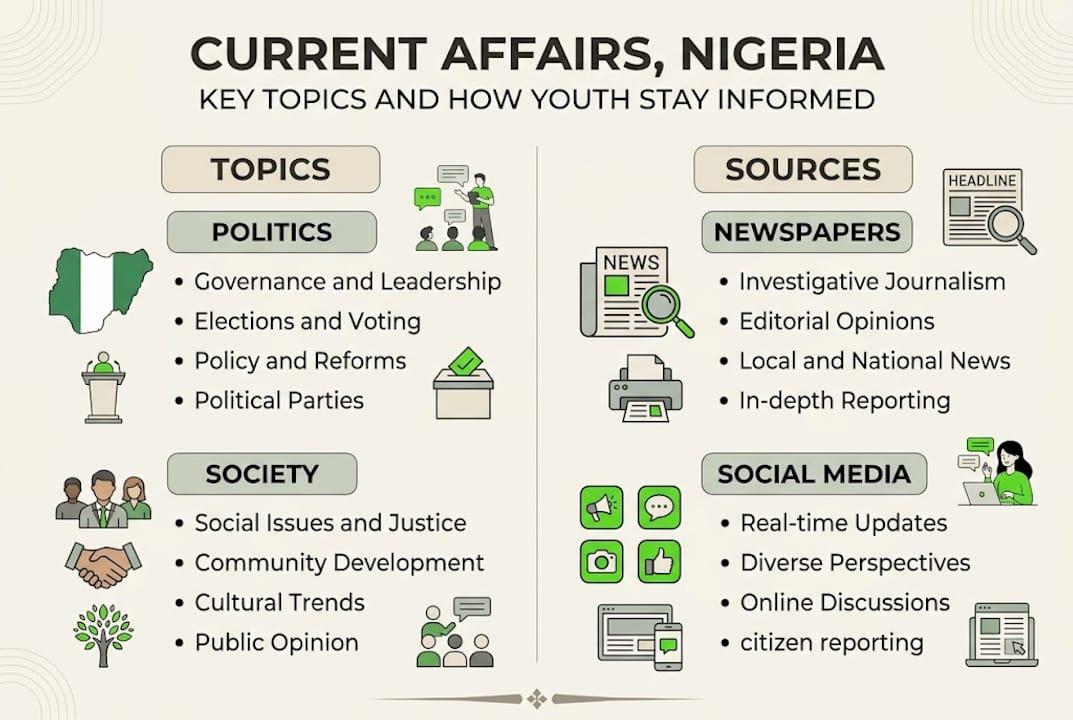
Think about the #EndSARS protests of 2020. The news reported the events. Current affairs, however, involved analyzing why the protests happened, what systemic issues they exposed, and what policy changes followed. That deeper layer of understanding is what separates passive news consumption from genuine current affairs awareness.
Current affairs covers a wide range of topics:
- Politics and governance: Elections, policy changes, government budgets
- Society and culture: Gender debates, religious tensions, youth unemployment
- Technology: Social media regulations, crypto bans, fintech growth
- Environment: Flooding in Lagos, desertification in the North
- International relations: Nigeria’s role in ECOWAS, foreign debt issues
As Collins Dictionary explains, current affairs is a broad category that shapes how citizens understand and participate in public life. It is not just academic content for exams. It is the foundation of civic awareness.
Here is a quick comparison to help you see the difference:
| Category | Focus | Format |
|---|---|---|
| Breaking news | What just happened | Short reports |
| Current affairs | Why it happened and what it means | Analysis, debate, discussion |
| Historical events | What happened in the past | Retrospective coverage |
“Understanding current affairs is not about memorizing facts. It is about developing the ability to connect events, question motives, and form informed opinions.”
For Nigerian youth, this matters enormously. When you understand current affairs empowers youth to participate in civic life, you start to see how government decisions directly affect your job prospects, safety, and future. The role of news forums in shaping these conversations is also growing fast, giving young people platforms to engage beyond passive reading.
How Nigerian youth access current affairs
With the basics set, let’s see where Nigerian youth actually find current affairs and what works best.
According to Reuters Institute research, young Nigerians stay updated via daily reading of newspapers like Vanguard and Premium Times, sites like currentaffairs.ng, quizzes on Zikoko and OgaJob, and by following influencers on X and TikTok such as VeryDarkMan and Aisha Yesufu. In fact, 79% of Nigerian youth use social media weekly to access news and current affairs updates.
Here is a comparison of the most popular access methods:
| Source | Strengths | Weaknesses |
|---|---|---|
| Newspapers (Vanguard, Premium Times) | In-depth reporting, verified facts | Can be slow to update |
| Social media (X, TikTok) | Fast, engaging, wide reach | High risk of misinformation |
| Current affairs quizzes (OgaJob, Zikoko) | Interactive, great for exam prep | Limited depth of analysis |
| Influencers (VeryDarkMan, Aisha Yesufu) | Relatable, popular framing | Personal bias possible |
You can also explore OgaJob quizzes as a practical way to test your knowledge while learning.
Here are the most effective habits young Nigerians use:
- Read at least one reputable newspaper or news site daily
- Follow credible voices on social media, not just popular ones
- Use quizzes to reinforce and test your knowledge
- Watch or listen to political analysis programs weekly
- Join online discussions to sharpen your thinking
For a broader strategy, check out these ways to stay updated and explore the best news platforms for youth that are currently active in Nigeria.
Pro Tip: Do not rely on just one source. Combining newspapers, social media, and quizzes gives you a fuller, more balanced picture of any issue and reduces the risk of being misled.
Common pitfalls: Fake news, echo chambers, and misinformation
Having explored where to get reliable updates, it is just as crucial to recognize the traps and challenges that come with consuming news today.
Fake news is one of the biggest threats to current affairs literacy in Nigeria. A fabricated story can go viral within minutes, shaping public opinion before any correction is issued. The problem is that emotional or shocking headlines are designed to trigger quick reactions, not careful thinking.
An echo chamber is another serious issue. This happens when you only follow sources or people who share your existing views. Over time, your perspective becomes narrower, and you lose the ability to evaluate issues from multiple angles. For a country as diverse as Nigeria, this is especially dangerous.
Here are the most common pitfalls to watch out for:
- Emotional headlines: Designed to provoke anger or fear before you read the full story
- Unverified viral posts: Screenshots and voice notes shared without any source confirmation
- Influencer bias: Even trusted voices have personal or political interests
- Single-source reliance: Trusting only one outlet creates blind spots
- Outdated stories: Old news recycled as breaking news to generate engagement
As Cambridge Dictionary notes, it is important to distinguish news from analysis and to verify via multiple sources while focusing on Nigeria and Africa’s specific context amid global influences.
Knowing how to spot fake news is a critical skill in 2026. You should also develop habits around trending news curation so you are selecting quality information rather than just reacting to whatever is loudest online.
Pro Tip: Before sharing any news story, ask yourself three questions: Who published this? When was it published? Can I find this same story on two other credible platforms? If you cannot answer all three, do not share it.
Turning current affairs into action: From discussion to impact
Being aware of the pitfalls, the next step is to put your knowledge into action for real community and personal benefit.

Knowing about current affairs is valuable. But using that knowledge is where real change begins. Nigerian youth who actively engage with current events, rather than just consuming them, are better positioned to lead, advocate, and contribute meaningfully to society.
Here is a practical four-step framework you can follow:
- Learn: Read and watch credible current affairs content daily. Focus on Nigerian and African issues first, then global ones.
- Verify: Cross-check every major claim with at least two credible sources before accepting or sharing it.
- Discuss: Join forums, community groups, or school debates. Respectful discussion sharpens your thinking and exposes you to new perspectives.
- Act: Use your knowledge to vote wisely, volunteer for causes, create educational content, or advocate for policy change.
“The young person who reads widely, thinks critically, and speaks up respectfully is more powerful than any algorithm or propaganda machine.”
According to Reuters Institute data, young Nigerians engage via social media at a rate of 79% weekly, and many use quizzes and youth-focused sites like YNaija to build civic knowledge, especially for exams.
Current affairs knowledge also directly supports exam performance. Many Nigerian competitive exams, including JAMB, civil service tests, and bank aptitude tests, include current affairs sections. Regular engagement gives you a real edge.
You can also explore why it pays to follow international news as a Nigerian professional, and stay current with the most important current affairs topics shaping Nigeria in 2026.
Why mastering current affairs is the ultimate youth superpower
After understanding application, let’s look at what most people miss about the true power behind following current affairs.
Most people treat current affairs as something you study for exams or bring up in arguments online. That is a limited view. The real value of staying informed is what it does to your thinking over time.
When you consistently engage with current events, you develop the ability to spot patterns, question narratives, and anticipate change. These are not just academic skills. They are leadership skills. They are the same skills that help entrepreneurs identify market shifts, help activists build effective campaigns, and help voters make decisions that actually reflect their interests.
Conventional wisdom says current affairs is about knowing facts. We believe it is about building judgment. A young Nigerian who follows empowering youth through current affairs with genuine curiosity and critical thinking is not just informed. They are future-proof. They can navigate misinformation, contribute to public discourse, and lead communities. That is not just useful. It is transformative.
Take your understanding of current affairs further
Ready to get practical? Naijatipsland offers tools and communities to help you grow your current affairs skills.
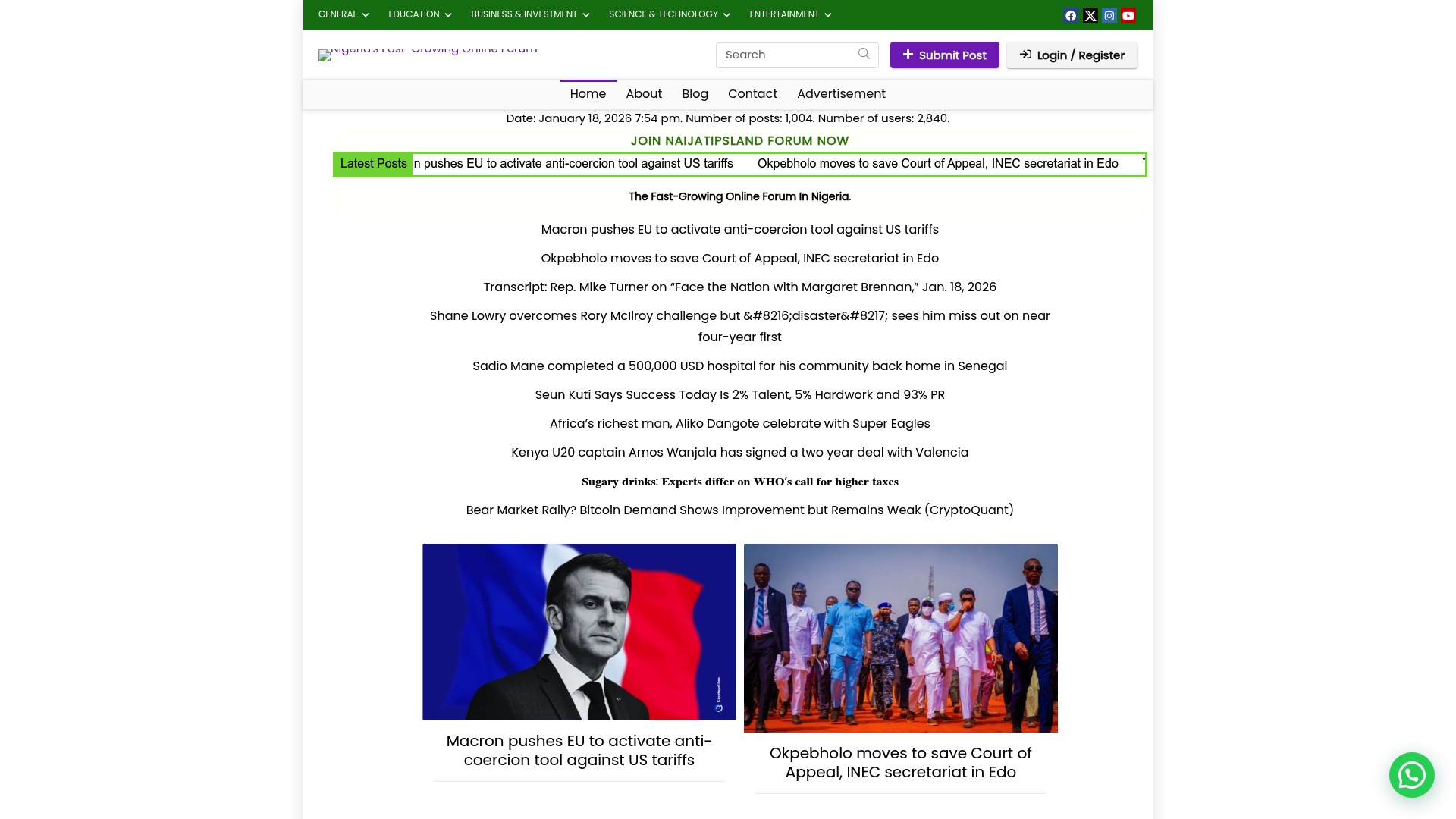
Naijatipsland is built for exactly this kind of engagement. You can start an online discussion on any trending topic and connect with other young Nigerians who are equally passionate about staying informed. Learning forum etiquette ensures your contributions are respected and impactful. You can also read about how young journalists are changing the narrative through work like the urban issues reporting project in Lagos. Whether you are here to learn, debate, or lead, Naijatipsland is your platform.
Frequently asked questions
What is the difference between news and current affairs?
News reports events as they happen, while current affairs includes both the news and the analysis or discussion of ongoing issues. Current affairs adds context and meaning to raw news events.
How can I ensure the current affairs I follow are accurate?
Always verify with multiple credible sources and be cautious with viral or emotional headlines before accepting or sharing any story.
Why are current affairs important for Nigerian youth?
Staying informed helps young people engage meaningfully in society, perform better in exams, and make smarter civic decisions. With 79% of youth using social media weekly for news, the opportunity to build real awareness is already in your hands.
What are the best sources for Nigerian current affairs?
Popular choices include newspapers like Vanguard and Premium Times, online quizzes on OgaJob, influencers on X and TikTok, and reputable news apps. Combining these sources gives you the most balanced view.