
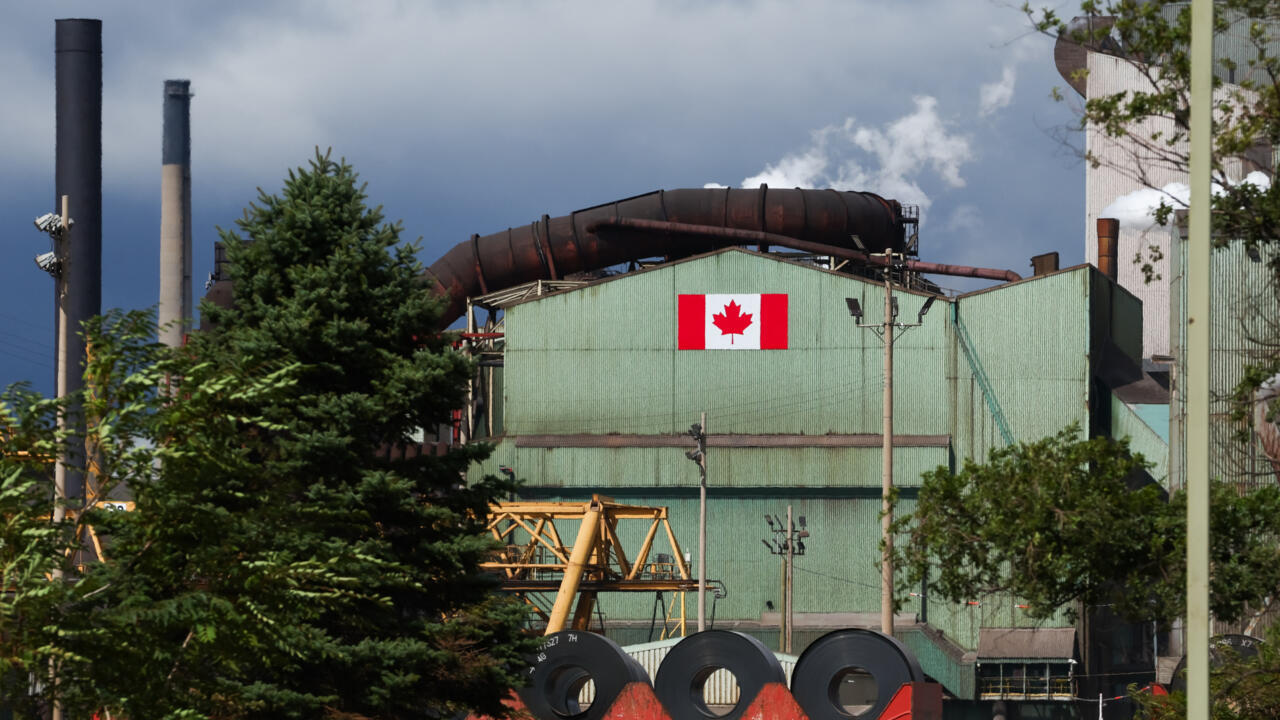
Canada will announce retaliatory tariffs against the United States on Tuesday after US President Donald Trump told Canadian leaders on Monday to “fall in line” or face consequences “far worse” than existing tariffs and Canada’s Prime Minister Mark Carney accused Washington of trying to subordinate Canada.
After trade negotiations crumbled at the eleventh hour, Trump’s 50 percent tariffs on scores of Canadian imports kicked in over the weekend.
The new levies, which took effect Saturday, are set to impact about 5 percent of Canada’s annual exports to the US – or $20 billion in goods ranging from hockey sticks to agricultural products. Carney quickly promised that his government would roll out retaliatory measures “dollar for dollar” starting September 8.
Additional threats have piled up in the meantime. Ontario Premier Doug Ford told The Associated Press on Monday that “everything is on the table,” noting his province would be ready to cut off electricity and critical minerals to the US if the trade war worsens. Meanwhile, Trump suggested his administration could also increase taxes on Canadian automobiles next year.
The US and Canada once held one of the world’s most durable trade alliances, but the latest escalation plunges the North American neighbours deeper into a rupture that has kept both sides of the border on edge throughout Trump’s second term in office. Steeper tariffs raise costs for businesses – and almost always trickle down to households in the form of higher prices.
US-Canada trade war deepens as Trump threatens additional tariffs
One of your browser extensions seems to be blocking the video player from loading. To watch this content, you may need to disable it on this site.
Here’s what we know.
The 50 percent tariffs from the US are set to affect $20 billion of Canadian goods.
Canada sends the vast majority of its goods exports to the US (72 percent last year), and the Trump administration says the new taxes will be levied on products ranging from hockey sticks to wine and cement. The list is long. According to documents published by the White House, other goods subject to the tax include honey, seeds and agricultural products – as well as select makeup, perfumes, clothing, jewellery, furniture, cameras, fabric and more.
The 50 percent levy also applies to some products that were previously protected under the US-Mexico-Canada Agreement (USMCA), a trade pact from Trump’s first term. This marks a shift from past levies – and further underlines questions around the future of the USMCA overall.
Trump reinstated a long-dormant Great Depression-era law: Section 338 of the Tariff Act of 1930.
When the US and world economies were in collapse nearly a century ago, Congress passed the 1930 law as part of broader Smoot-Hawley legislation (named after its congressional sponsors). But Section 338 – which authorises the president to slap import taxes of up to 50 percent on imports from countries that have discriminated against US businesses – has never been used specifically to raise tariffs until now.
No investigation is required to justify the levies. Nor is there any limit on how long they can stay in place. Since there’s no precedent however, the latest tariffs may also see legal challenge.
Trump has claimed that Canada unfairly discriminates against US exports of automobiles, alcohol and dairy products. The president expressed anger over Canada’s retaliation against his own tariffs in 2025 – noting how Canadian imports of American alcohol and cars started to fall last spring.
US-Canada trade dispute escalates after Carney announces retaliatory tariffs
One of your browser extensions seems to be blocking the video player from loading. To watch this content, you may need to disable it on this site.

On Saturday, Carney quickly promised to match the new levies “dollar for dollar” – later announcing that those countermeasures would begin September 8. He noted Canada would target US steel, dairy, appliances, agricultural equipment, pulp and paper and electronics.
In the meantime, provincial leaders like Ford have reiterated Canadians’ willingness to endure economic pain rather than give in to US pressure.
Trump “underestimates Canada. We’re all in,” Ford said Monday. Beyond potentially cutting off electricity and critical minerals from Ontario, he also called for Canada to consider using oil and potash as leverage.
Meanwhile, Trump made new threats on social media. He threatened to increase tariffs on Canadian cars, trucks, automotive parts and steel to 50 percent starting January 1, 2027. Like other countries, Canada currently faces a broader 25 percent tariff on autos. A 50 percent sectoral tariff on most steel imports is already in effect.
“WE DON’T NEED CANADA, THEY NEED US!” Trump wrote Monday.
Read more‘We don’t need Canada’: Trump threatens to double auto tariffs after trade talks collapse
Carney on Monday said Washington’s auto-sector proposals would “gradually dismantle” Canadian production. He also questioned what Trump’s latest move would mean for workers in US states who depend on Canadian demand.
The prime minister added that Canada remained willing to negotiate, but only if the US approached the talks as a partnership between sovereign countries. He said “an attitude at the negotiation table that Canada is a subsidiary of the United States” is “not something we’re going to accept.”
Tariffs are taxes paid by importers or businesses that buy goods from abroad. Their impact typically trickles down to consumers through higher prices – and, as seen over the last year, they can also create uncertainty for workers across affected sectors.
“Nearly all industries and professions are likely to see downstream effects from this spiraling trade dispute,” Augustine Lo, of law firm Dorsey & Whitney, which advises clients on international trade, said Saturday.
The 50 percent tariffs come on top of previously imposed levies, including a 10 percent rate that Trump slapped on Canada just last month – ostensibly for failing to do enough to prevent imports produced by forced labour and separate sectoral levies globally.
The growing trade war underscores Trump’s willingness to risk breaking established alliances. And Canada’s reluctance to accept a deal may reflect recent experience.
Read moreTrump says Canada wants ‘benefits of being a State, without being one’ as trade war deepens
Trump has threatened tariffs in response to everything from a TV ad criticising his trade policies (later pulled by Ontario’s government) to Canadian wildfires that blackened skies across North America.
Steeper tariffs have already contributed to higher inflation, but have appeared to level off in recent months, according to researchers at the Federal Reserve Bank of St. Louis – most notably after the Supreme Court struck down some of Trump’s most sweeping levies in February.
Still, the weekend’s escalation with Canada marks the latest instance of Trump turning to other laws to impose tariffs. And Washington’s ongoing war with Iran has driven prices even higher. With the cost of living at the center of many voters’ minds in a midterm election year, political ramifications could mount for the Republican president in the coming months.
(FRANCE 24 with AP)