
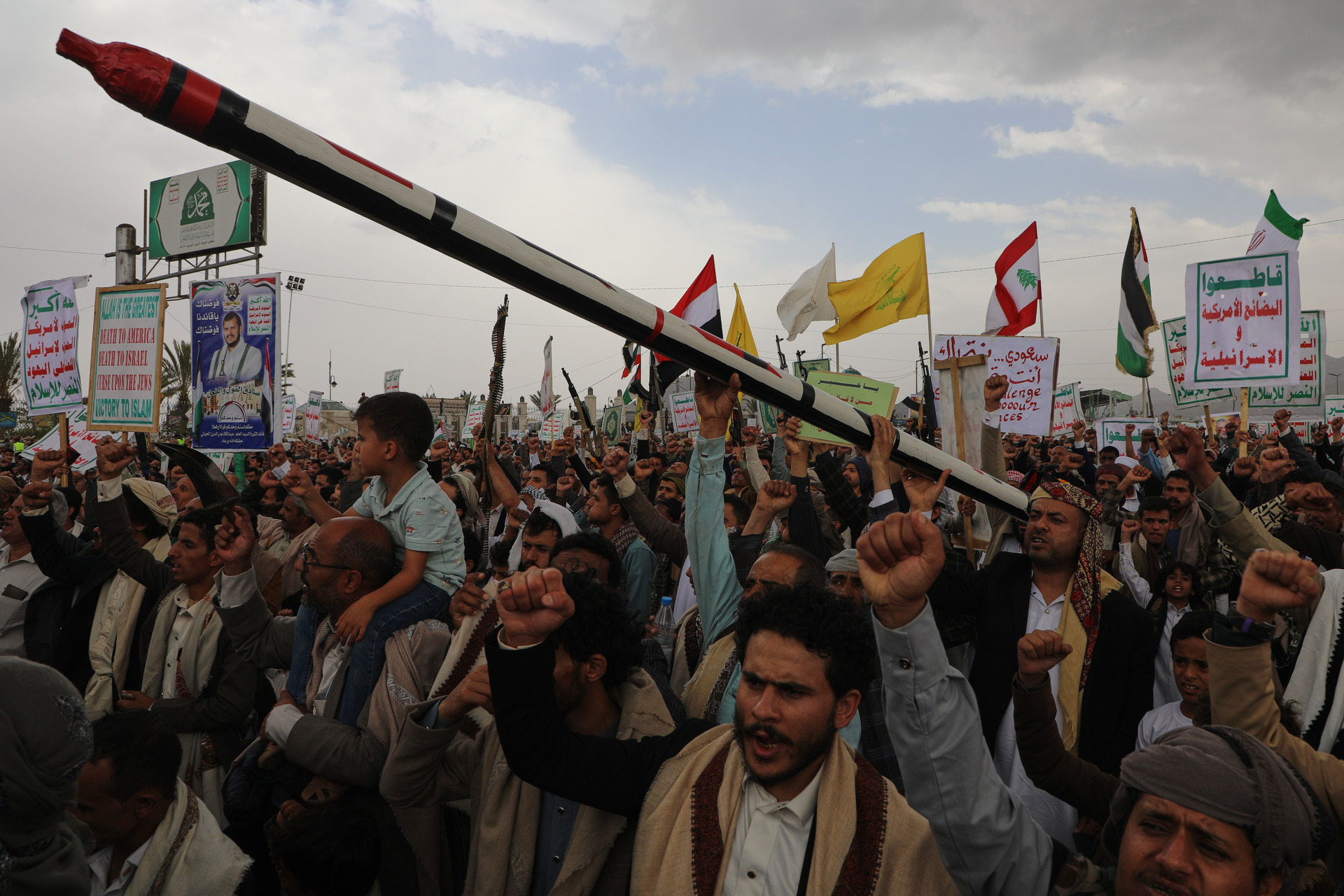
On Sunday, the president of Yemen’s internationally recognized government, Rashad al-Alimi, declared the launch of a major military offensive to retake territories controlled by Houthi militants. In a televised address, al-Alimi said the offensive was a last resort after “all chances of deescalating the conflict had been exhausted.”
The Houthis currently control much of northwestern Yemen, including the capital, Sanaa. Last month, they launched a fresh offensive that saw them capture territory around the strategic Bab el-Mandeb strait, a strategic waterway that connects the Red Sea with the Gulf of Aden and the Indian Ocean. Houthi fighters have also captured hilltops around Yemen’s third-largest city, Taiz, where thousands of government forces are stationed and where al-Alimi hails from.
As I wrote in a previous newsletter, it is not clear how renewed fighting could alter the balance of power in the Yemeni government’s favor. The Houthis have withstood years of Saudi and Emirati intervention and even U.S. air campaigns, while the anti-Houthi coalition is now more divided than it was during the civil war.
Read More: