


Remote work can sound straightforward, but for Nigerian professionals eyeing global opportunities, the reality takes many forms. From fully distributed teams to hybrid setups mixing days at home and in office, the structure impacts everything from collaboration to career growth. Many enter remote work believing it means endless flexibility or lower standards, but those are common myths. Understanding the nuanced differences between remote work models helps you make smart choices, stay competitive, and avoid surprises. This guide clarifies modern remote work, addresses misconceptions, and maps out what you’ll actually experience in global roles.
Table of Contents
- Defining Remote Work And Popular Misconceptions
- Types Of Remote Work Roles And Environments
- How Remote Work Operates In Practice
- Essential Tools And Skills For Remote Success
- Benefits, Challenges, And Legal Implications
Key Takeaways
| Point | Details |
|---|---|
| Understanding Remote Work | Remote work encompasses diverse arrangements, including fully remote, hybrid, and flexible roles, each impacting productivity and work style. |
| Overcoming Misconceptions | Many myths about remote work, such as it being unproductive or synonymous with comfort, need to be debunked for realistic career planning. |
| Legal Implications | Before accepting remote positions, be aware of tax obligations and employment law differences that may affect your rights and responsibilities. |
| Skills for Success | Essential skills for thriving in remote work include strong written communication, self-discipline, and proficiency in collaboration tools. |
Defining Remote Work and Popular Misconceptions
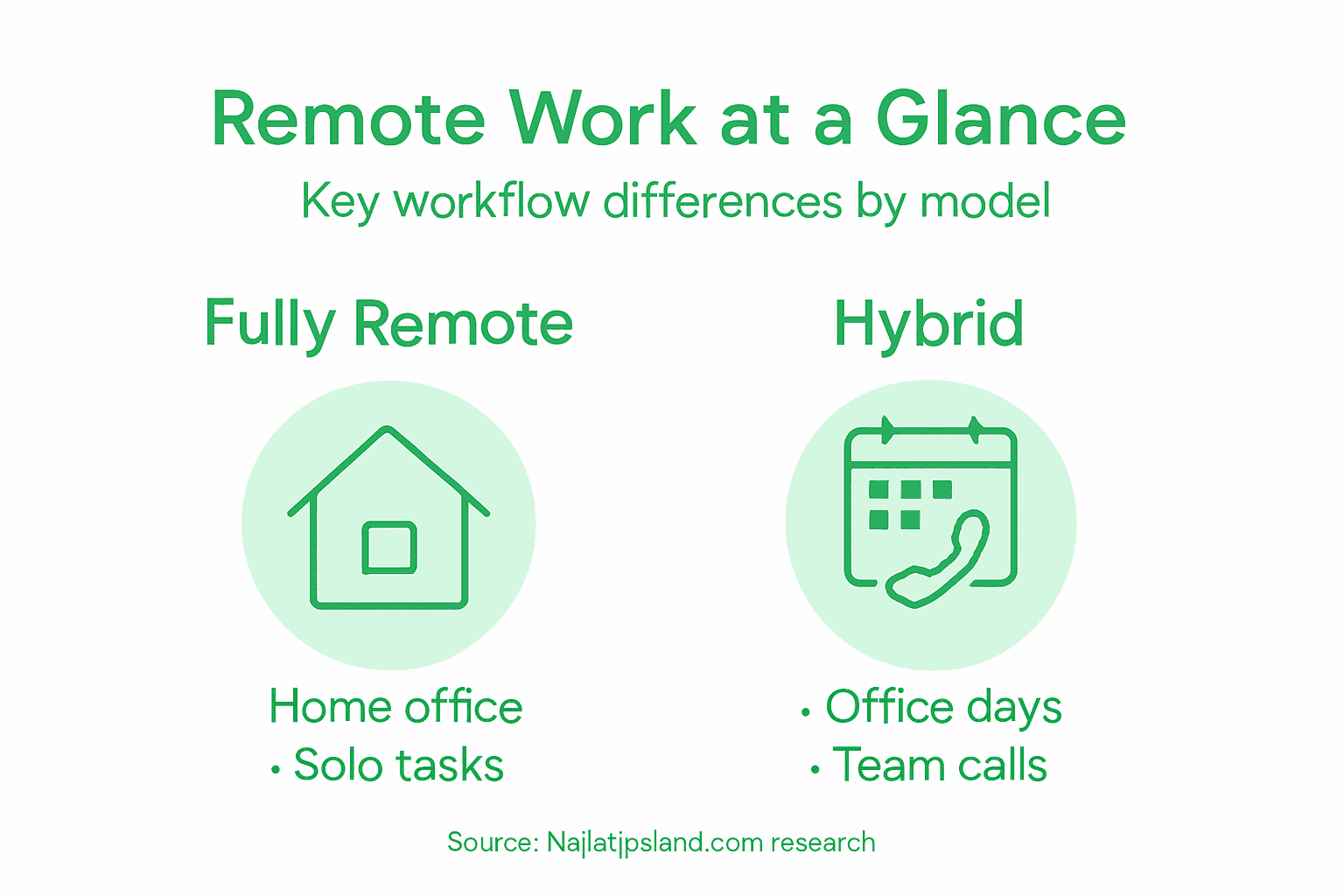
Remote work means different things depending on who you ask, and that’s where confusion starts. At its core, remote work describes any job arrangement where employees work outside a traditional office environment, typically from home or other locations with internet access. However, this definition oversimplifies a complex reality. Research shows that remote work spans multiple categories, including telecommuting (occasional work-from-home arrangements), fully distributed roles where employees never enter an office, hybrid positions mixing office and remote days, and virtual team setups where collaboration happens entirely online. The type of remote arrangement matters significantly because outcomes vary dramatically based on structure, frequency, and company culture.
Many Nigerians considering remote work careers encounter persistent myths that can cloud decision-making. The biggest misconception is that remote work means simply sitting at home, relaxing, and being productive whenever you feel like it. That’s fiction. Real remote work requires discipline, clear boundaries between work and personal life, and often more communication than traditional office jobs. You cannot coast through projects unnoticed when you’re working virtually. Every output, every deadline, every interaction gets documented because everything happens through digital channels. Another widespread belief is that remote work automatically reduces productivity and that employees slack off when unsupervised. The data tells a different story. Productivity depends on individual work habits, role suitability, and company systems, not office proximity. Some people thrive working remotely and produce exceptional results. Others struggle without in-person structure. There’s no universal outcome.
Another critical misconception is that all remote roles are the same. They absolutely are not. Some positions genuinely suit remote work, while others don’t. Software development, content writing, customer service, virtual assistance, and data analysis typically work well remotely. Jobs requiring hands-on collaboration, immediate face-to-face problem-solving, or specialized equipment are harder to execute fully remote. Additionally, many people assume remote work means abandoning Nigerian professional networks and opportunities. That’s backward thinking. Remote work actually opens doors to international employers paying in currencies stronger than the Naira while keeping you connected to local professional communities. You’re not choosing between global and local, you’re accessing both. Finally, people often believe remote positions require less technical skill or offer lower compensation than office roles. Wrong again. Top remote positions demand the same expertise, often more, since you cannot rely on proximity to supervisors for guidance. Many international companies pay premium rates for skilled remote talent, including experienced Nigerian professionals.
Understanding how remote work’s degree of virtuality influences outcomes helps you make realistic decisions about your career path. Whether you work fully remote, hybrid, or in occasional work-from-home arrangements shifts your experience dramatically. A truly distributed team where everyone works remotely operates entirely differently from a hybrid setup where some colleagues sit in the office. You’ll face different challenges, different collaboration styles, and different career visibility concerns. The key is matching your work style and life circumstances to a realistic assessment of what remote work actually demands, not what social media suggests it offers.
Pro tip: Before accepting a remote position, ask the employer detailed questions about team structure, communication expectations, whether meetings happen during specific time zones, and how success gets measured. These answers reveal whether the role suits your work style far better than job title or salary alone.
Types of Remote Work Roles and Environments
Remote work isn’t one size fits all. The types of roles and work environments vary dramatically depending on industry, company structure, and job function. Understanding which category fits your skills and lifestyle helps you target the right opportunities and set realistic expectations. Remote work roles vary widely across industries and suitability, with some positions naturally suited to distributed teams while others require physical presence or specialized coordination. The three primary remote work categories Nigerian professionals encounter are fully remote positions, hybrid arrangements, and flexible work-from-home options, each with distinct advantages and challenges.
Fully Remote Roles
Fully remote positions mean you work exclusively from a location of your choice, never entering an office. These roles typically include software developers, content writers, virtual assistants, digital marketing specialists, customer support representatives, data analysts, and project managers. Companies offering fully remote positions usually operate as distributed teams where remote work is the default, not an exception. Team members sit across different cities, countries, or continents. Communication happens asynchronously through email, project management tools, and scheduled video calls rather than corridor conversations. Fully remote roles suit people who thrive with independence, prefer structured communication, and work well across time zones. The upside is flexibility, often competitive international compensation, and no commute stress. The downside is complete responsibility for maintaining boundaries between work and personal space, potential isolation, and limited spontaneous collaboration. For young Nigerian professionals, fully remote international roles unlock earning potential in foreign currency while maintaining flexibility to live anywhere.

Hybrid and Flexible Arrangements
Hybrid work means splitting time between office and home, typically two to three days in office weekly. This arrangement attempts to balance in-person collaboration with remote flexibility. Flexible work-from-home options let employees choose when and where they work within broader guidelines, often requiring occasional office presence for meetings or team building. Different remote work models across industries and regions show that hybrid arrangements dominate many traditional industries including finance, consulting, and corporate operations. These roles suit people who want office camaraderie but don’t need daily commutes. You get face-to-face connection with colleagues, access to office resources, and clearer work boundaries. The challenge is commuting on office days, less schedule predictability, and the pressure of appearing visible when in office. For Nigerians working for Nigerian companies transitioning to hybrid models, this offers remote benefits without completely severing office relationships.
Platform and Gig-Based Remote Work
A growing segment involves platform-based work where you complete individual projects or tasks through online marketplaces. Freelance writing, graphic design, virtual bookkeeping, and digital consulting fall into this category. You control your schedule and client roster entirely, but income fluctuates, benefits are nonexistent, and you manage all your own business operations. This suits entrepreneurial professionals building personal brands. Another emerging category is asynchronous knowledge work, where you produce deliverables on flexible deadlines rather than in real-time collaboration. This particularly suits Nigerians managing multiple time zone differences with international clients. You can work during your preferred hours, submit work when ready, and let clients review without needing synchronous meetings.
Practical Comparison
Choosing between these options depends on your priorities. Full remote roles offer maximum flexibility and international opportunity but require discipline and self-motivation. Hybrid positions provide structure and social connection but demand commuting and less schedule control. Platform work maximizes autonomy but sacrifices stability and benefits. Consider your work style, financial needs, career growth goals, and whether you prefer team-based or independent work before applying.
Here’s a summary comparing the main remote work models in Nigeria:
| Model Type | Typical Roles | Benefits | Challenges |
|---|---|---|---|
| Fully Remote | Software development, writing | Maximum flexibility, global pay | Isolation, blurred boundaries |
| Hybrid | Finance, consulting | Social connection, office access | Commute, less control of schedule |
| Platform/Gig-Based Remote | Design, consulting, freelance | Total autonomy, diverse clients | Income instability, no benefits |
Pro tip: When evaluating any remote position, ask whether the role is designed as remote from inception or converted to remote later, since roles designed for remote work have better tools, processes, and team culture than afterthought remote options.
How Remote Work Operates in Practice
Remote work looks clean on paper, but the daily reality involves complex coordination, deliberate communication protocols, and organizational shifts that most people overlook. When companies transition to remote operations, they don’t simply move desks to homes. They restructure how work gets assigned, monitored, communicated, and completed. How employers adjust management techniques for remote environments reveals that organizations must recalibrate surveillance systems, performance measurement, and oversight methods entirely. Traditional managers who relied on seeing employees at desks must shift to outcome-based evaluation. Micromanaging becomes impossible and counterproductive when you cannot see someone’s screen. This forces companies to define clear deliverables, deadlines, and success metrics instead of clock-watching. For Nigerian professionals accustomed to traditional management styles, this shift can feel both liberating and disorienting.
Communication becomes the operational backbone of remote work. In a physical office, you grab a colleague for a quick question. Working remotely, that casual chat must happen through chat apps, email, or scheduled calls. This sounds inefficient, but it actually creates better documentation. Every discussion gets recorded in writing, reducing misunderstandings and creating accountability. However, this also means communication requires more intentionality and clarity. You cannot rely on tone of voice or body language to convey meaning, so written communication must be precise. Meetings shift from optional time-wasters to essential coordination moments. Many remote teams operate across time zones, so meetings must work for everyone or rotate times fairly. Some companies adopt asynchronous communication where team members respond within hours rather than real-time, reducing meeting fatigue. Project management tools like collaboration and trust mechanisms in remote work become central to how work flows. Tasks, deadlines, dependencies, and progress all live in shared digital spaces. Your manager tracks progress through project updates, completed deliverables, and regular check-ins rather than by watching you work.
Daily Operations and Workflow Changes
Remote work fundamentally changes how work gets organized and tracked. Rather than walking to someone’s desk or gathering in conference rooms, remote teams schedule focused video calls with clear agendas. Decisions that once happened in hallway conversations now require formal communication and documentation. This creates a paper trail protecting everyone but also requiring more deliberate workflow. Most remote companies implement asynchronous workflows where work doesn’t depend on real-time responses. You send a message, get feedback within hours, and progress independently. This suits distributed teams across time zones. Synchronous work happens during overlapping hours when real-time collaboration is necessary. Successful remote operations blend both approaches. Many teams schedule “core hours” where everyone works simultaneously for collaboration, with flexibility outside those windows. This maintains connection without forcing Nigerian professionals to work middle-of-the-night schedules.
Management styles shift dramatically in remote environments. Traditional hierarchies flatten because visibility of individual output increases. Your work speaks for itself rather than your presence earning credit. Micromanagement collapses because managers cannot monitor activity continuously. Instead, trust becomes the operating principle. This benefits self-motivated professionals but challenges those needing close supervision. Career advancement in remote companies depends more heavily on demonstrable results than office visibility. You cannot lean on proximity to leadership or being noticed in meetings. Your contributions must stand out through quality deliverables, reliability, and communication. Additionally, remote work requires stronger self-management skills. Nobody forces you to start working on time, take proper breaks, or stop when exhausted. You must create structure yourself. Many Nigerians find remote work demands more discipline than office environments because distractions at home compete with work responsibilities. Children, visitors, chores, and personal tasks blur into work time without intentional boundaries.
Pro tip: Create a dedicated workspace even if small, establish a consistent work schedule your team knows, and overcommunicate status updates proactively rather than waiting to be asked, since remote managers cannot see your progress without explicit communication.
Essential Tools and Skills for Remote Success
Succeeding in remote work requires far more than a laptop and internet connection. You need specific tools that keep teams coordinated and soft skills that replace face-to-face communication. The right combination of technology and interpersonal abilities determines whether you thrive or struggle working virtually. Digital competencies and communication skills directly influence remote work outcomes, affecting job satisfaction, mental well-being, and actual performance. Nigerian professionals entering remote roles must invest in developing both technical proficiency with workplace tools and stronger written communication abilities. The technical requirements vary by role, but soft skills matter universally.
Essential Tools for Remote Work
Every remote worker needs reliable internet connectivity first. This sounds basic, but unreliable internet ruins remote work. You cannot attend meetings with constant disconnections or upload deliverables that fail mid-transfer. In Nigeria, where internet reliability varies by location, choosing a stable provider or having backup options becomes critical. Beyond connectivity, you need collaboration software that your company provides. Common platforms include Slack or Microsoft Teams for messaging, Zoom or Google Meet for video calls, Asana or Monday.com for project management, and Google Workspace or Microsoft Office for document creation. Learning these tools before starting prevents scrambling during your first week. Most companies offer training, but arriving with basic familiarity accelerates your productivity.
You also need communication and documentation tools. These include email platforms, file storage systems like Google Drive or Dropbox, and note-taking apps for keeping track of decisions and action items. A reliable calendar system is essential for scheduling across time zones. Nigerians often work with teams across Europe, America, and Asia, so understanding time zone differences and scheduling tools prevents meetings at impossible hours. Finally, invest in productivity tools suited to your role. Writers need distraction-free writing apps. Designers need design software. Analysts need data visualization tools. These are role-specific but equally important as communication platforms.
For international success, these remote tools and skills are essential:
| Tool/Skill | Business Impact | Why It Matters for Nigerians |
|---|---|---|
| Stable Internet | Enables seamless communication | Prevents missed meetings, deadlines |
| Collaboration Software | Organizes teamwork, tasks | Facilitates working across time zones |
| Written Communication | Reduces errors, builds trust | Critical for email-based relationships |
| Self-Management Skills | Maintains productivity and reliability | Ensures discipline without supervision |
Critical Skills Beyond Technology
Technology alone never guarantees success. You need written communication skills that far exceed typical office requirements. Remote communication happens through email, chat, and project comments where tone is invisible. Your writing must be clear, concise, and professional because nobody hears your voice’s warmth or sees your friendly facial expression. Ambiguous messages cause misunderstandings that take hours to untangle asynchronously. Practice explaining complex ideas simply in writing. Get feedback from colleagues on your communication clarity. Another crucial skill is self-discipline and time management. Remote work offers freedom that can become dangerous. You must start working on time, maintain focus without supervision, take appropriate breaks, and actually stop working at day’s end. This separates successful remote workers from those who burn out or fail to deliver.
Proactive communication matters tremendously. You cannot wait for managers to ask how projects progress. Update stakeholders regularly without being prompted. Flag issues early before they become crises. Ask clarifying questions rather than guessing requirements. In offices, people overhear conversations and stay informed. Working remotely, nobody knows your challenges unless you voice them explicitly. Additionally, develop strong digital collaboration skills. This means understanding how to share documents effectively, providing constructive feedback on digital platforms, managing video call etiquette, and contributing meaningfully in virtual meetings. Mastering collaboration software alongside interpersonal skills enhances organizational performance in remote settings. You must balance technology proficiency with genuine human connection. Remote work demands being present during calls, responding promptly to messages, and showing reliability through consistent delivery.
Building Confidence in Remote Environments
Many Nigerians experience imposter syndrome working remotely because they cannot gauge whether colleagues consider them capable. Develop remote working self-efficacy, which means believing in your ability to succeed in distributed environments. This grows through small wins, getting positive feedback, and seeing your contributions matter. Many remote professionals struggle initially but improve dramatically after three months as they master tools and establish communication patterns. Do not judge yourself harshly during your first month. You are learning simultaneously the role, the company culture, the tools, and remote work dynamics.
Pro tip: Set up your communication preferences explicitly with your manager during your first week: preferred communication channels, response time expectations, and how you prefer receiving feedback, since clarity prevents misunderstandings and shows professionalism in remote environments.
Benefits, Challenges, and Legal Implications
Remote work offers genuine advantages that explain its explosive growth, but those benefits come packaged with real difficulties that deserve honest discussion. Understanding both sides helps you make informed decisions about whether remote roles suit your situation and what adjustments you need to make. The picture is far more nuanced than social media suggests, with benefits and challenges varying dramatically based on individual circumstances, company culture, and role type.
Clear Benefits of Remote Work
The most obvious benefit is schedule flexibility. You control when you work within agreed parameters. No commute means recovering two to three hours daily. For Nigerians in Lagos traffic, this alone is transformative. You can start work at 7 a.m. or 10 a.m., work through lunch, and finish earlier. You attend medical appointments without requesting time off. You pick up children from school without explaining to supervisors. This flexibility particularly benefits parents, people with health conditions, and those managing caregiving responsibilities. Another major benefit is cost savings. No commute means saving money on transportation, car maintenance, and fuel. You avoid buying work clothes constantly. You eat meals at home rather than purchasing lunches. Over a year, these savings become significant for professionals earning in Naira while managing Nigerian living costs.
Remote work also enables access to global opportunities. You work for international companies paying in dollars or euros without relocating. You maintain your Nigerian life, relationships, and networks while earning premium international salaries. This geographic arbitrage has transformed earning potential for skilled Nigerian professionals. Additionally, remote work offers improved work-life balance potential. Without office politics, unnecessary meetings, and commute stress, many people report better mental health and more time for personal interests. You can live in locations you prefer rather than where jobs concentrate. The environmental benefits are real too. Less commuting means reduced carbon emissions. Companies operating remotely require smaller physical offices.
Significant Challenges Worth Acknowledging
However, remote work introduces challenges that many people underestimate. Isolation and loneliness affect many remote workers. You lose casual colleague interactions, spontaneous conversations, and social connection that offices provide. For extroverts or people new to professional environments, this isolation becomes genuinely difficult. You must actively build community and relationships through intentional effort. Work-life boundary blurring presents another challenge. When your bedroom doubles as your office, work never truly ends. You think about tasks during personal time. You answer emails late at night. Remote work challenges including workload intensification and isolation affect many workers globally. Without clear boundaries, remote work can demand more hours than traditional employment. Burnout becomes a real risk when nobody monitors whether you are overworking.
Career visibility challenges emerge too. In offices, leaders see your contributions constantly. Working remotely, you remain invisible unless you actively communicate accomplishments. This particularly disadvantages women and minorities who already face visibility gaps. Promotions may favor people visible in office meetings. Additionally, internet and infrastructure reliability remains problematic in Nigeria. Power outages, unstable connections, and expensive data packages create stress in remote roles. You cannot attend critical meetings if your power fails. This technical reality affects job security and performance ratings. Finally, legal frameworks for remote worker protections remain developing globally, creating uncertainty around employment rights, tax obligations, and liability.
Legal and Contractual Considerations
Before accepting remote positions, understand the legal implications. Tax obligations vary based on where you work and where your employer operates. Nigerian residents working for foreign companies often owe taxes to both countries depending on agreements. Your employer might not withhold taxes, leaving you responsible for calculating and paying them. Failing to do so creates serious legal consequences. Employment protection differs between countries. Nigerian employment law provides certain worker protections that international companies might not honor for remote workers. Contracts should specify whether you receive benefits, how notice periods work, whether you can be terminated remotely, and what happens to your employment if you relocate. Data privacy and security become your responsibility when working from home. You must protect company information in your personal space. If you are hacked or lose devices containing sensitive data, you bear liability. Additionally, understand insurance coverage. Home office injuries might not qualify for workers compensation. You may need personal liability insurance. Ask your employer what coverage applies to remote work.
Before signing remote employment contracts, clarify several legal points with your employer. Confirm whether your contract specifies remote work as permanent or temporary. Verify how Nigerian labor law applies to your situation. Understand tax filing responsibilities and whether your employer assists with cross-border tax compliance. Confirm whether you have written employment agreements protecting both parties. Ask about dispute resolution procedures if issues arise.
Pro tip: Before accepting any remote position with an international company, consult a tax professional familiar with Nigerian tax law to understand your obligations, or at minimum request that your employer clarify in writing whether they handle withholding for remote workers or whether you manage taxes independently.
Unlock Your Potential in the New World of Remote Work
Remote work comes with exciting opportunities as well as real challenges like isolation, blurred boundaries, and the need for strong self-discipline. If you are a Nigerian professional navigating these complexities or seeking reliable information to make informed decisions about your remote career path, Naijatipsland.com offers a vibrant community and trusted news platform tailored for you. Stay updated with the latest discussions on career strategies, productivity tips, and how modern work dynamics impact Nigerians both locally and globally.
Explore practical insights and share your experiences with others on Naijatipsland.com. Join a network where you can participate in conversations about remote work trends, access valuable resources, and empower yourself to thrive in fully remote, hybrid, or gig-based roles. Start engaging today to turn challenges into opportunities and connect with a growing Nigerian community focused on success in the digital age.
Frequently Asked Questions
What defines remote work?
Remote work refers to any job arrangement where employees work outside of a traditional office environment, such as from home or other locations with internet access. It can include fully remote roles, hybrid positions, or flexible work-from-home options.
How does remote work impact productivity?
Productivity in remote work depends on individual work habits and the company’s systems, rather than just the physical location. Some people excel in remote environments, while others may struggle without the structure of an office.
What types of remote work roles are available?
Remote work roles vary widely and include positions like software development, content writing, digital marketing, customer support, and data analysis. The suitability of a role for remote work can significantly impact the work experience and outcomes.
What are the challenges of working remotely?
Common challenges of remote work include feelings of isolation, difficulties in maintaining work-life boundaries, reduced visibility for career advancement, and the need for strong self-management skills. Additionally, technical issues like unreliable internet connections can pose problems.
Recommended
- ECN Upgrades Information Processing Techniques For Digital Transformation / Naijatipsland
- SRT Marine Systems: A Leader In Marine Technology / Naijatipsland
- US Stocks: Opt For Resilience, Growth And Value / Naijatipsland
- All About Japan’s ‘investor-friendly’ Crypto Tax Overhaul Plan For 2026 / Naijatipsland
- The Benefits of Online Therapy – Dr. Stephen Oreski & Associates
- Remote Work Disputes and Employee Privacy in Costa Mesa | Serendib Law Firm
- Cómo la IA transforma el empleo y la estrategia laboral – Bit2Brain