

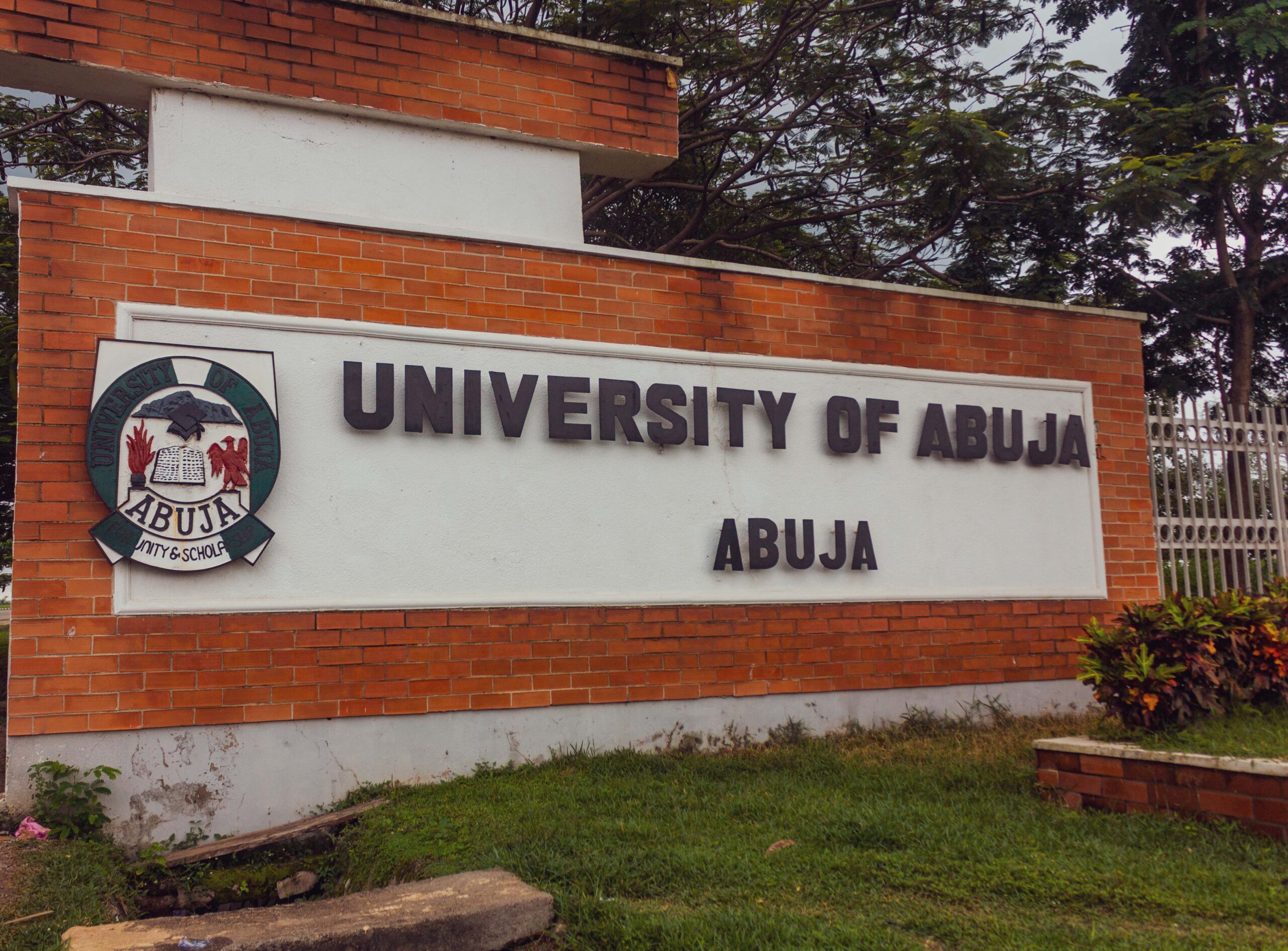
Raheem Akingbolu looks at a changing University of Abuja and its ambitions to place human-centred technology, innovation and knowledge at the centre of the capital’s economic and development agenda
A country’s capital is often judged by the buildings that define its skyline, but its enduring influence is measured by the ideas it produces. Abuja was built as Nigeria’s political and administrative capital. It is now taking on another identity, as a place where knowledge, innovation, and enterprise are beginning to shape the city’s wider development story. At the centre of this evolution is the University of Abuja, now Yakubu Gowon University, gradually establishing itself as one of the institutional signposts of the Federal Capital Territory’s intellectual and developmental ambitions.
The change is not about one building, one project or one announcement. It is the cumulative effect of several things happening at once. The university is strengthening its energy infrastructure, linking research more closely to enterprise, exposing students to entrepreneurial opportunities and cultivating relationships beyond Nigeria’s borders. Investments in health sciences, accommodation, ICT and other facilities are also expanding the institution’s ability to serve a growing academic community.
One of the clearest signs of this new direction came in August 2026, when the university launched its Enterprise University Initiative under the theme, ‘Innovative Agriculture as a Tool for Sustainable Enterprise Growth and Youth Empowerment’. Supported by the Federal Ministry of Education, the initiative aims to take knowledge beyond academic publication and connect it with practical application, commercialisation, and job creation. The idea goes beyond adding another programme to the university calendar. It speaks to a changing understanding of what higher education should deliver.
In an economy where young graduates compete for limited formal employment, a degree alone may not be enough. The emerging approach is to give students the confidence and practical capacity to create value, develop ventures and pursue opportunities of their own.
International engagement is adding another layer. Increasingly, the university is looking beyond its immediate academic environment to build relationships that can expand access to global knowledge, expertise and opportunities. In a city that hosts diplomatic missions and international institutions, this outward-looking approach gives the university a natural platform for connecting scholarship with the wider world.
Its recent engagement with the Saudi Arabian Embassy in Abuja, alongside a developing partnership with the Federal Ministry of Foreign Affairs and its selection to pilot the ECOWAS Club initiative, reflects that growing international orientation. The proposed collaboration with the Foreign Affairs Ministry covers diplomatic training, policy research, migration management, staff and student exchanges and professional postgraduate training. It also creates opportunities for interaction between the university and members of the diplomatic corps.
Location makes this particularly relevant. Abuja is home to embassies, government ministries, international organisations and regional institutions. Few Nigerian universities operate so close to this concentration of diplomatic and policy activity. That proximity offers a chance to turn the capital itself into an extended classroom, where academic work can engage directly with questions of diplomacy, development, governance and international cooperation.
Energy is another part of the story, though it is easy to overlook because reliable power is often noticed only when it is absent. For a modern university, electricity touches almost every aspect of academic life. Laboratories require it, research requires it, and digital learning requires it. So do campus security, administration and the everyday activities that allow students and staff to work effectively, often late into the evening.
Against this background, the recent inauguration of a major solar-hybrid power project under phase II of the Federal Government’s Energising Education Programme is an important marker. Delivered by the Rural Electrification Agency through the Nigeria Electrification Project, with World Bank support, the project features a 3.3 MWp solar array, 3 MW of AC output capacity, 2 MWh of battery storage and 388 streetlights.
Its value goes beyond reducing dependence on diesel generators. More dependable power can improve teaching, research and laboratory services, while the renewable-energy installation itself provides a practical environment where students can see sustainable technology at work. The project also includes a renewable energy workshop and training centre, giving the intervention an academic dimension that fits naturally into the university’s growing emphasis on research, skills and innovation.
This push is happening alongside wider expansion. A ₦4 billion TETFund-backed Health Sciences project is strengthening facilities for medical and health-related programmes, while a 1,500-bed hostel project through a public-private partnership is addressing accommodation. Earlier Central Bank of Nigeria interventions also contributed engineering facilities, postgraduate hostels and ICT centres.
Buildings and equipment, however, tell only part of the story. A university ultimately lives through the quality and relevance of the knowledge it produces. Research, inaugural lectures, and academic work covering areas such as climate resilience and digital communication contribute to the university’s intellectual presence and connect its scholarship with issues that matter beyond the campus.
The links between these strands are becoming clearer. Reliable energy creates better conditions for research. Research can become the raw material for enterprise. Enterprise can give young people another route into the economy. International partnerships bring new ideas, expertise and networks. Infrastructure provides the setting in which these possibilities can develop.
This is why the University of Abuja’s current evolution matters to the FCT. Abuja’s future will not be defined only by government buildings, diplomatic missions and the impressive architecture of a planned capital. It will also be shaped by what happens in its universities, by the questions researchers ask, the ideas students develop and the solutions they take into society.
The University of Abuja is increasingly part of that story. Its emerging role brings together education, enterprise, research, international engagement and sustainable development in ways that reflect the changing needs of the capital. This direction gives the university significance beyond its campus, placing it within the broader effort to build a more productive, connected, and knowledge-driven Federal Capital Territory.
Abuja was conceived around Nigeria’s future. If that future will be defined as much by ideas as by institutions, then the emergence of a knowledge economy is not just an institutional ambition for the University of Abuja. It is the university carving out a distinctive place in the evolving story of the FCT, a federal capital steadily expanding its role as an economic and conference hub in Africa.