Trump calls on Ukraine to stop targeting Russian refineries as both countries trade strikes

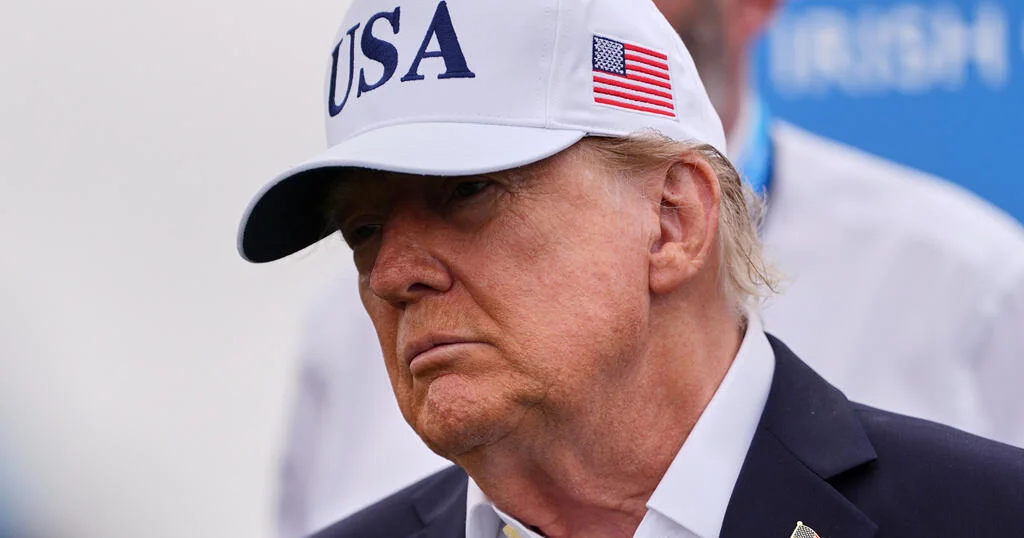
President Trump on Sunday called on his Ukrainian counterpart to halt strikes on Russian refineries, saying the attacks are causing a shortage of diesel.
Mr. Trump, who is in Ireland watching the Irish Open at one of his golf courses for the weekend, was asked by a reporter if he had spoken with Ukrainian President Volodymyr Zelenskyy following his recent conversation with Russia’s Vladimir Putin. The U.S. president responded by calling on Zelenskyy to halt strikes against Russia.
“Mr. Zelensky has to do one thing. He has to stop knocking out diesel fuel in Russia,” Mr. Trump said. “Let him go after targets but not diesel fuel, because he’s causing a shortage of diesel fuel.”
Ukraine’s recent long-range strikes have targeted Russia’s oil and gas industry, which Kyiv says both funds and directly fuels its war on Ukraine. The Ukrainian drone campaign has caused fuel rationing across Russia, despite the country being a key oil and gas exporter. Other Ukrainian strikes targeted major Russian online retailers, bringing the war ever closer to the public.
Mr. Trump’s remarks come as Russia and Ukraine continued overnight waves of drone attacks.
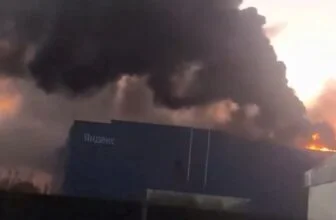
Two people were killed in Russia’s Tatarstan, according to local officials. At the same time, Ukrainian authorities reported Russian drone attacks on the Black Sea port of Odesa and a fire near a border crossing with Poland.
Russia has ramped up its air campaign in recent weeks, using ballistic missiles and jet-powered drones to pierce Ukraine’s defenses and capitalize on Kyiv’s dwindling stock of missile interceptors. Moscow’s attacks have targeted Ukraine’s power grid ahead of winter in what officials say is meant to demoralize civilians.
Arthur Shvits/Anadolu via Getty Images 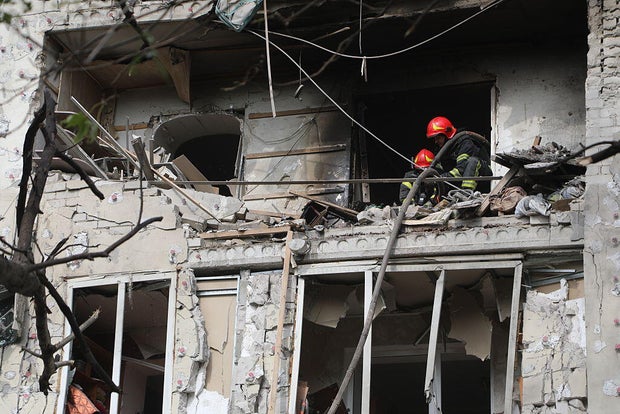
Russia hits train shortly after Western officials passed
A Russian drone targeted a train near the Ukraine-Poland border shortly after trains with top Western figures — including ex-CIA Director David Petraeus, former U.K. Prime Minister Boris Johnson and former Swedish Prime Minister Carl Bildt— passed through, Ukraine’s rail operator Ukrzaliznytsia said in a statement.
No casualties were reported after the Russian strike at Yahodyn, which hit the train’s engine. All the passengers had been evacuated, Ukrainian authorities said. Russia said it struck “railway infrastructure” in western Ukraine.
“Quite possibly, the target of this drone could have been the diplomatic train, which had left the station earlier than expected because of the timetable change… due to constant threats of Russian strikes,” Ukrzaliznytsia said.
CBS News partner BBC News said Johnson, Petraeu and other European senior security advisers passed along the same train line on their way back from a conference in Kyiv.
Johnson condemned the attack as “random and senseless” in a post on social media.
“I don’t know what warped logic drove Putin to blow up a stationary Ukrainian locomotive on the Polish border this morning,” Johnson said. He asked, “When are we going to give them the air defences they need?”
Russia said Sunday it struck “railway infrastructure” in western Ukraine used to “transport military cargo” from Europe, Agence France-Presse reported.
“Strikes have continued on railway infrastructure in the western regions of Ukraine, which are used to transport military cargo from European countries,” Moscow’s defense ministry said in a statement.
Kremlin open to restarting peace talks
On Sunday, Kremlin spokesman Dmitry Peskov said Moscow is open to restarting peace talks in the autumn featuring Russia, Ukraine and the U.S.
“We are not ruling out that possibility. We are specifically talking about the foreseeable future. That is, October cannot be ruled out,” Peskov told reporters.
Last weekend, U.S. envoys Jared Kushner and Steve Witkoff held talks with Putin in Moscow, followed by a meeting with Zelenskyy in Kyiv. Despite the latest diplomatic push, Moscow and Kyiv’s core demands remain mutually exclusive, especially over territorial concessions.
Kushner, who is Mr. Trump’s son-in-law, said Sunday that “territory is going to be the main issue, and, you know, that’s where the sides are still apart.”
“Our job as the mediator is to figure out how can we come up with a creative solution that doesn’t violate [Ukraine’s] desires and that helps them achieve, you know, their objective and does it in a way that we can get Russia to end the conflict in a way that hopefully, you know, allows both parties to move forward in a framework where this doesn’t happen again,” Kushner said.