
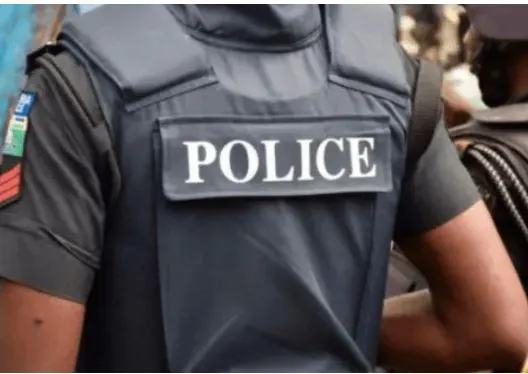
A steering committee working on the proposed State Police Service (SPS) has recommended a comprehensive and independent oversight structure designed to guard against political interference and abuse of power.
The committee, led by Prof. Olu Ogunsakin, made the disclosure in its report released to journalists on Sunday in Abuja.
Constituted by the Inspector-General of Police, Olatunji Disu, the panel acknowledged that political pressure would be unavoidable in the creation and operation of state police structures.
“The committee regards robust, independent, multi-layered accountability as the single most critical structural safeguard for ensuring that SPS serve their communities rather than their political patrons.
“The oversight architecture must be strong enough to withstand the full force of political pressure that will inevitably be brought to bear on it. A single oversight body, however well-designed, is vulnerable to capture.
“The proposed architecture creates overlapping, mutually reinforcing lines of accountability so that no single point of failure can permit systematic abuse to go unaddressed,” the report said.
According to the committee, strong accountability systems would be central to building public confidence and ensuring effective policing at the state level. It warned that without such safeguards, state police could quickly become feared institutions with diminished operational efficiency.
The report pointed to past accountability challenges within the Nigeria Police Force, including incidents highlighted during the #EndSARS protests, cases of extortion, and deaths in custody, as evidence of the risks posed by weak oversight mechanisms.
Read also: NRS debunks viral claim of new vehicle tax, labels infographic misleading
It noted that such experiences demonstrate how inadequate supervision can severely damage institutional credibility.
To address these concerns, the committee proposed the creation of State Police Service Commissions (SPSC) in each state as constitutionally independent bodies. Each commission, it recommended, should be chaired by either a retired High Court judge, a retired senior police officer, or a senior legal academic.
Membership of the commission would also include two individuals with expertise in public administration, a civil society representative with a human rights background, and a nominee from the state’s traditional rulers’ council. Additional members would include a women’s rights advocate and a youth representative under the age of 35.
The report proposed that members be appointed by state governors and confirmed by their respective State Houses of Assembly, with each serving a four-year term.
It further outlined the responsibilities of the SPSC, including the appointment, confirmation, and promotion of all state police personnel, as well as disciplinary control over officers, with powers to demote, suspend, or dismiss.
In addition, the commissions would oversee and approve state police budgets before submission to the legislature.
Their duties would also extend to reviewing quarterly and annual reports from the State Police Ombudsman, alongside performance data covering use of force, arrests, prosecutions, complaints, and detention conditions.
The report added that each commission would be required to publish an annual report detailing the performance and compliance of the State Police Service, making such information accessible to the public.