
Nigeria’s real sector, particularly manufacturing, is not yet out of the woods. But improved macroeconomic stability has sparked a noticeable uptick in output and competitiveness. This encouraging trend reflects bold — and often painful — economic reforms implemented in less than three years of President Bola Tinubu’s administration. Industry experts warn, however, that without disciplined and sustained policy execution, the hard-won gains could be reversed, undermining the sector’s full recovery, reports Assistant Editor CHIKODI OKEREOCHA
Real sector operators, especially manufacturers, are increasingly optimistic. They say most, if not all, of the deliberate and strategic economic reforms implemented by the President Bola Ahmed Tinubu administration to revive the struggling sector are now yielding significant results. These gains are rooted in the improved macroeconomic stability spurred by the suite of reforms introduced since May 29, 2023.
The diligent execution of targeted measures — including fuel subsidy removal, exchange rate unification, fiscal and tax restructuring, the floating of the naira, trade reforms, improved export processes, and the rebasing of the nation’s Gross Domestic Product (GDP) — has created a more manufacturing-friendly macroeconomic environment. This is reflected in relative naira stability, easing inflation, and steady economic growth, collectively driving the sector’s gradual rebound that began last year.
Confirming this positive trend, the Managing Director and Chief Executive Officer of Coleman Technical Industries Limited, Mr. George Onafowokan, said: “2025 was a stable year. We saw stability in the naira, inflation trended downwards, with economic growth of about 3.4 to 3.9 per cent, heading towards four per cent. That stability is a good thing for manufacturers.”
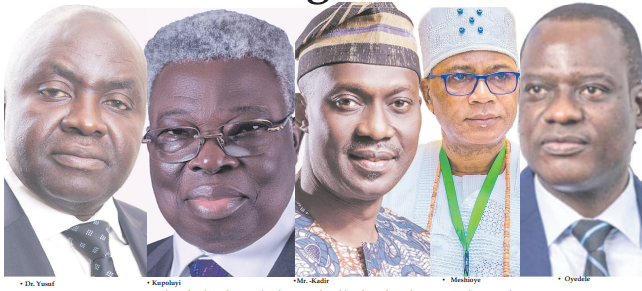
The President of the Lagos Chamber of Commerce and Industry (LCCI), Engr. Leye Kupoluyi, echoed this view, observing that “in 2025, the naira demonstrated notable stability against the dollar and other major trading currencies, reflecting improved market confidence and supportive policy conditions.” In his ‘State of the Economy Address’ delivered at the Chamber’s first press conference of 2026, Engr. Kupoluyi noted, for example, that “at the official foreign exchange market, the naira appreciated by 6.52 per cent, strengthening from N1,535.32/US$ at the end of December 2024 to N1,435.26/US$ at the end of December 2025.”
He added that a similar trend occurred in the parallel market, where the naira appreciated by 10.16 per cent, closing the year at N1,485/US$, compared with N1,653/US$ at the end of 2024. Convergence between the official and parallel market rates also improved during the year, with the exchange rate premium remaining within the maximum benchmark of five per cent, standing at 3.47 per cent as of December 2025. “This narrowing premium indicates reduced arbitrage opportunities and enhanced alignment between the two market segments,” Engr. Kupoluyi emphasised. He noted that on a quarter-on-quarter basis, exchange rate performance was mixed but relatively stable: the naira recorded a 2.68 per cent appreciation at the official window in the fourth quarter of 2025, while the parallel market saw a marginal 0.51 per cent depreciation over the same period. “Overall, the exchange rate dynamics in 2025 point to greater stability, improved market convergence, and growing confidence in the foreign exchange framework,” the LCCI President added.
Engr. Kupoluyi said the Chamber recognises that the relative stability of the exchange rate in 2025 reflects greater transparency in the foreign exchange market and stronger policy credibility. “These gains were further supported by a significant increase in external reserves, which rose to $45.5 billion by the end of 2025, enhancing the Central Bank of Nigeria’s capacity to manage liquidity, boost market confidence, and cushion the economy against external shocks,” he added.
Dr. Tayo Aduloju, Chief Executive Officer of the Nigeria Economic Summit Group (NESG), also affirmed the progress. In delivering the NESG’s ‘2026 Macroeconomic Outlook,’ titled Consolidating Economic Stabilisation Gains: Pathway to Sustainable Growth in Nigeria, he stressed that the bold and often challenging reforms of the past two years and eight months are beginning to deliver measurable results.
Caging the inflation monster
The pushback against inflation may well stand as the most visible proof that recent economic reforms are gaining traction. Nigeria recorded sustained disinflation in 2025, with headline inflation declining for eight consecutive months to 14.45 per cent in November — a 3½-year low. The moderation was driven by base effects, easing food prices, improved foreign exchange stability, and tight monetary policy.
This disinflation was not accidental. It reflected deliberate monetary tightening by the Central Bank of Nigeria (CBN), which kept the Monetary Policy Rate (MPR) at 27 per cent for most of the year to anchor inflation expectations and stabilise macroeconomic conditions. However, industry operators caution that lower inflation does not mean low prices. The President of the Manufacturers Association of Nigeria (MAN), Otunba Francis Meshioye, noted that although headline inflation eased from 27.61 per cent in January to 15.15 per cent in December 2025, price levels remained elevated.
Speaking at the 10th edition of the MAN Media Personality of the Year Award/2026 Presidential Media Luncheon in Lagos, Meshioye said the disinflation trend was partly supported by exchange-rate stability. The naira appreciated by 6.4 per cent during the year, closing at N1,443/US$ in December, compared with N1,541/US$ in January — the first annual appreciation in seven years. Still, he warned that persistent double-digit inflation continues to erode consumers’ purchasing power, dampening demand for manufactured goods. Despite these headwinds, he added, “the manufacturing sector demonstrated notable resilience.”
According to Meshioye, capacity utilisation rose to 61.3 per cent, up from 57.6 per cent in the second half of 2024. Export performance also strengthened, with the sector’s export value increasing to N978.53 billion in Q3 2025 from N803.8 billion in Q2. Manufacturing’s contribution to GDP averaged 8.36 per cent in Q3 2025, compared with 8.24 per cent in 2024. “That’s not all,” he said. “Sectoral growth remained positive, with output expanding by 1.69 per cent, 1.60 per cent, and 1.25 per cent in Q1, Q2, and Q3 2025 respectively, reflecting the underlying resilience of manufacturers despite a challenging operating environment.”
FX market stability and fuel subsidy reform
NESG CEO, Dr. Aduloju, also pointed to growing stability in the foreign exchange market, describing it as a clear departure from the crisis conditions of the past. He recalled that before the major reforms of mid-2023, Nigeria operated what many described as a “subsidised foreign exchange regime,” under which a managed float kept the naira artificially stable within a narrow band of N400/US$ to N462/US$. This engineered stability, he said, masked deep distortions.
The wide and persistent gap between official and parallel market rates created lucrative arbitrage opportunities, worsened market illiquidity, and accelerated the depletion of external reserves. Investor confidence weakened, foreign portfolio flows slowed, and many market participants retreated, leaving the economy fragile. A decisive shift began in June 2023 with the introduction of stabilisation reforms, including exchange-rate unification and a reduction in routine market interventions.
Although initially disruptive, the transition marked the start of a new, market-driven FX regime. “Within a relatively short time, market-based adjustments and improved forex inflows led to renewed stability,” Aduloju said, noting that the official rate settled at about N1,435.2/US$ by the end of 2025. He said this stability reflects stronger policy credibility, improved price discovery, and a rebound in international confidence. Since the reforms began, business sentiment and operating conditions have improved, as seen in leading indicators. The CBN’s Purchasing Managers’ Index (PMI) and the Stanbic IBTC Private Sector PMI stayed above the 50-point expansion threshold through most of 2024 and 2025. By March 2025, the Stanbic PMI reached 54.3 — its highest level since January 2024 — while the broader composite index remained above 53 throughout Q3 2025.
Fuel subsidy reform is another pillar of the stabilisation effort. Before its removal, the Federal Government spent vast sums subsidising petrol — reportedly about $10 billion in 2022 alone, equivalent to 2.2 per cent of GDP. According to the President’s Special Adviser on Information and Strategy, Mr. Bayo Onanuga, the subsidy regime placed a heavy strain on public finances and constrained spending on critical sectors such as health, education, and infrastructure. Its removal has since been widely described as a turning point. Beyond freeing up substantial fiscal resources for capital and infrastructure investment, fuel supply has become more stable, while allocations to state governments from the Federation Account Allocation Committee (FAAC) have risen significantly.
Game-changing tax reform
Even before the new Tax Act took effect on January 1, 2026, the Director-General of the Manufacturers Association of Nigeria (MAN), Segun Ajayi-Kadir, had expressed strong support for the reform. He voiced optimism that the new framework would usher in a more business-friendly tax system and finally curb the problem of multiple — and sometimes illegal — taxes imposed by different tiers of government.
That optimism appears well-founded. A central pillar of the reform is tax harmonisation, which streamlines revenue administration by consolidating more than a dozen federal tax laws into a single unified statute, while encouraging states to adopt a similar approach. The aim is to eliminate overlapping taxes and reduce the compliance burden on businesses.
The Chairman of the Presidential Fiscal Policy and Tax Reforms Committee, Mr. Taiwo Oyedele, has also assured manufacturers that the new tax laws contain provisions designed to stimulate inclusive growth and enhance the sector’s competitiveness. Speaking at a recent Hybrid Stakeholders’ Engagement held at MAN House in Ikeja, Lagos — themed “From Legislative Assembly to Factory Floor: What the New Tax Laws Mean for Nigerian Manufacturers” — Oyedele outlined several strategic benefits embedded in the reform. Among the most significant changes, he said, are tax exemptions for small companies, reduced compliance requirements for micro-businesses, and targeted investment incentives. Un der the new regime, manufacturers and other businesses with an annual turnover of N100 million or less are now fully exempt from Companies Income Tax (CIT).
While small and medium-sized firms enjoy a zero per cent CIT rate, the plan for larger companies is a phased reduction of the rate from 30 per cent to 20 per cent, bringing Nigeria’s corporate tax burden closer to globally competitive levels. Oyedele also highlighted the introduction of the Economic Development Incentive (EDI) scheme, which replaces the former “pioneer status” tax holiday. The EDI provides a five per cent annual tax credit for five years on qualifying capital expenditures, encouraging manufacturers to invest in modern machinery and advanced technology.
In addition, the new tax laws allow manufacturers to recover input Value Added Tax (VAT) on all purchases — including services and fixed assets. This removes the long-standing hidden cost of non-recoverable VAT, directly improving cash flow and lowering production costs. Another notable innovation is the establishment of a Tax Ombud to safeguard taxpayer rights and moderate excessive regulatory charges. According to Oyedele, the Ombud will serve as an independent and impartial arbiter with powers to conduct inquiries, initiate legal proceedings on behalf of taxpayers, and act as a watchdog against arbitrary tax practices. He said the reforms are intended to fix what he described as a “fragmented, complex, growth-inhibiting and regressive” tax system that has placed an excessive burden on Nigerians and businesses.
Other private-sector leaders share this assessment. The Chief Executive Officer of the Centre for the Promotion of Private Enterprise (CPPE), Dr. Muda Yusuf, noted that the reforms contain several positive elements, including relief measures for producers and priority sectors, higher exemption thresholds for low-income earners and small businesses, and zero-rated VAT on essential goods such as food, pharmaceuticals, and educational materials.
Similarly, the Director-General of the Lagos Chamber of Commerce and Industry (LCCI), Dr. Chinyere Almona, said the exemption of essential goods from VAT should help ease living costs. She emphasised the need for sustained stakeholder engagement, adding that harmonising Nigeria’s fragmented tax laws — alongside digital and institutional upgrades — would foster a more competitive and efficient business environment.
Resurgent non-oil export trade
Targeted trade reforms, improved export processes, and increased value addition across key sectors have driven notable progress in Nigeria’s export-led growth and diversification agenda. Non-oil exports rose by 21 per cent to $12.8 billion in the first half of 2025 — nearly double the $6.5 billion target — helping to generate a N12 trillion trade surplus over the same period. This performance reflects a broader expansion in trade activity, with overall trade value increasing by 14 per cent. Further gains are expected as ongoing trade facilitation measures and logistics infrastructure improvements continue to mature.
The Federal Ministry of Industry, Trade and Investment — the lead agency behind many of the sector’s policy reforms — highlighted these achievements in its 2025 performance review and 2026 outlook, released two weeks ago. The report assessed Nigeria’s economic repositioning under the current administration. According to the Ministry, the progress stems from deliberate and concrete actions aimed at strengthening industrial capacity, expanding exports, and restoring investor confidence.
Among the standout initiatives is the first-ever national mapping of digital services, which identified more than 200 firms across 17 sectors, providing a foundation for targeted support and export promotion in the digital economy. The Ministry also launched a dedicated Exports Air Cargo Corridor to East and Southern Africa in partnership with Uganda Airlines and the United Nations Development Programme (UNDP). The initiative has reportedly reduced logistics costs by between 50 and 75 per cent, significantly improving the competitiveness of time-sensitive exports.
In addition, Nigeria hosted the African Continental Free Trade Area (AfCFTA) Digital Trade Market Access Roundtable in Lagos, bringing together regulators from Egypt, Ghana, Kenya, Rwanda, and South Africa. The forum offered Nigerian businesses direct insight into market entry requirements, licensing rules, and regulatory processes in key African markets. Another milestone is the publication of a Market Intelligence Tool covering cosmetics, agro-processed products, and textiles across 13 African countries. According to the Ministry’s review, “these interventions have expanded access for manufactured and agricultural exports and enhanced the competitiveness of Nigerian goods and SMEs across regional markets.”
Electricity reform brightens hope of cutting N676.6b energy costs
Manufacturers have been under severe pressure. At last week’s Media Luncheon, MAN President, Otunba Meshioye, lamented that unreliable public power supply has forced manufacturers to depend heavily on alternative energy sources. As a result, the sector spent an estimated N676.6 billion on energy costs in the first half of 2025 alone.
The Electricity Act 2023, however, offers renewed hope. As part of the administration’s broader drive to ensure a more stable and reliable electricity supply for industries and households, the Act represents a major policy shift aimed at addressing the chronic power challenges confronting manufacturers. Widely regarded as a game-changer, the law removed electricity from the Exclusive Legislative List, devolving substantial authority over power generation, transmission, and distribution to the states. In practical terms, states can now independently generate, transmit, and distribute electricity within their jurisdictions.
Stakeholders across the electricity value chain view the reform as a decisive step toward decentralisation, improved supply reliability, and faster industrial growth — particularly in states prepared to act swiftly. The law also empowers states to establish their own electricity markets and regulatory bodies, and to license private investors without recourse to the Federal Government.
Boom time for manufacturers and businesses
Industry operators and analysts broadly agree that the manufacturing sector is regaining momentum, buoyed by targeted reforms implemented over the past two years and eight months. According to them, the sector is experiencing renewed growth, stronger investor confidence, and more strategic policy support for industries that form the backbone of the economy. The administration’s determination to stabilise the macroeconomic environment through wide-ranging reforms is gradually correcting distortions that once left manufacturing virtually on life support — heavily dependent on imported raw materials, machinery, and fragile global supply chains.
A growing emphasis on local production is now injecting fresh energy into the sector. The renewed push for the Buy Made-in-Nigeria campaign, the Nigeria First policy, and various incentives for domestic manufacturing are encouraging firms to scale up production and strengthen both local and international competitiveness. Under the Buy Nigeria campaign, the Federal Government aims to inject about N3 trillion into the economy in the short term, according to the Minister of State for Industry, Trade and Investment, Senator John Owan Enoh.
Tracking the initial pains and distortions
While Nigeria’s macroeconomic indicators now reflect tangible improvements on multiple fronts, signaling a clear break from the crisis conditions of the past, the path to these gains was far from smooth. The reforms that drove this progress came with significant short-term pain and disruptions for both manufacturers and the general public. The removal of fuel subsidies, exchange rate unification, and the floating of the naira triggered a sharp rise in the cost of living. Manufacturers faced major setbacks due to soaring energy and raw material costs, while interest rates spiked to as high as 36 per cent at certain points.
The naira’s depreciation made imported raw materials and machinery considerably more expensive, directly increasing production costs. High foreign exchange volatility disrupted production planning, leading to reduced output and, in some cases, temporary factory closures. Soaring inflation further compounded the challenges. Rising production and living costs, fuelled by a weak currency, pushed Nigeria’s annual inflation rate to a nearly 30-year high of 34.8 per cent in December 2024. The decline in consumers’ purchasing power caused a corresponding drop in demand for manufactured goods, further stifling growth and profitability.
Access to foreign exchange was another critical constraint. With limited availability, many manufacturers experienced production delays, and capacity utilisation fell due to the high cost of inputs. The abrupt removal of subsidies also sent transportation and energy costs sharply higher, with fuel, diesel, and gas prices skyrocketing. Electricity tariffs imposed by Distribution Companies (DisCos) rose by as much as 250 per cent, further inflating manufacturers’ operational expenses. Dr. Chinyere Almona, Director-General of LCCI, acknowledged that while necessary, these reforms imposed short-term hardships on businesses and households, particularly small and medium-sized enterprises (SMEs), which form the backbone of the Nigerian economy.
Push for consolidation of macroeconomic gains
Despite these initial challenges, there are encouraging signs that the manufacturing sector is stabilising. According to Mr. Onafowokan, “We see a positive outlook for growth… these developments could make 2026 a catalyst year for sustained strategic growth.” However, he cautioned that these measurable macroeconomic gains remain fragile and risk reversal without consistent and effective reinforcement policies.
Dr. Aduloju, CEO of the NESG, echoed this perspective, noting: “…the challenge now is to turn the fragile recovery into resilient and inclusive growth capable of withstanding future shocks and delivering sustained benefits to businesses, workers, and households across Nigeria.” He stressed that while the gains provide a critical platform, the next phase — consolidation — is essential. According to him, Nigeria cannot afford to pause or regress. “The demands of consolidation are as rigorous as those that drove the initial wave of reforms. Achieving robust transformation — characterised by productive job creation, poverty reduction, enhanced services, and global competitiveness — depends on unwavering courage, commitment and policy consistency.”