

The Federal Government is moving to tighten regulatory and tax controls within Nigeria’s Special Economic Zones as it seeks to curb the misuse of incentives, prevent the diversion of goods into the domestic market and restore the export-focused purpose of the scheme.
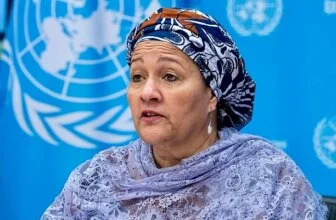
The Minister of Industry, Trade and Investment, Jumoke Oduwole, disclosed the government’s position on Tuesday at a stakeholders’ meeting on the Special Economic Zones, where she warned operators against practices capable of undermining the credibility of the scheme.
Among the practices identified by the minister are the diversion of goods from free zones into the Nigerian market, mispricing of transactions between related companies, understatement of domestic sales and the use of free-zone status by businesses that effectively operate within the Nigerian Customs Territory.
Oduwole said the government would take a stricter approach to compliance, particularly with the implementation of the country’s new tax regime.
“These unsavoury practices are not victimless practices. They damage the reputation of the entire scheme and bring the entire scheme at risk, particularly under the new tax regime,” Oduwole said.
“Compliance is a condition precedent. The Ministry can only defend a clean scheme.”
She explained that the government’s concern was partly driven by the competitive imbalance created when businesses operating within the Customs Territory are subjected to full domestic taxes and duties while competing against products benefiting from free-zone concessions.
According to the minister, manufacturers outside the zones import similar production inputs, employ Nigerian workers and meet their tax and duty obligations, making it necessary to ensure that free-zone incentives are not used in ways that distort competition in the domestic market.
The reforms are consequently aimed at reinforcing the original export orientation of the Special Economic Zone regime without removing legitimate incentives available to investors operating within the framework.
Oduwole said the government would provide greater clarity on the existing requirement that businesses in the zones should maintain a 75 per cent export and 25 per cent domestic-sales structure.
She added that products transferred from a free zone into the Nigerian Customs Territory would be subjected to the relevant customs requirements.
The proposed changes will also clarify the responsibilities of the government agencies involved in administering the zones.
Under the framework, the Nigeria Export Processing Zones Authority and the Oil and Gas Free Zone Authority will continue to oversee licensing and operations within their respective jurisdictions.
The Nigeria Revenue Service will be responsible for tax administration, while the Nigeria Customs Service will retain its statutory responsibilities covering customs control, valuation, classification and enforcement.
Despite the stronger compliance measures, Oduwole said the government was not seeking to discourage legitimate investment in the zones.
She disclosed that the Special Economic Zone scheme had attracted more than $200 billion in foreign investment and over ₦900 billion in domestic investment.
According to her, the investments have generated more than 100,000 direct jobs, while employment linked to supply chains, logistics networks and host communities has pushed the broader job impact above 500,000.
The minister said the objective of the reforms was therefore to provide investors with a more predictable and sustainable regulatory environment rather than weaken the free-zone system.
“Lawful incentives that support the purpose of the Zones remain critically important,” she said.
“We are making the framework clearer, more coherent and more sustainable so investors can plan with greater certainty and the integrity of the Scheme can be protected.”
She pointed to recent investments as examples of the type of economic activity the government intends to encourage through the zones.
Among them is Health Textiles Nigeria FZE, a subsidiary of Vestergaard, which recently commenced production at the Lagos Free Zone.
The company produces WHO-prequalified dual active-ingredient insecticide-treated mosquito nets and is projected to reach an annual production capacity of 10 million nets. The facility is also expected to employ more than 600 Nigerians once it reaches full scale.
Oduwole also referenced the Dangote Industries Free Zone, which houses the Dangote refinery and Africa’s largest granulated urea complex, as another major investment anchored within the free-zone framework.
She further highlighted the Lagos Free Zone, where the International Finance Corporation has taken an equity position of up to $50 million.
Beyond manufacturing and physical industrial activities, the government is also seeking to expand the scheme into emerging areas of the economy.
Oduwole disclosed that revised regulations being developed by NEPZA would provide for the establishment of Digital Free Zones and Digital Special Economic Zones for the first time in Nigeria.
The new provisions, she said, would accommodate technology-driven and non-physical businesses while creating new categories of licences for businesses operating in emerging areas where established regulatory frameworks may not yet exist.
One of the proposed categories is an Innovator Licence, which is expected to provide a regulatory pathway for enterprises operating in developing sectors.
The minister said the reforms were preceded by 19 months of consultations involving government institutions, members of the National Assembly and private-sector stakeholders.
She called on operators and other stakeholders to continue submitting recommendations to the Special Economic Zones Legislative and Regulatory Reform Committee to help shape the final regulatory framework.
According to Oduwole, the broader objective of the reforms is to reposition the Special Economic Zones as platforms for expanding Nigeria’s non-oil exports, attracting productive investment and supporting the Federal Government’s ambition of growing the economy to $1 trillion by 2030.