

Online discussions about Nigerian politics, entertainment, and trending news can quickly turn messy if users ignore the basics. For young Nigerians active on forums, understanding forum etiquette consists of guidelines for respectful and productive communication is crucial if you want your voice to be heard. Discover how recognizing key misconceptions and practicing these principles sets you apart, helping you build real credibility and foster engaging, meaningful conversations.
Table of Contents
- Defining Forum Etiquette And Common Misconceptions
- Types Of Forum Behavior And User Roles
- Core Principles Of Respectful Communication
- Responsibilities And Obligations For Forum Users
- Risks And Consequences Of Poor Forum Etiquette
Key Takeaways
| Point | Details |
|---|---|
| Respectful Communication is Key | Focus on attacking ideas rather than individuals to maintain constructive dialogue. |
| Understand User Roles | Recognize the different types of users, such as original posters, contributors, lurkers, and trolls, to engage effectively in discussions. |
| Cite Your Sources | Always provide sources for claims to build credibility and prevent misinformation. |
| Follow Community Guidelines | Adhere to the forum’s rules to foster a respectful and productive environment for all members. |
Defining Forum Etiquette and Common Misconceptions
Forum etiquette is not about being stiff or robotic in your posts. It’s about creating a space where real conversations can happen without descending into chaos. At its core, forum etiquette consists of guidelines for respectful and productive communication that keep discussions organized and valuable for everyone involved. Think of it like the unwritten rules you follow when visiting someone’s home—you wouldn’t shout over people, interrupt constantly, or throw insults around. Online forums work the same way. These guidelines cover practical things like using clear language, avoiding derogatory words and excessive slang, checking whether someone else already made your point, and respecting the time people invest in reading your posts. The goal isn’t to turn you into a corporate robot speaking only in formal sentences. Instead, it’s about making sure your words actually reach people and create genuine dialogue rather than just noise.
One massive misconception that trips up many Nigerian forum users is thinking that online discussions work like group chats with your friends. You type informally, use lots of abbreviations, drop jokes without context, and move on. That’s not how forum conversations function. Forum discussions demand structured, courteous interaction where people read your posts hours or even days later, without the benefit of your tone of voice or facial expressions to clear up misunderstandings. Someone browsing a Naijatipsland.com thread about politics or entertainment needs to understand your argument clearly, not decode it like a puzzle. Another common misconception is that forum etiquette means you can’t express strong opinions or disagreement. Wrong. You absolutely can challenge ideas. What you can’t do is attack the person behind the idea. Disagreeing with someone’s take on a policy is perfectly fine. Calling them names or suggesting they’re unintelligent because of their opinion crosses the line.
Here’s what actually matters in practice: use professional language without sounding like you’re writing a university thesis, cite your sources when you’re making claims about current events or facts, respect different perspectives even when you strongly disagree with them, and check if your point has already been made in the thread before posting the same thing again. These aren’t rules designed to stifle you. They’re designed to make sure your voice gets heard and your arguments matter. When you follow forum etiquette, you’re not losing personality—you’re gaining credibility. People take you more seriously. Your posts get engaged with. Discussions around you become more productive.
Pro tip: _Before hitting post, read your message as if someone else wrote it—would you think they sound angry, unclear, or like they’re attacking someone? If yes, revise before submitting.
Types of Forum Behavior and User Roles
Every forum develops its own ecosystem of user types, and understanding who does what helps you navigate interactions more effectively. The most visible role is the original poster, the person who starts a thread with a question, observation, or news item. They set the tone and direction for what comes next. Then you have active contributors who respond regularly, sharing knowledge, asking clarifying questions, and keeping conversations moving forward. These are often the most valued members because they invest time in meaningful engagement. But there’s a large group you might not notice at first: lurkers. These users read threads constantly without ever posting. They’re learning, absorbing information, deciding whether they trust the community enough to participate. On Naijatipsland.com, lurkers often become contributors once they see respectful discussions happening. Then there’s the problematic end of the spectrum where trolls operate. These users deliberately provoke conflict, post inflammatory content, or derail conversations just to get reactions. Understanding these diverse user roles helps navigate interactions and avoid conflicts within the community.
Beyond individual users, forums also have moderators who enforce rules and keep discussions on track. These aren’t always paid staff; many are experienced community members given authority to delete spam, lock threads that turn hostile, or issue warnings to disruptive users. Moderators are the backbone of healthy forums. Then there’s the spectrum of actual behavior people display. Constructive engagement means you’re sharing credible information, disagreeing respectfully when you disagree, and adding value to discussions. You’re the kind of person others want to see more of. On the flip side, disruptive behavior includes spamming (posting the same thing repeatedly or advertising products nobody asked about), trolling (intentionally starting fights), and going completely off topic when someone’s trying to have a serious conversation about Nigerian politics or entertainment. The middle ground exists too—people who mean well but haven’t learned proper forum habits yet. They might write walls of text without paragraph breaks, quote entire previous posts when they only needed one sentence, or post the same question three times because they didn’t wait for responses.
What matters for you is recognizing which category you fall into and which behaviors actually serve the community versus drain it. Proper forum behavior means abiding by the rules your specific community sets, respecting what the forum is actually about, and participating in ways that add something real. If you’re on a Nigerian news forum, posting about unrelated topics repeatedly gets old fast. If you see someone asking a genuine question, taking time to write a thoughtful answer creates value that benefits everyone reading later. The users who get respected in long-running forums are the ones who understand these dynamics and choose to be contributors rather than noise makers.
Pro tip: Spend your first week observing what kind of posts get positive responses and which ones get ignored or criticized, then model your behavior after the respected members rather than the dismissed ones.
Here is a comparison of typical forum user roles and their influence on the community:
| User Role | Primary Behavior | Impact on Community | Example Action |
|---|---|---|---|
| Original Poster | Starts new threads | Sets topic direction | Asks a topical question |
| Active Contributor | Responds, shares insights | Sustains discussions | Offers a detailed answer |
| Lurker | Reads without posting | Increases view count | Follows discussions silently |
| Troll | Provokes or disrupts | Creates conflict and noise | Posts inflammatory comments |
| Moderator | Enforces rules and order | Maintains healthy dialogue | Removes off-topic content |
Core Principles of Respectful Communication
Respectful communication online isn’t complicated, but it does require intention. The first principle is simple: attack the idea, not the person. When someone on Naijatipsland.com posts an opinion you disagree with, you can absolutely challenge that opinion. Pick it apart. Ask questions that expose weak logic. But the moment you shift from criticizing their argument to insulting their intelligence, character, or background, you’ve crossed into disrespect. This distinction matters because it keeps discussions focused on actual issues rather than devolving into personal feuds. Someone can learn from hearing their argument is flawed. They learn nothing from being called stupid.

The second core principle involves keeping discussions on topic and staying patient with the natural pace of forum conversations. Unlike real-time chats where you get immediate responses, forums move slower. Someone might take hours or days to reply to your point. That’s normal. Don’t interpret silence as dismissal or assume people are ignoring you. Also, if a thread is about Nigerian entertainment news, don’t suddenly start posting about cryptocurrency. Stay focused on what the thread is actually about. A third principle that often gets overlooked is using a respectful tone despite the lack of facial expressions and voice inflection. Core respectful communication principles include active participation, patience, and proper writing style to compensate for missing nonverbal cues. When you can’t see someone’s face or hear their tone, written words become everything. A sentence like “That makes no sense” reads as harsh and dismissive. The same idea phrased as “I’m not sure I follow your logic here—can you explain further?” opens dialogue instead of shutting it down. The tone difference is massive, and it costs you nothing but a few extra seconds to write.
Then there’s creating psychological safety through inclusive language and acknowledgment of different perspectives. This means recognizing that people on the forum come from different backgrounds, have different knowledge levels, and different experiences. Someone asking a basic question isn’t stupid. Someone disagreeing with your political analysis isn’t your enemy. When you approach forum interactions with genuine curiosity about why someone thinks differently instead of assuming they’re wrong, you create space where people actually want to participate. You also strengthen your own arguments because disagreement forces you to think more carefully. Finally, cite your sources when you’re making factual claims. If you’re sharing news about Nigerian politics or economics, link to where you got that information. This simple practice builds trust, prevents misinformation from spreading, and shows you’re not just talking off the top of your head.
Pro tip: Before posting, reread your message and remove any words that sound condescending, dismissive, or aggressive, then ask yourself if you’d say it the same way face to face with that person.
Responsibilities and Obligations for Forum Users
Being part of a forum community comes with real responsibilities, not just privileges. The most basic obligation is following the rules that govern the space. Every forum has guidelines, whether they’re spelled out explicitly or operate as unwritten norms. On Naijatipsland.com, those rules exist to keep discussions productive and safe for everyone. You’re not being oppressed by following them; you’re being a respectful community member. This isn’t like social media where you think you have absolute free speech rights. Forums are privately owned spaces, and the owners set the terms. You agree to those terms when you join. Breaking them repeatedly gets you warned, suspended, or removed. It’s that straightforward. Your obligation extends to avoiding spam at all costs. Posting the same message in multiple threads, advertising products nobody asked about, or flooding threads with off-topic links wastes everyone’s time and annoys moderators. Every spam post you avoid is one less thing cluttering up the community.
Another major responsibility involves respecting diverse viewpoints even when they challenge your own beliefs. On a platform discussing Nigerian politics, entertainment, and current affairs, you’ll encounter perspectives wildly different from yours. That’s the point. Your obligation isn’t to agree with everyone; it’s to engage with openness and genuine curiosity. This connects directly to contributing with integrity by citing your sources and not plagiarizing other people’s work or ideas. If you’re sharing a news story, link to the original source. If someone’s argument influences your thinking, acknowledge it. Forum users must adhere to academic integrity by contributing original work with proper citations, which builds credibility and prevents misinformation. Think of your forum presence as a reputation you’re building over time. When you consistently cite sources and credit ideas properly, people trust what you say. When you don’t, people stop taking you seriously.
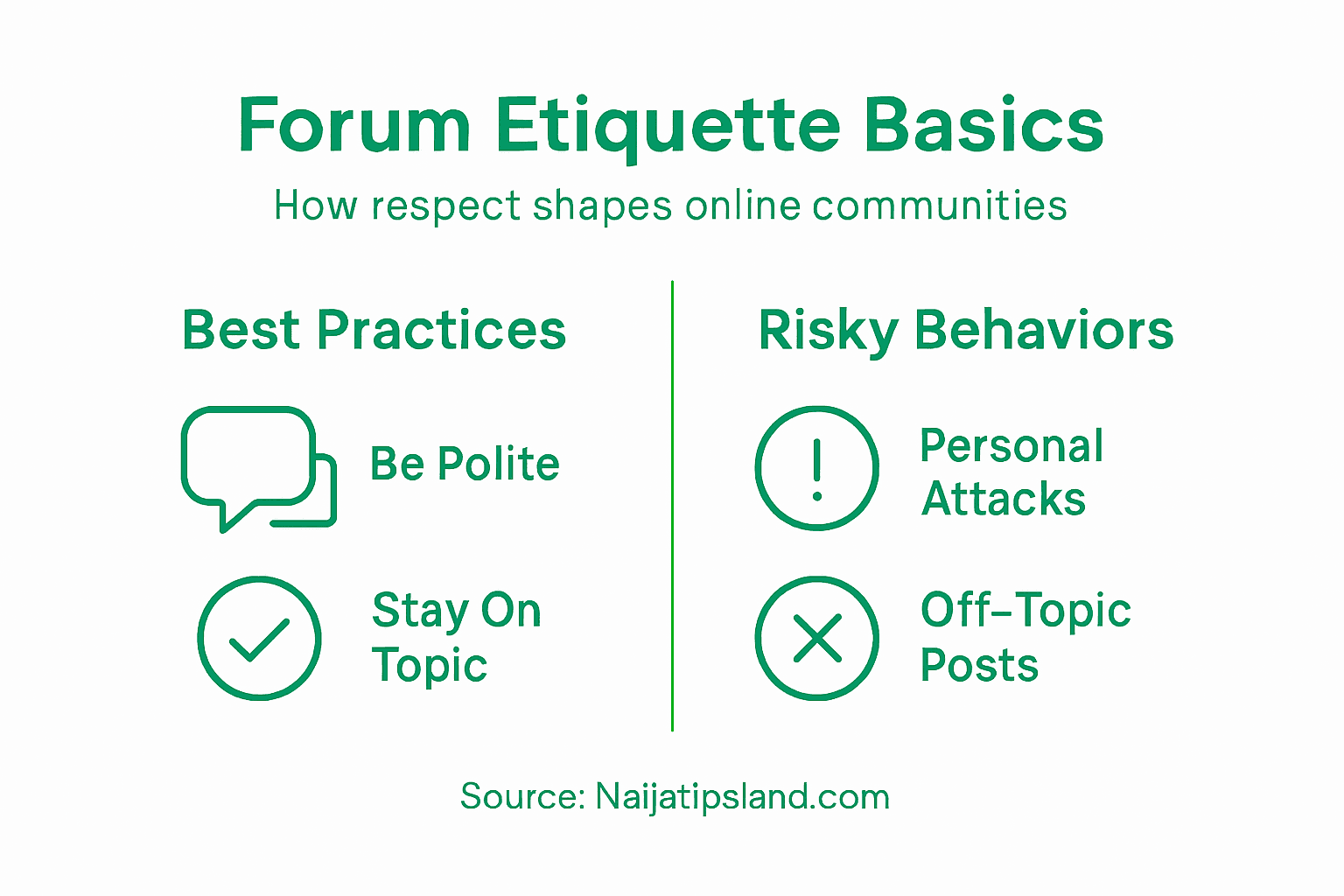
You also have an obligation to lead by example in how you participate. If you want others to disagree respectfully with you, you need to disagree respectfully with them first. If you want people to stay on topic, you need to stay on topic. If you want thoughtful responses to your posts, you need to put thought into your contributions instead of just typing whatever comes to mind. This doesn’t mean writing novels; it means showing the same respect you expect to receive. Finally, avoid unwelcome or offensive comments that target people based on their background, beliefs, or identity. This should be obvious, but it bears stating clearly: personal attacks, discriminatory language, and harassment have no place in forums. They damage the community and violate the trust that makes discussions possible. Your responsibility is to be the kind of participant that makes other people want to stay engaged rather than the kind that drives them away.
Pro tip: Bookmark the forum’s rules page and actually read it within your first week, then refer back to it whenever you’re unsure about whether a post or behavior fits community standards.
Risks and Consequences of Poor Forum Etiquette
Ignoring forum etiquette might seem harmless when you’re just one person posting comments. But your individual choices ripple outward faster than you’d expect. When users consistently violate etiquette rules, the consequences start small and compound quickly. Communication breaks down first. Threads that should be focused discussions become messy arguments where people talk past each other instead of engaging with actual points. Nobody gets anywhere because everyone’s defensive. Then comes alienation of members who might have valuable things to contribute. Imagine you’re interested in discussing Nigerian current affairs but every thread you enter is filled with personal attacks and off-topic spam. You’d stop showing up. That’s exactly what happens on forums where etiquette collapses. The thoughtful members leave first, and you’re left with people who thrive on conflict rather than conversation.
The damage accelerates from there. Poor etiquette creates hostility and an unwelcoming environment where new members feel unsafe participating. Poor forum etiquette leads to communication breakdowns, alienation of members, and ultimately the deterioration of the community’s health and productivity. When someone posts their first comment and gets mocked or attacked, they’re gone. They tell their friends the forum is toxic. Word spreads. What used to be a vibrant community becomes a ghost town with only the most aggressive voices remaining. This directly impacts the quantity and quality of discussions. Fewer people participate, so fewer ideas circulate. The ideas that do surface come from a narrower range of perspectives. Diversity of thought disappears. A forum about Nigerian politics loses value when only one viewpoint gets heard because everyone else stopped engaging.
On a personal level, poor etiquette has consequences for you specifically. Your reputation gets damaged permanently. Forums have long memories. If you’re known as someone who attacks people, spreads misinformation without sources, or floods threads with spam, that reputation follows you. People ignore your posts. They don’t take you seriously. Even if you change your behavior later, the damage lingers. Moderators also escalate consequences for repeat offenders, which means warnings, temporary bans, and eventually permanent removal from the community. You lose access entirely. For the forum owner, the cost is real too. Communities require effort to maintain. When etiquette standards collapse, moderators work overtime dealing with conflicts, deleting spam, and managing disruption. Some eventually give up and shut down their forums. Others implement heavy-handed moderation that stifles legitimate discussion. Nobody wins in that scenario.
The table below summarizes major risks of poor forum etiquette and their broader effects:
| Etiquette Failure | Immediate Effect | Long-Term Consequence |
|---|---|---|
| Personal attacks | Escalates arguments | Loss of trust and members |
| Persistent spamming | Thread clutter | Moderator burnout |
| Off-topic posting | Dilutes discussion quality | Community disengagement |
| Not citing sources | Spreads misinformation | Credibility collapse |
| Ignoring rules | Warnings or bans | Permanent reputation damage |
Pro tip: Before posting something confrontational, ask yourself: “Will this comment make someone want to stay in this community or leave it?” If the answer is leave, reconsider whether it’s worth posting.
Elevate Your Online Conversations with Naijatipsland.com
Respect and clarity are vital for meaningful discussions in any online community. If you often struggle with misunderstandings or off-topic debates in forums, you are not alone. The article highlights essential forum etiquette concepts like attacking ideas and not people, staying on topic, and citing sources. These principles can transform your experience and help you engage more effectively with diverse Nigerian perspectives.
Join Naijatipsland.com today, Nigeria’s fastest-growing platform for respectful and impactful discussions on politics, entertainment, and current affairs. Discover how easy it is to become a valued contributor by observing forum etiquette and tapping into a community that values clear communication and diverse viewpoints. Start participating now to build credibility, connect with like-minded Nigerians, and stay informed with the latest news and trends. Visit Naijatipsland.com and explore how proper forum behavior enhances every conversation.
Frequently Asked Questions
What is forum etiquette and why is it important?
Forum etiquette consists of guidelines for respectful and productive communication that help maintain organized and valuable discussions. It’s important because it fosters a respectful environment where all members feel safe and encouraged to participate.
How can I avoid common misconceptions about online forums?
To avoid misconceptions, recognize that forums are not informal group chats. Be structured in your posts, avoid excessive slang or abbreviations, and ensure your arguments are clear and respectful of differing opinions.
What should I do if I disagree with someone on a forum?
You can challenge ideas respectfully by criticizing the argument itself without attacking the person behind it. This keeps discussions focused on the issue rather than personal conflicts.
What are the consequences of ignoring forum etiquette?
Ignoring forum etiquette can lead to communication breakdowns, alienation of valuable members, and a toxic environment. Over time, this can deteriorate the community’s health, leading to fewer discussions and a decline in quality interactions.
Recommended
- Toilet And Bathroom Debate Online / Naijatipsland
- A Relationship Advise / Naijatipsland
- Maximus Monaheng Sefotho: Educational Psychologist And Inclusion Advocate / Naijatipsland
- EFCC Docks 3 Indians, Nigerian For Criminal Breach Of Trust / Naijatipsland
- The High Cost Of Incivility In Business – Mastering Conflict
- What Best Practices Should You Follow For Reputation Management In Digital Marketing? – City Web Company | Digital Marketing Agency