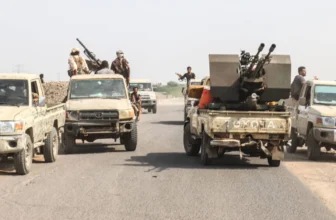

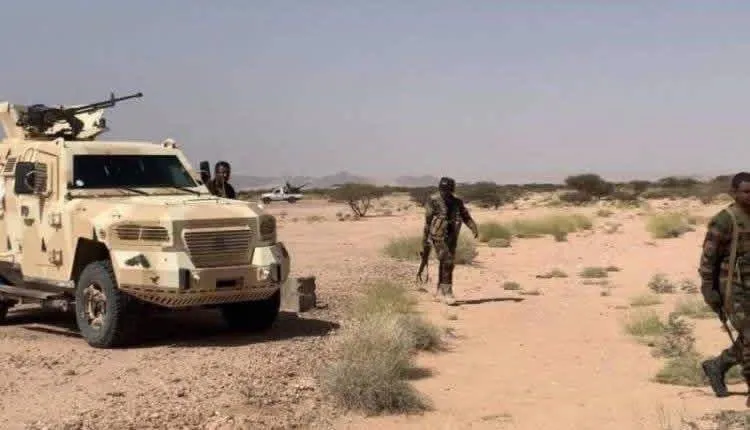
Airstrikes carried out by the Yemeni armed forces against Houthi positions and gatherings in recent weeks have reshaped the military scene after nearly four years of stalemate under the UN-brokered truce.
While the government views the operations as a shift in the way the conflict is being managed, many Yemenis, especially those living in Houthi-controlled areas, see them as a sign that a new phase may be approaching, one that could lead to the restoration of the state and the end of the Houthi coup.
This optimism has coincided with mounting internal and external pressure on the group following its involvement in regional escalation through attacks on international shipping in the Red Sea and the Bab al-Mandab Strait. The resulting increase in military strikes against Houthi positions has strengthened the belief among many Yemenis that the balance of power could shift in the coming period.
The Yemeni Ministry of Defense announced on July 3 that it had targeted the runway at Sanaa International Airport to prevent an Iranian aircraft from landing. According to the ministry, the aircraft had entered Yemeni airspace without authorization and was carrying officers from Iran’s Revolutionary Guard Corps, along with weapons and funds intended for the Houthi group.
The operation attracted widespread attention inside Yemen because it signaled the return of the government’s air capabilities, which had remained limited throughout much of the war. Many viewed it as evidence that the conflict had entered a new phase.
Public Expectations
In Houthi-controlled provinces, many residents view the recent military developments as a long-awaited opportunity to end years of repression, economic collapse, and deteriorating living conditions.
Taha, a resident of Dhamar Province, told Asharq Al-Awsat that most people are waiting for any advance by government forces. He believes many residents would join the fight against the Houthis if given the opportunity, arguing that the group’s security and economic policies have generated widespread public resentment.
Abdulrahman, from Ibb Province, shares that assessment. He said the stricter security measures imposed by the group in recent months, along with expanded powers granted to local supervisors to compel residents to attend armed rallies and mobilization events, reflect the group’s growing concern about the possibility of internal unrest coinciding with any advance by government forces.
He believes Ibb Province, which has become one of the country’s leading centers of anti-Houthi protests in recent years, could be among the areas most prepared to support efforts to restore state institutions. He noted that the absence of secure supply routes between Houthi opponents and areas near the front lines has prevented peaceful protests from developing into armed resistance.
He added that any advance by government forces from the direction of Al-Dhale Province could create the conditions for a local resistance base. Until now, opposition has largely been limited to peaceful protests that, according to him, resulted in the arrest of around 1,000 people, about 100 of whom remain in detention.
A Noticeable Shift on the Ground
Residents living near the front lines with Al-Dhale Province say the Houthis have significantly expanded their military presence in villages and farmland in recent weeks while establishing additional checkpoints in an effort to tighten security and prevent any internal movement that could coincide with government military operations.
According to residents, the Houthis are well aware of growing public opposition to placing military positions inside residential areas. Nevertheless, they continue reinforcing those positions out of concern that a local uprising could break out if the military balance changes on the front lines.
Meanwhile, residents in government-controlled provinces say the government’s transition from a defensive posture to carrying out preemptive strikes against Houthi missile launchers, drone launch sites, and weapons depots on multiple fronts in Marib and Al-Jawf Provinces marks a significant shift after years of primarily responding to Houthi attacks.
They believe maintaining this strategy could reduce the group’s ability to launch attacks against cities and liberated areas, disrupt its military supply lines, and create conditions for government forces to regain the initiative on the battlefield.
Calls to Capitalize on Changing Conditions
Yemeni analysts argue that the tight security grip the Houthis have imposed over the years, combined with policies of intimidation and economic deprivation, has prevented large-scale protests in areas under their control despite growing public discontent.
The analysts say any meaningful advance by government forces could encourage residents to rise up against the group. They expect Houthi authority to collapse quickly in a number of cities and districts if military pressure is accompanied by a popular uprising from within.
Adel Mohammed, a government employee in Taiz, believes the recent military operations demonstrate a high level of preparedness within the Yemeni armed forces and send a clear message that the government is now better positioned to wage a decisive battle if the political will exists.
He told Asharq Al-Awsat that no political process with the Houthis is likely to produce meaningful results unless the group faces military pressure that forces it to reconsider its calculations. He pointed to the Houthi offensive south of Al-Hodeidah Province last week, which ended in failure, as evidence that government forces are capable of repelling attacks and inflicting heavy losses on the attackers.
According to observers, the recent developments do not necessarily indicate that a full-scale confrontation is imminent. They do, however, reflect a shift in the military posture of government forces, alongside growing pressure on the Houthis resulting from their involvement in regional escalation and increasing public discontent in the areas under their control.