
Iraqi officials said the United States has conditioned the integration of the Popular Mobilization Forces (PMF) on disarming armed factions, sidelining their leaders, and appointing professional officers to oversee the PMF’s infrastructure, a step Washington says is necessary because the force remains a major obstacle to restoring normal relations with Baghdad.
But Shiite groups said implementing the “bold plan,” which remains under discussion, would place Prime Minister Ali al-Zaidi’s government in an unequal confrontation with Iran and the factions linked to it, amid a lack of guarantees, warning of “internal divisions and unrest.”
What did Petraeus do in Baghdad?
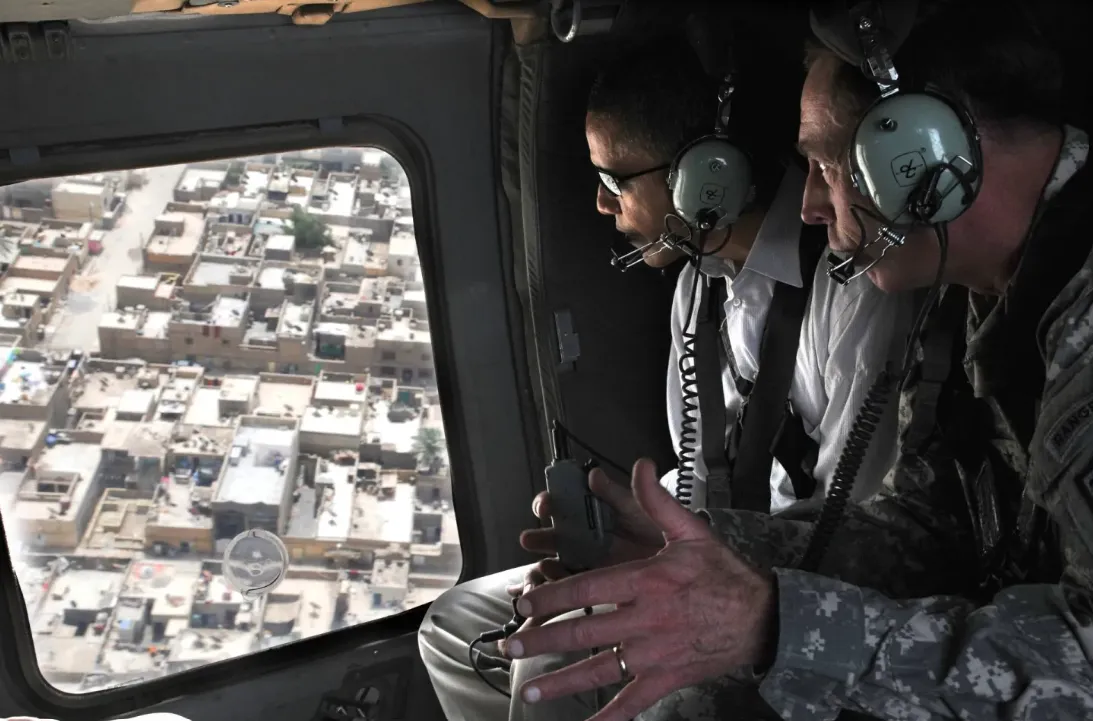
The information disclosed by officials involved in technical and political discussions on the future of the PMF coincided with a visit by retired US General David Petraeus to Baghdad last week in his capacity as an “independent expert” providing advisory services to the White House.
After leaving Baghdad, Petraeus wrote on LinkedIn on May 17, 2026, that Iraqi officials he met “recognized the importance of ensuring that the Iraqi Security Services have a monopoly on the use of force in Iraq.” He added that he left Iraq “encouraged by what I heard, while also realistic about the dynamics with Iran.”
Asharq Al-Awsat learned that Petraeus spent five days in Baghdad, where he met senior Iraqi officials. The fate of PMF fighters was at the center of “serious discussions,” according to sources.
A US State Department spokesperson told Asharq Al-Awsat that Petraeus visited Baghdad as “a private citizen, nothing more.”
However, the level of meetings he held there, including with Iraq’s Chief Justice Faiq Zidan, Prime Minister Ali al-Zaidi, Parliament Speaker Haybat al-Halbousi, and Counter Terrorism Service chief Staff Lieutenant General Karim al-Tamimi, went beyond the nature of a personal visit.
An informed Iraqi source told Asharq Al-Awsat that “Petraeus’s meetings revolved around a single objective: reforming the military institution and ending the current PMF structure, while discussing realistic and practical mechanisms for integrating its members into the security institutions.”
Petraeus is among the most prominent commanders associated with the Iraq war after 2003. He gained experience through a range of field and strategic roles, most notably commanding the 101st Airborne Division during the invasion that toppled Saddam Hussein’s regime.
Petraeus now serves as partner and chief operating officer at KKR, a global investment management firm. Information available on the company’s website indicates that its activities are expanding across Middle Eastern countries, with no reference to Iraq.
KKR did not respond to Asharq Al-Awsat’s requests for comment on the nature of Petraeus’s visit to Baghdad or whether the White House had assigned him an advisory mission there.
However, three government and political figures told Asharq Al-Awsat that the US general “has been tasked with drafting an actionable executive paper to be submitted to the White House at a later stage through US envoy to Syria Tom Barrack.”
People close to the new prime minister in Baghdad told Asharq Al-Awsat that “Ali al-Zaidi will discuss this sensitive issue with US President Donald Trump if a planned visit to the White House takes place.”
An Iraqi official who declined to be identified said that “the preliminary date could be set after Eid al-Adha in June,” noting that “the timing could be affected by the course of negotiations between Washington and Tehran.”
“A Danger That Could Blow Up in Your Face”
A person familiar with the discussions held during Petraeus’s meetings said that “some Iraqi officials spoke to the US general as though they were speaking directly to President Trump. They displayed unusual candor about their concerns over the potential consequences of plans for the Popular Mobilization Forces that remain largely theoretical at this stage.”
Another source said that “the US general listened more than he spoke during his meetings with Iraqi officials, but he was clear about what Washington wants: eliminating the source of the regional threat.” Nevertheless, “the general left Baghdad without complete confidence in Baghdad’s ability to resolve the problem in line with the US vision.”
Two Western diplomats, who spoke to Asharq Al-Awsat on condition of anonymity, said that “US confidence declined sharply during the final months of Sudani’s government because of what was viewed as leniency toward attacks by armed factions during the war. The current prime minister may now pay the price when he is asked to provide stronger security and political guarantees regarding the enforcement of state sovereignty.”
As attacks on Gulf states continued, and with the United States accusing the previous Iraqi government of providing official cover for these groups, the Popular Mobilization Forces and the armed factions associated with them have become “a knot that is difficult to untangle.” An Iraqi official said the issue is “a danger that must be dealt with, but when you get close to it, it could blow up in your face.”
Washington hopes that the new prime minister, Ali al-Zaidi, a businessman whose commercial activities are rumored to have prospered under the shadow of politics, will be able to distance his government from Iranian influence. It sees the issue of weapons outside state control as a test of whether trust can be maintained and support resumed, but the task will not be easy, according to a person close to him.
A person familiar with political consultations concerning the Popular Mobilization Forces said that “Petraeus did not answer questions raised by Iraqi officials about whether there would be sufficient backing to confront Iran if the Popular Mobilization Forces were dissolved.”
Baghdad ‘Buys Time’
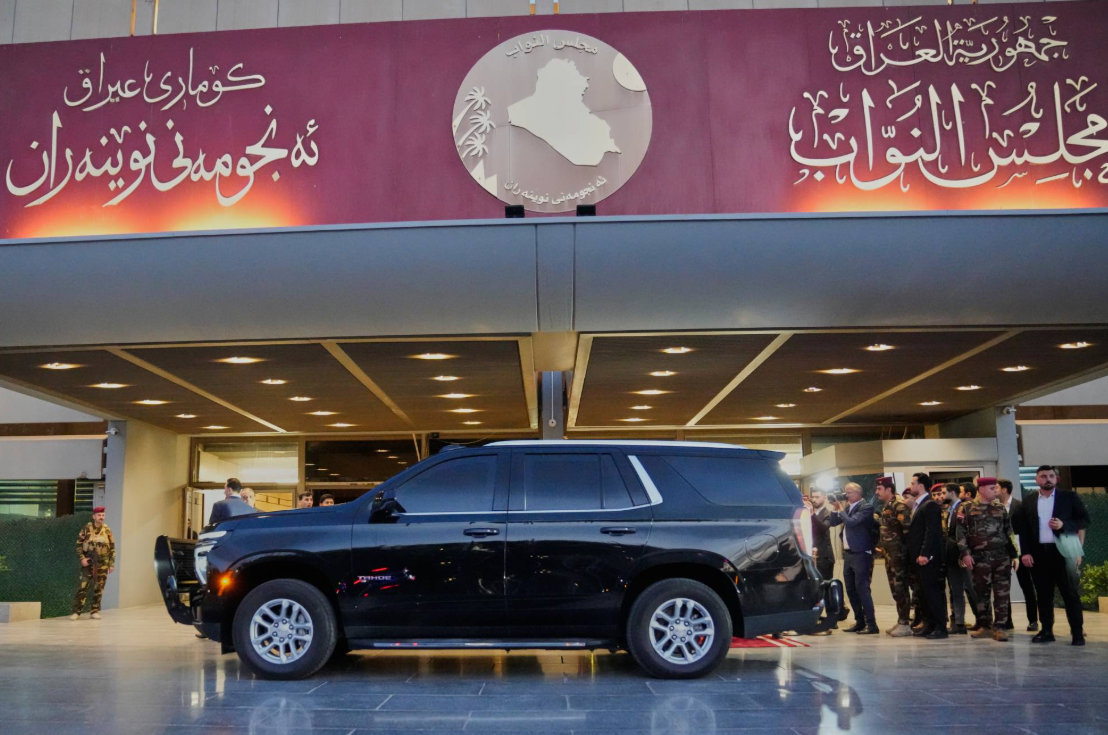
For Shiite leaders in Iraq, the Popular Mobilization Forces (PMF) are “a matter of destiny” and “a red line that cannot be crossed,” according to officials close to the factions. But the organization has become caught in intense regional polarization since the events of Oct. 7, 2023, and has been directly involved in the recent conflict between the United States and Iran.
Figures close to the armed factions have appeared on television warning of “retaliation against any government or political official who participates in a project to integrate or dissolve the PMF.”
A leader of an armed faction told Asharq Al-Awsat that “Iran recently urged them to resist the US effort aimed at dismantling the largest military force safeguarding its interests in the region.”
He added: “Generals from the Revolutionary Guards who play supervisory roles within Shiite factions, including those who run the Islamic Resistance in Iraq operations room, will put obstacles in the way if moves are made toward dissolving the PMF.”
According to an Iraqi lawmaker close to Kataib Hezbollah, the PMF is an institution operating under a law passed by the Iraqi parliament in 2016, and dissolving it would now require a parliamentary vote.
Shiite armed groups maintain influential political wings in the Iraqi parliament. Estimates suggest they hold around 80 seats, while the ruling Shiite alliance, the Coordination Framework, enjoys a comfortable majority of about 180 seats in the 329-member legislature, giving it substantial influence over the legislative process.
Two members of the Coordination Framework told Asharq Al-Awsat that “most leaders of the Shiite alliance informed the prime minister that they agree on the risks posed by the factions, but resolving the issue requires national dialogue and an incentives plan as part of a broader strategy involving the religious authority in Najaf, given the sensitivity of the political and security balances associated with it.”
A Western adviser working in Iraq told Asharq Al-Awsat that “Washington has come to view such ideas as attempts to buy time, and warnings about the risks of dissolving the PMF are being used as a form of counterpressure against the United States.”
An Iraqi official also said that “US officials who held discussions with local officials before Petraeus’s talks in Baghdad made it clear that overlooking the PMF issue carries an extremely high cost.”
“Fell on Deaf Ears”
On that basis, according to sources, the United States dismissed Iraqi proposals it viewed as cosmetic measures to integrate the Popular Mobilization Forces (PMF), restructure the organization, or change its leadership.
The Iraqi government, in its program approved by parliament, pledged to “define the responsibilities of the PMF within the military and security system.”
Al-Zaidi’s office declined to answer Asharq Al-Awsat’s questions about how the government intends to implement its program regarding the PMF and whether it has participated with the United States in any executive plans related to the issue.
According to five Iraqi and Western figures who spoke to Asharq Al-Awsat, proposals put forward by members of the Coordination Framework aimed at elevating the PMF and other factions into a new ministry or restructuring them within an administrative framework under the supervision of the prime minister “fell on deaf ears” in Washington.
Over the past week, figures close to Shiite groups appeared on local television channels promoting a proposal to establish a “Federal Security Ministry,” claiming it would serve as an umbrella for the PMF and other security formations, including the Rapid Response Forces and the Border Guards.
Informed sources told Asharq Al-Awsat that the United States is seriously focused on ensuring full Iraqi sovereignty over political and security decision-making and eliminating sources of threat that it describes as terrorist, so that Baghdad can live in peace with its neighbors.
It is widely believed in Baghdad that the recent attacks against Saudi Arabia and the United Arab Emirates are part of a dual-track campaign within the Revolutionary Guards’ regional strategy: linked to the ongoing conflict on one hand, and on the other an attempt at deterrence aimed at protecting the PMF’s position and preventing any reduction in its influence.
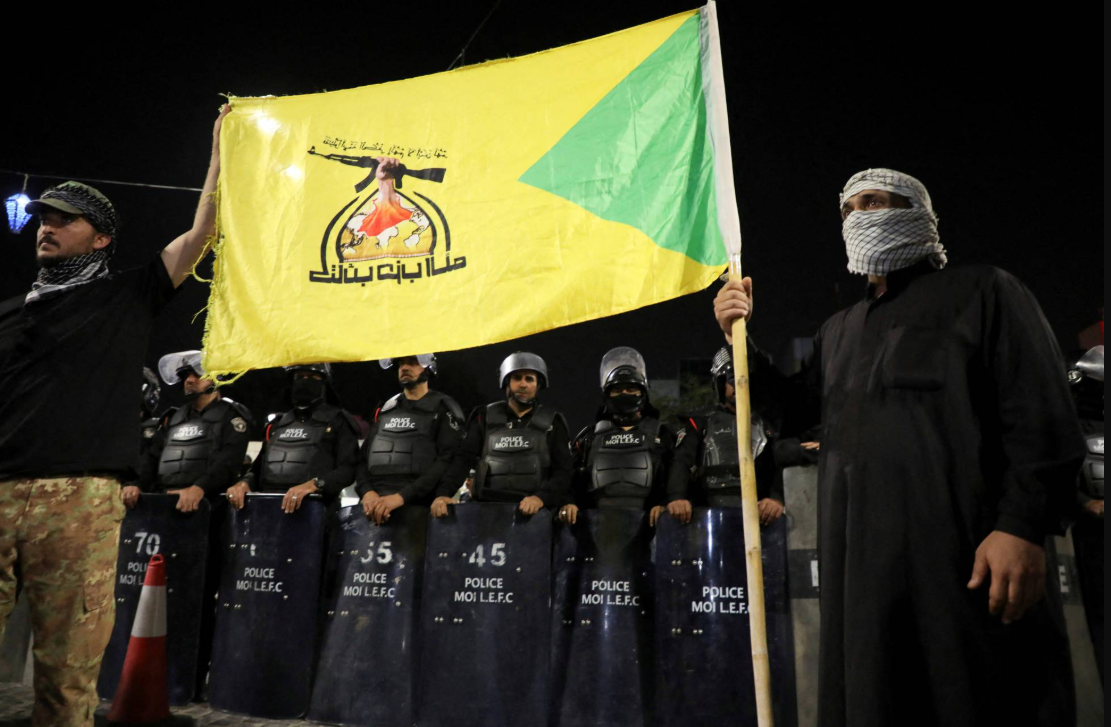
On May 18, 2026, Abu Mujahid al-Assaf, a security official in Kataib Hezbollah, said in a press statement that the faction was “prepared to respond to the United States on all fronts if leaders of the resistance and the Popular Mobilization Forces are targeted.”
What Comes Next in Baghdad?
Nevertheless, two Iraqi figures said they expect “an initial phase to begin in the coming period,” involving the transfer of heavy and medium weapons to a trusted Iraqi security body agreed upon by the Iraqi government and the United States.
According to one of the two figures, the first phase would also include removing figures involved in attacks against the United States and its allies in the region, and appointing Iraqi generals to oversee the infrastructure associated with the Popular Mobilization Forces.
Asharq Al-Awsat learned that armed groups with political wings represented in parliament are negotiating to regain their share of positions in the Iraqi government after surrendering their weapons, but are seeking firm guarantees that they will be removed from the list of groups barred from participating in government.
Several ministerial posts in Ali al-Zaidi’s government remain vacant because of disputes within the Coordination Framework. However, some positions have been postponed indefinitely because of a US veto on election winners who maintain armed wings and have ties to Iran.