

By Yunus Yusuf
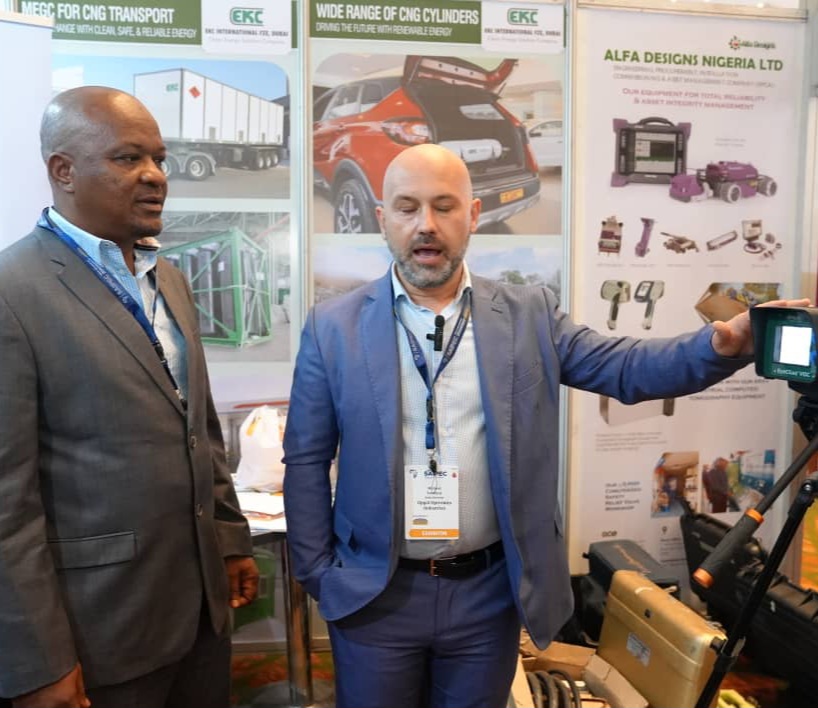
Mr Quadri Fatai, MD/CEO, Alfa Designs Nigeria Ltd.,(middle) during the 2026 Sub-Saharan Africa International Petroleum Exhibition and Conference
Chief Executive Officer, Alpha Designs Nigeria Ltd., Mr Quadri Fatai, has urged the Federal Government to prioritise indigenous oil and gas firms with proven capacity and impressive track records to fast-track the nation’s energy ambitions.
He also warned that companies acting largely as intermediaries cannot deliver the nation’s long-term energy goals.
Fatai made the call in an interview with the News Agency of Nigeria(NAN) on the sidelines of the ongoing 10th Sub-Saharan Africa International Petroleum Exhibition and Conference (SAIPEC) on Wednesday in Lagos.
He said Nigeria must move beyond what he described as “paper capacity” and deliberately support homegrown companies that had invested in technology, skilled manpower and operational excellence.
“Nigeria has many indigenous companies with the capacity, technological know-how and drive to deliver complex projects.
“What we need is targeted government support for companies that create real value, not those that exist only as portfolio service providers,” Fatai said.
According to him, empowering execution-driven indigenous firms will accelerate project delivery, lower operational costs, deepen local content outcomes and retain greater economic value within the country.
Fatai acknowledged that local content policies had increased Nigerian participation in the oil and gas sector.
He said gaps remained in distinguishing between companies that genuinely execute projects and those that rely heavily on subcontracting and intermediary roles.
“Real local content is built on assets, technology, trained personnel and a track record of delivery.
From Left: Mr Quadri Fatai, MD/CEO, Alfa Designs Nigeria Ltd., and Mr Michael Tsudikov, Sales Director of Opgal Industries, during exhibitors booth inspection at the 2026 Sub-Saharan Africa International Petroleum Exhibition and Conference
“We must move beyond documentation to measurable performance,” the CEO said.
He urged the government, regulators and industry bodies to adopt clearer, performance-based criteria in procurement and licensing processes to ensure that incentives and project awards go to competent and sustainable firms.
Fatai noted, “This approach will not only strengthen indigenous companies but also attract investment, create jobs and accelerate industrial growth.
“When government backs capacity and competence, the entire industry wins. It is the surest path to sustainable growth and energy security.”
Fatai noted that although government initiatives at the policy level had been commendable, many innovative local players at the grassroots remained disconnected from opportunities within the local content framework.
“At the high level, government is doing a lot. But the real players, those willing to complement government efforts with innovation and investment are often not connected at that level,” he said.
He cited Alpha Designs’ development of “Cylindron,” a cloud-based application designed to track and monitor gas cylinders throughout their lifecycle, as an example of indigenous innovation addressing critical safety gaps.
According to him, while regulatory bodies such as the Standards Organisation of Nigeria ensure conformity assessments before cylinders enter the country, most safety incidents occur during day-to-day usage.
“There is a disconnect in monitoring cylinders after they are deployed.
“Incidents do not happen at the point of importation; they occur during usage,” Fatai stressed.
He said that the Cylindron platform tracks each cylinder, ensures timely certification, flags unfit cylinders and prevents refilling at gas stations if safety standards are not met.
Fatai said the system could significantly reduce accidents, enhance regulatory oversight and create substantial employment opportunities.
“This kind of control mechanism can drastically cut avoidable incidents and bring accountability to daily operations.
“These are the kinds of innovations that should be integrated into Nigeria’s local content agenda,” Fatai, also the Managing Director of the company said.
Fatai cautioned against what he described as overhyped products and initiatives that add little tangible value to the economy.
He, however, called for a sharper focus on solutions that replace imports, generate significant economic returns and enhance the nation’s corporate image globally.
“Local content should mean products and services that Nigerians can deliver competitively, replacing foreign alternatives and creating measurable economic value,” he said.
The expert cited the recent improvements in Nigeria’s passport data integration, noting,”progress was less about when a reform begins and more about the commitment to implement it effectively”.
“It doesn’t matter if we are late starters. What matters is that we start and do it right,” he said.
Fatai urged authorities to “beam the searchlight” to grassroots innovators who are contributing quietly but meaningfully to industrial advancement.
“These companies are not political actors. They are focused on one question: what can we do to contribute to the industry?
“Government must connect with them and give them the platform to scale,” he said.
He added that with the right policy signals and incentives, Nigeria could build globally competitive service companies capable of exporting expertise across Africa.
“Nigeria has the talent and the ideas.
“What is needed now is deliberate support for competence, innovation and execution, ” Fatai added.
Edited by Olawunmi Ashafa