

With just days to the Federal Capital Territory (FCT) Area Council elections scheduled for Saturday, 21 February 2026, the political landscape remains charged with political activities and jostles for voters attention.
Though the Independent National Electoral Commission (INEC) has cleared candidates from 17 political parties to contest the 68 elective positions; made up of six area council chairmanships and 62 councillorship seats across the six area councils of the FCT: Abaji, Abuja Municipal Area Council (AMAC), Bwari, Gwagwalada, Kuje and Kwali, eyes are on the ruling All Progressives Congress (APC) and the African Democratic Congress (ADC) and few others.
SPONSOR AD
The cleared political parties according to INEC are; Accord (A), Action Alliance (AA), African Action Congress (AAC), African Democratic Congress (ADC), Action Democratic Party (ADP), All Progressives Congress (APC), All Progressives Grand Alliance (APGA), Allied Peoples Movement (APM), Action Peoples Party (APP), Boot Party (BP), New Nigeria Peoples Party (NNPP), National Rescue Movement (NRM), Peoples Democratic Party (PDP), Social Democratic Party (SDP), Young Progressives Party (YPP), Peoples Redemption Party (PRP), and Zenith Labour Party (ZLP).
All the parties are aggressively campaigning. The ADC, in particular, has boosted its profile with grassroots outreach such as health interventions in communities ahead of the polls, reflecting its strategy to convert voter dissatisfaction into electoral gains while APC candidates are banking on incumbency factor to maintain or expand their scopes.
A major development in the FCT election race is the complete exclusion of the Labour Party (LP). INEC’s final list of candidates shows no LP nominee for the February 21 polls, a situation confirmed by court rulings that upheld Labour Party’s exclusion following sustained internal leadership disputes and legal challenges.
The crisis stems from prolonged factionalism within the party’s national leadership and conflicting claims over its legitimate executives; disputes that went up to the Supreme Court and Federal High Court. LP had sued INEC for refusing to accept and publish its candidates’ names but lost when courts determined the suit was filed outside the statutory window for pre-election matters.
Beyond LP’s disqualification, there are notes of internal strains in other parties, such as the Peoples Democratic Party. Although the PDP successfully submitted candidates for all council positions, its internal leadership disputes in the FCT have drawn attention. Factions loyal to different national leaders have traded accusations over control of party structures, raising questions about organisational coherence ahead of the polls.
Reports indicate that the FCT chapter of the PDP insists it remains united and confident, with candidates duly recognized by INEC and ready to contest across all councils.
The absence of the Labour Party from the ballot marks a significant shift from previous elections in the FCT, where LP’s grassroots appeal had challenged dominant parties; particularly following its strong performance in the 2023 presidential election. Its exclusion according to analysts could affect the opposition vote and sharpen competition between APC and ADC.
Meanwhile, the PDP’s internal disputes and the rallying efforts of both APC and ADC could influence turnout dynamics and election day strategies in communities across the territory.
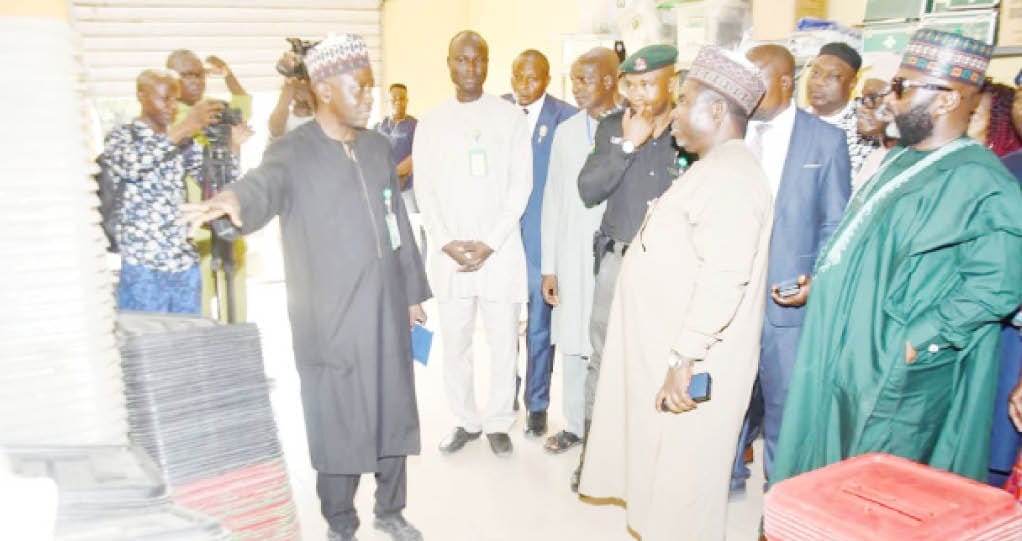
INEC says about 1.68 million voters are registered to participate in the FCT election and has undertaken logistical adjustments; including the creation of sub-registration centres — to facilitate smoother operations on election day.
UPDATE NEWS:
Nigerians can now invest ₦2.5 million on premium domains and profit about ₦17-₦25 million. All earnings paid in US Dollars. Rather than wonder, click here to find out how it works.