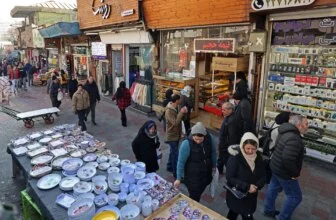

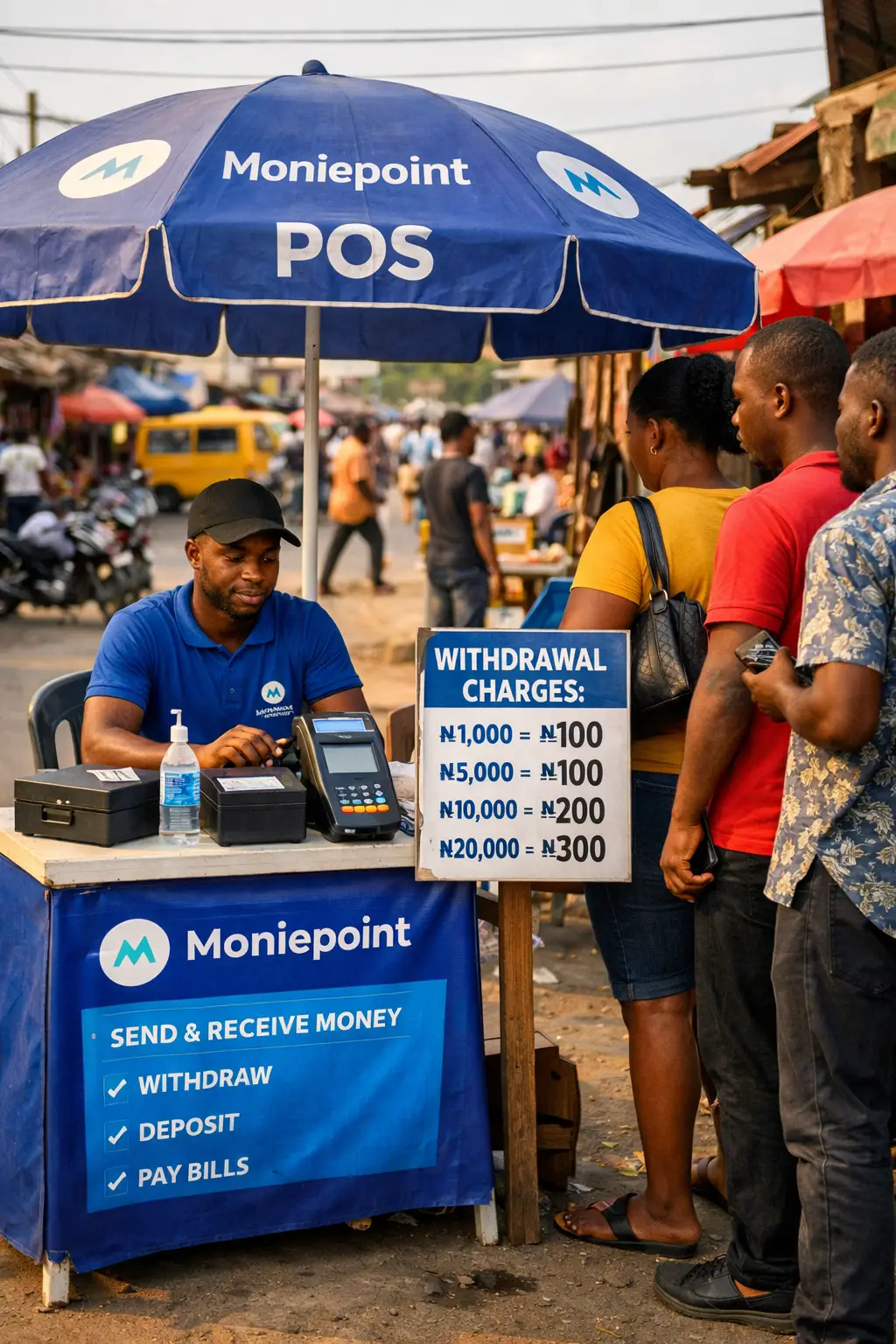
Starting a POS (Point of Sale) business in a rural area in Nigeria is one of the most practical, high-demand micro-businesses you can launch with relatively low capital. Rural communities often face limited access to bank branches and ATMs, irregular cash availability, and long travel distances to towns for simple transactions. A well-run POS outlet becomes a local financial access point—helping people withdraw cash, transfer money, pay bills, buy airtime/data, and sometimes even pay for goods.
This complete guide walks you through everything you need to start and grow a POS business in a rural Nigerian community—step-by-step, including startup requirements, location strategy, pricing, profitability, risk management, and how to scale.
What Is a POS Business in Nigeria?
A POS business is a small agency banking outlet that uses a POS terminal (or mobile app) to provide financial transactions on behalf of banks, fintechs, or payment service providers. In Nigeria, common services include:
Cash withdrawal
Bank transfers (intra and interbank)
Cash deposit (supported by some providers)
Airtime and data sales
Utility/bill payments (depending on platform)
BVN-related services or account opening (for some agent networks)
In rural areas, the demand is usually strong because residents need quick access to cash and financial services without traveling to a distant town.
 Why a Rural POS Business Can Be Highly Profitable
A rural POS outlet solves real problems, and that creates consistent demand.
Key reasons rural POS works well:
Low competition: Many villages have few or no agents.
High transaction frequency: Farmers, traders, teachers, and artisans often need regular withdrawals and transfers.
Convenience premium: People pay fees gladly to avoid transport costs and time.
Community trust: Once established, the business becomes part of daily life.
Multiple revenue streams: Fees, commissions, airtime/data margins, bill commissions.
If you run your outlet professionally, you can build a stable daily income and expand to additional locations over time.
Step-by-Step: How to Start a POS Business in a Rural Area in Nigeria
Step 1: Research the Community and Confirm Demand
Before buying any POS terminal, study the environment:
Is there an ATM within 5–10 km?
Are there nearby markets, schools, farm settlements, or motor parks?
Do people receive salary payments, grants, cooperative funds, or remittances?
What network works best there: MTN, Airtel, Glo, or 9mobile?
Is there steady cash flow in the community (e.g., market days, harvest seasons)?
Tip: Visit on market day. If traders complain about cash scarcity or delays in transfers, that’s your green light.
Step 2: Choose the Right POS Model for Rural Areas
In rural Nigeria, reliability is more important than fancy branding. You must plan for unstable power and network issues.
Options:
POS terminal + agent account: Traditional method. Best for physical outlet visibility.
Smartphone agent banking app: Good backup but depends on phone battery and data network.
Hybrid: Best approach—use a POS terminal and keep one or two agent apps as backup.
What to prioritize:
Strong battery life
Low failure rate
Fast settlement
Good dispute resolution support
Multi-network SIM or strong network compatibility
Step 3: Register With a Trusted POS/Agent Banking Provider
You can start by registering as an agent with a fintech, bank agent network, or aggregator. The provider typically supplies a POS terminal (sometimes paid, sometimes loaned), onboarding documents, and commissions.
Common onboarding requirements often include:
Valid ID card (NIN slip, voter’s card, driver’s license, or international passport)
Passport photograph
Proof of address (may be requested)
Phone number and email
BVN (often required)
Business details (optional but helpful)
Important: Choose providers known for stable service, transparent pricing, and responsive support. In rural areas, you cannot afford a provider that delays settlement or ignores disputes.
Step 4: Calculate Your Startup Capital (Realistic Rural Budget)
Your actual startup capital depends on whether you’re buying a POS terminal outright, renting one, or receiving it through an agent network.
Typical cost areas:
POS terminal (if purchased)
Branding/signage (banner, stand, small kiosk)
Table/chair/umbrella or kiosk setup
Power: power bank, mini solar, or generator contribution
Data subscription / SIM(s)
Logbook/receipts
Most importantly: float (working cash)
The float is your lifeline.
In rural communities, people mainly withdraw cash. If you run out of cash, you lose customers fast.
Recommended starting float (guideline):
Small village: ₦100,000 – ₦300,000
Busy market/rural town: ₦300,000 – ₦1,000,000+
Start with what you can manage, then reinvest profits to increase float.
 Step 5: Secure a Strategic Location
Location is a major success factor in rural POS business.
Best rural locations include:
Near markets (especially entrances or high-traffic corners)
Close to schools, health centers, or community halls
Near shops selling provisions, farm inputs, or phone accessories
Close to transport stops (bike/tricycle parks)
Along main village roads with pedestrian flow
Avoid:
Isolated areas (security risk)
Places with poor network coverage
Spots with no shade or protection (device overheating is real)
Practical tip: If network is weak, test at different times—morning, afternoon, evening—because rural network performance changes with traffic and weather.
Step 6: Set Competitive Pricing (Fees That Customers Accept)
Your pricing must balance profitability with community acceptance. Rural customers are fee-sensitive, but they also value convenience.
Common pricing approach (examples):
Withdrawals: charge by range (e.g., ₦50 for small amounts, ₦100–₦300 for larger amounts)
Transfers: small fixed fee (ensure it covers provider charges and your margin)
Airtime/data: small markup (or use commission-based pricing)
Rule: Be transparent. Display your fees clearly to build trust.
Tip: Rural trust builds faster when you:
Give receipts or write transactions in a logbook
Explain failed transactions calmly
Refund promptly when confirmed
Step 7: Put Strong Processes in Place for Disputes and Failed Transactions
Failed transactions happen. What matters is how you manage them.
Best practices:
Keep transaction references and screenshots
Maintain a dispute record book: date, time, amount, customer name, phone, reference
Train yourself to check “reversal status” properly before paying cash again
Keep provider customer support numbers accessible
Never argue. Reassure the customer with facts and timelines.
Important: Always confirm successful withdrawal before handing out cash. Many beginners lose money by paying cash during network delays.
Step 8: Plan for Power and Network Challenges (Rural Reality)
Rural POS agents often face:
Unstable electricity
Weak mobile network
Rainy season disruptions
Long downtimes
Solutions:
Use a high-capacity power bank
Consider small solar options if feasible
Use dual SIM or multi-network SIM where possible
Keep at least two networks’ data active
Have a backup agent app for transfers when POS fails
If your outlet is consistently “available” while others are “down,” you will dominate the area.
Step 9: Build Trust and Become the Community’s Preferred Agent
In rural areas, trust is your biggest marketing channel.
How to build it fast:
Be consistent with opening hours
Treat customers respectfully (especially elderly customers)
Keep customer information confidential
Provide clear pricing and avoid hidden charges
Help customers understand transfers and confirmations
Keep enough cash on market days and salary days
Bonus trust booster:
Offer micro services like photocopy/printing, phone charging, SIM registration support (where legal and compliant), or selling phone accessories—only if it fits your setup.
How Much Profit Can a Rural POS Business Make?
Profit depends on volume and your fee structure.
Example scenario (simple illustration):
60 withdrawals daily
Average fee per withdrawal: ₦150
Daily withdrawal fee revenue: ₦9,000
Add:
Transfers fees
Airtime/data commissions
Bill payment commissions (if available)
Estimated range:
A well-positioned rural POS agent can earn from a few thousand naira daily to significantly more in high-traffic rural markets—especially during peak seasons (harvest, festive periods, salary cycles). The key is consistent transaction volume and keeping enough float.
Common Mistakes to Avoid in Rural POS Business
Starting without enough float (you’ll lose customers quickly)
Operating without security awareness
Using only one network in a weak coverage area
Not tracking transactions and disputes
Charging random fees without a structure
Paying cash before confirmation
Ignoring customer service (rural referrals are powerful)
Security Tips for Rural POS Agents
Handling cash makes you a target. Use practical security habits:
Avoid announcing your cash levels
Don’t keep all money in the kiosk—bank/secure excess regularly
Use a lockable drawer or waist pouch
If possible, operate near other businesses
Close earlier when there’s risk (late nights, isolated days)
Consider a discreet CCTV if you have the setup (even a visible dummy sometimes deters)
Build relationships with community leaders and nearby shop owners
 How to Scale Your POS Business in Rural Nigeria
Once you stabilize cash flow and processes:
Scaling options:
Increase float to handle larger withdrawals
Add a second terminal (reduce downtime and queues)
Hire and train an attendant (extend working hours safely)
Open a second outlet in a nearby village/market
Add complementary services: airtime/data focus, bill payments, micro-merchandising
Scaling is largely about improving reliability, increasing transaction capacity, and expanding coverage.
FREQUENTLY ANSWERED QUESTIONS (FAQ)
“Frequently Asked Questions About POS Business in Rural Nigeria”
Enable FAQ Schema using SiteSeo Pro or a compatible schema module.
1. How much capital do I need to start a POS business in rural Nigeria?
You can start a rural POS business with as low as ₦100,000 to ₦300,000, depending on your location, transaction volume, and whether you buy or rent a POS terminal. Busy rural markets may require ₦500,000 or more for sufficient cash flow.
2. Is POS business profitable in rural areas of Nigeria?
Yes, POS business is often more profitable in rural areas due to low competition, high demand for cash withdrawals, and limited access to banks and ATMs.
3. What services can I offer with a POS machine in a rural area?
Common services include cash withdrawals, bank transfers, airtime and data sales, bill payments, and sometimes cash deposits, depending on the POS provider.
4. Which POS terminal is best for rural Nigeria?
The best POS terminal for rural Nigeria is one with long battery life, strong network compatibility, fast transaction processing, and reliable customer support.
5. Do I need to register a business name before starting a POS business?
Business registration is not compulsory to start, but registering with CAC improves credibility, enables partnerships, and helps when scaling or opening multiple outlets.
6. What network works best for POS business in rural areas?
Network quality varies by location. It is advisable to test MTN, Airtel, Glo, and 9mobile in your area and use dual-SIM or multi-network POS devices.
7. How much do POS agents charge for withdrawals in rural areas?
Fees vary by community, but most rural POS agents charge between ₦50 and ₦300 per withdrawal, depending on the transaction amount.
8. How do I handle failed POS transactions?
Always confirm transaction status before paying cash. Keep transaction references, log failed transactions, and contact your POS provider for reversals if needed.
9. Is POS business safe in rural Nigeria?
POS business is generally safe if you follow security measures such as operating in visible locations, limiting cash exposure, and maintaining good community relationships.
10. Can I run a POS business without electricity?
Yes. Many rural POS agents use power banks, solar chargers, or long-lasting POS terminals that function without constant electricity.
11. Can I operate a POS business alongside another business?
Yes. Many rural agents combine POS services with provision shops, phone accessory sales, or farm input stores to increase income.
12. How many POS transactions can I do daily in a rural area?
Transaction volume depends on location and demand. Some rural agents handle 30–100+ transactions daily, especially on market or salary days.
13. What are the major risks in POS business?
Key risks include network failure, fraud, insufficient cash float, security threats, and delayed reversals.
14. Can I expand my POS business to other villages?
Yes. Once profitable, you can expand by increasing capital, hiring attendants, adding more terminals, or opening outlets in nearby communities.
15. How long does it take to break even in a rural POS business?
Many rural POS agents recover their startup capital within 1–3 months, depending on transaction volume and expense management.