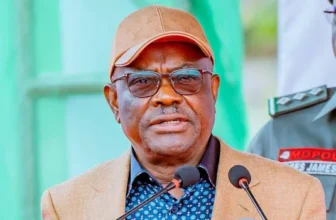

The Minister of Finance and Coordinating Minister of Economy, Taiwo Oyedele, has said Nigeria’s crude oil production constraints remain a major challenge to meeting domestic refining needs, despite President Bola Tinubu’s decision to remove the petrol subsidy in 2023.
Oyedele said the country did not have enough freely available crude oil to supply the Dangote Refinery and other local refiners, explaining that production costs, royalties and contractual obligations significantly reduced the volume available to the Federal Government.
The minister spoke on Friday during an interview on Channels Television’s Politics Today, amid renewed calls for government intervention in the petroleum sector and proposals for a production subsidy to support domestic refineries.
“So the people that are saying, ‘We’ll discount it, we’ll do the cost of production,’ don’t know what they’re talking about. We don’t have enough to service Dangote. Dangote imports crude. And I just want us to establish that fact,” Oyedele said.
He explained that although Nigeria currently produces about 1.8 million barrels of crude oil daily, the entire volume does not belong to the government because of production-sharing contracts and joint ventures with oil companies.
“Under the production sharing contract and joint venture, they share these things. And the ratios vary. Let’s say roughly 45, 55, right? You do that,” he said.
According to the minister, the government’s share is further reduced by production costs and royalties before the remaining crude can be allocated.
“Then there’s the cost. To produce it, to get it out of the ground, you take it in the cost of oil. That’s also barrels that are going away. Then you take the one for royalty. Before you now start talking about profit oil that you share,” he said.
Oyedele added, “The long and short of what I’m telling you is that whatever is left for Nigeria, we have sustained it almost entirely because of fuel subsidy.”
He said the country currently had less than 700,000 barrels of crude oil freely available for allocation to any buyer, including the Dangote Refinery.
“I don’t want to go into the technicalities, but the reality is that today we do not have up to 700,000 free crude to give anyone, including Dangote,” he said.
Oyedele said the naira-for-crude policy introduced by the Tinubu administration had helped provide stability but acknowledged that available volumes remained insufficient to meet domestic demand.
“That’s why when Mr President introduced the Naira for Crude, it was meant to help us gain some stability. And it has worked, but we don’t have enough quantity to give as of yet,” he said.
The minister expressed optimism that increased crude oil production would enable Nigeria to meet the feedstock requirements of the Dangote Refinery and other domestic processors.
“As we ramp up production and we free up some barrels, we’ll get to a point where we’ll be able to give Dangote everything he wants and other refiners will be able to get enough,” he said.
He added that his long-term ambition was for Nigeria to refine all its crude oil locally and export only refined petroleum products.
“I even hope personally that we get to a point in Nigeria where all the crude we produce will be refined in Nigeria and we only export refined products,” Oyedele said.
The debate over domestic crude supply comes amid renewed calls for the return of fuel subsidies following rising petrol prices and the economic pressures associated with the Tinubu administration’s reforms.
The Federal Government recently announced a 30-day petrol discount at outlets operated by the Nigerian National Petroleum Company Limited. The move attracted criticism from opposition politicians and other Nigerians, who questioned whether it amounted to a return of subsidy through another channel.
Tinubu removed the petrol subsidy in 2023 as part of his administration’s economic reforms, arguing that the policy had become fiscally unsustainable. The removal, alongside changes to the foreign exchange market, has contributed to higher living costs, although the government has maintained that the reforms were necessary to avert a deeper economic crisis.
Nigeria remains a major crude oil producer and is home to the Dangote Refinery, owned by businessman Aliko Dangote. However, Oyedele’s remarks highlight the gap between the country’s crude oil production and the volume available to meet the needs of domestic refiners.