
By Angela Atabo, News Agency of Nigeria (NAN)
When climate disaster strikes, the warning may come through a radio broadcast, a text message, a television announcement or social media.
But what happens when the warning cannot be heard, seen, understood or physically accessed?
For millions of people with disabilities, this can be the difference between safety and danger; and for women and girls with disabilities, moreover, the risks can be even greater.
Indeed, floods, extreme heat, displacement, food insecurity and other consequences of climate change do not affect every Nigerian in the same way.
Rather, existing inequalities can turn a climate emergency into a deeper humanitarian crisis for people already facing barriers to mobility, information, healthcare, livelihoods and decision-making.
According to the World Health Organisation (WHO), globally, about 16 per cent of the world’s population lives with a disability, while persons with disabilities can face mortality rates up to four times higher than the general population during disasters.
The UN Office for Disaster Risk Reduction (UNDRR) reported in its 2023 Global Survey on Persons with Disabilities and Disasters that persons with disabilities make up 16 per cent of the world’s population.
However, the burden is not evenly distributed, as roughly 80 per cent of persons with disabilities live in the Global South, where they are often among those worst affected by natural hazards and climate-induced disasters.
The survey also highlights a significant information gap; only one in four persons with disabilities can easily follow evacuation instructions during a disaster.
Just 11 per cent are aware that a disaster management plan exists in their community, leaving many without access to critical information before and during emergencies.
WHO also estimated that 13 to 17 million women and girls with disabilities in Nigeria face heightened climate risks, making them among the most vulnerable groups during climate-related emergencies.
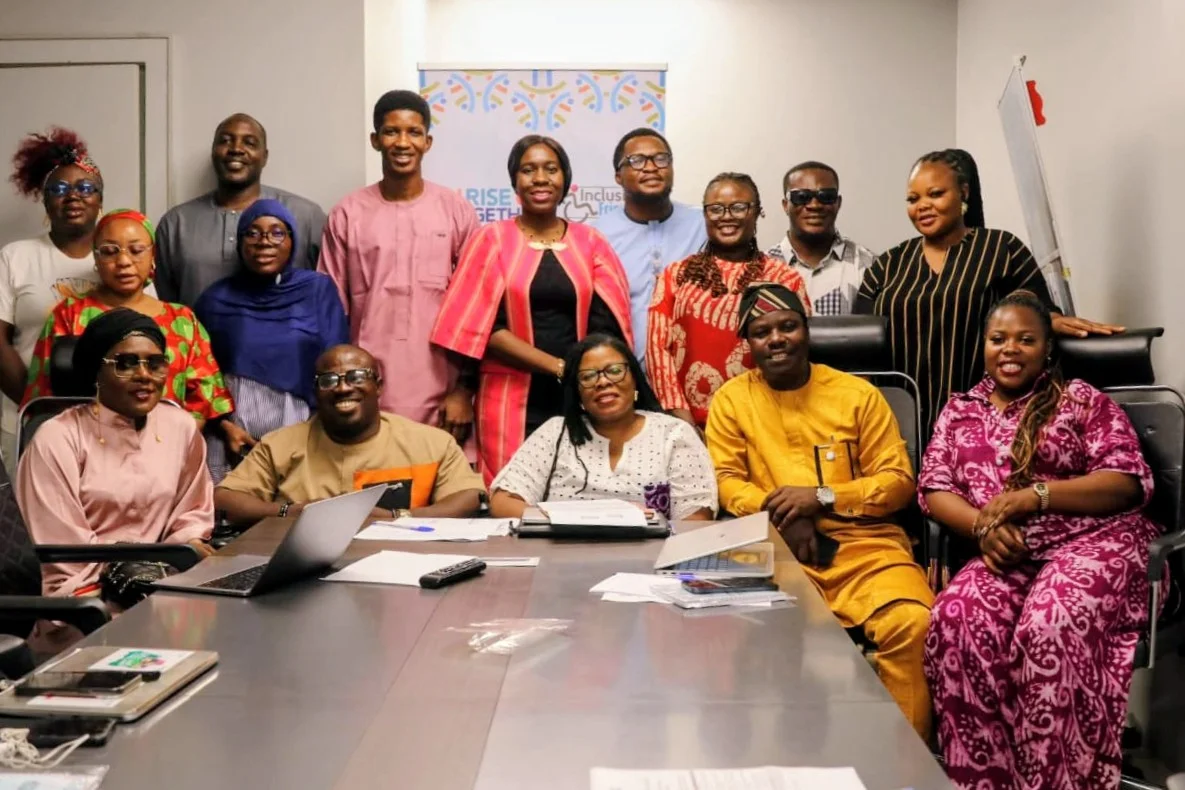
Against this backdrop, this growing concern was brought into focus at a Media Engagement Session on Disability-Inclusive Climate Action.
The engagement, organised by the Inclusive Friends Association (IFA), brought together disability advocates, journalists and other stakeholders as they called for a fundamental change in the way Nigeria approaches climate action and reports on its impact.
The message was clear; climate justice demands the full inclusion of women and girls with disabilities in climate policies, programmes and public discourse.
Speaking at the event, Grace Jerry, Executive Director of IFA, said women and girls with disabilities often occupy the intersection of two forms of vulnerability; gender inequality and disability-related exclusion.
During climate emergencies, she explained, these barriers can become more severe.
For instance, a woman who uses a wheelchair may struggle to reach an evacuation centre without accessible transportation.
“Similarly, a deaf woman may miss an emergency announcement that is not accompanied by sign language or text, while a visually impaired woman may receive a warning but still have difficulty navigating an unfamiliar evacuation route”.
Consequently, Jerry warned that inaccessibility is itself a climate risk, especially when critical warnings, emergency shelters and public services cannot be accessed by persons with disabilities.
Research by the Harvard Law School Project on Disability reinforces this concern, finding that persons with disabilities are two to four times more likely to die or be injured during climate emergencies such as heatwaves, hurricanes and floods.
The risk is even higher for people with psychosocial disabilities, who face triple the mortality rate during heatwaves.
She noted that Nigeria’s National Climate Change Policy 2021–2030 recognises the need to mainstream gender, children, youth and other vulnerable groups into climate interventions and to reduce vulnerability across sectors.
Even so, the question now is whether that commitment is translating into practical, disability-inclusive action on the ground.
Building on this point, Jerry challenged journalists and policymakers alike to change the way women and girls with disabilities are represented in climate conversations.
According to her, they should not be portrayed only as helpless victims of climate disasters but also as leaders, advocates, innovators, community members and potential contributors to climate solutions.
“Needless to say, climate justice must include women and girls with disabilities, and disability inclusion should be integrated into all climate policies and programmes in Nigeria.
“Inaccessibility is a great climate risk. Accessible climate information and services save lives”.
Therefore, Jerry argued, as Nigeria implements its climate policies and adaptation measures, journalists must understand the particular experiences of women and girls with disabilities and report them accurately.
Her warning to policymakers was blunt; disability inclusion cannot be an afterthought, tacked onto climate programmes after key decisions have been made.
It must be built into climate policy, planning and implementation from the outset.
“Persons with disabilities, especially women and girls, are disproportionately affected by climate-induced disasters, including floods, heatwaves, and slow-onset events.
“Women and girls with disabilities are among those most affected by climate change, yet their voices and experiences remain underrepresented in media reporting and public discourse.
“As Nigeria advances the implementation of the National Climate Change Policy (2021–2030) and National Adaptation Plan, there is a critical need for journalists to better understand disability-inclusive climate action and to accurately report on the unique challenges and contributions of women and girls with disabilities.”
Overall, Jerry explained that inclusive climate action means designing climate policies and responses with affected communities, rather than simply for them.
Specifically, she said, it requires accessible climate information and early warnings, the meaningful participation of Persons with Disabilities (PWDs) in decision-making, accessible evacuation centres and emergency services, and disability-disaggregated data.
It also requires the inclusion of women and girls with disabilities in adaptation programmes, accessible media and public communication, funding and monitoring mechanisms that measure inclusion, and recognition of PWDs as contributors and leaders in climate solutions.
Meanwhile, Rifkatu Odeyemi, a facilitator who spoke on “The Role of the Media in Advancing Inclusive Climate Action,” said the media has a critical responsibility in changing the public narrative.
Climate reporting, she argued, has often focused on environmental disasters, government announcements and scientific developments while overlooking the experiences of marginalised groups.
As a result, this creates a gap between what actually happens during a climate emergency and what the public understands about its consequences.
To bridge that gap, Odeyemi identified three major roles for journalists; gatekeepers, translators and watchdogs.
“As gatekeepers, the media determines which issues receive public attention. When disability-inclusive climate issues are ignored, they remain largely invisible to policymakers and the public.
“As translators, climate policies and scientific information can be highly technical, and journalists have the responsibility to translate such information into language ordinary people can understand and use.
“As watchdogs, the media can investigate whether government climate plans and emergency systems actually work for everyone”.
Ultimately, Odeyemi said, once all these roles are fulfilled, early warnings will be accessible, shelters will be accessible and PWDs will be represented in climate decision-making.
Similarly, Dr Kehinde Ogunbiyi, Head of the Education Unit at the National Commission for Persons with Disabilities (NCPWD), highlighted the intersection between climate change and vulnerable identities.
He emphasised that persons with disabilities face multiple layers of discrimination during climate emergencies.
This assessment aligns with findings published by the UN Office of the High Commissioner for Human Rights (OHCHR), which has documented the disproportionate impact of emergencies on persons with disabilities.
They often face higher rates of morbidity and mortality while also being among those least able to access emergency support.
Accordingly, Ogunbiyi called on policymakers to work closely with Organisations of Persons with Disabilities to co-design climate policies that address real community needs.
He also stressed the urgent need for stronger partnerships among journalists, disability organisations and climate advocates.
He reaffirmed the Commission’s mandate to promote the rights, inclusion and dignity of persons with disabilities nationwide.
“Inclusion is not an act of charity, it is a matter of rights, equity, and justice. Every person deserves the opportunity to participate, succeed, and contribute meaningfully to society”.
In addition, Mr Stephen Idoko, Rise Up Leader and Programme Manager at IFA, said the Association is implementing an initiative aimed at strengthening the role of women and girls with disabilities in climate justice, with funding and technical support from Rise Up Together.
He explained that the organisation’s wider work covers advocacy, research and training across areas including inclusive education, gender, livelihoods, political participation and WASH, and that climate justice has now become an important part of that work.
“The project focuses particularly on women and girls with disabilities in rural, low-income and climate-vulnerable communities. Its ultimate policy objective is to secure the formal adoption of a National Guideline on Disability-Inclusive Climate Action by May 2027.”
In light of these challenges, experts believe the media’s approach must shift from traditional disaster reporting to inclusive journalism.
Specifically, they said journalists can improve their reporting by using respectful, accurate and dignified language, interviewing women and girls with disabilities directly, and seeking informed consent before using personal stories or images.
They also urged journalists to work with disability organisations as sources and experts, investigate the accessibility of climate services, and explain climate policies in simple language.
At the same time, journalists should avoid certain pitfalls, such as portraying PWDs only as helpless victims, relying on stereotypes or sensational language, speaking for people when they can speak for themselves, or assuming that one person’s experience represents everyone with a disability.
Beyond the media, the experts also recommended that governments integrate disability inclusion into all climate policies and adaptation programmes, develop disability-disaggregated climate data systems, and make early warning systems accessible.
They further called for accessible evacuation centres and emergency services, dedicated budget lines for disability-inclusive climate action, and the inclusion of Organisations of Persons with Disabilities in climate governance.
They also urged policymakers to establish clear indicators to monitor disability inclusion in climate action.
Likewise, media organisations were urged to adopt disability- and gender-sensitive editorial guidelines, train journalists on disability-inclusive climate reporting, and increase coverage of women and girls with disabilities, among other measures.
Finally, the experts called on Civil Society Organisations (CSOs) to strengthen alliances between disability rights and climate organisations, support women with disabilities to become climate advocates and leaders, and generate evidence to influence policy.
“The demand for disability-inclusive climate action is not a demand for special treatment. It is a demand for equal participation, equal protection and equal access to solutions.
“Nigeria’s climate policy already recognises the importance of reducing vulnerability and mainstreaming vulnerable groups”.
As stakeholders view it, the task now is to ensure climate action reflects the realities of people at the intersection of disability, gender and climate vulnerability.
That requires more than policy documents.
It demands accessible infrastructure, reliable data, dedicated funding, inclusive emergency systems and media that keeps vulnerable communities visible.
Ultimately, no climate policy can claim to be inclusive if those most at risk cannot access warnings, reach shelters, influence decisions or benefit from solutions. (NANFeatures)
Edited by Tosin Kolade
***If used, credit the writer and the News Agency of Nigeria.