

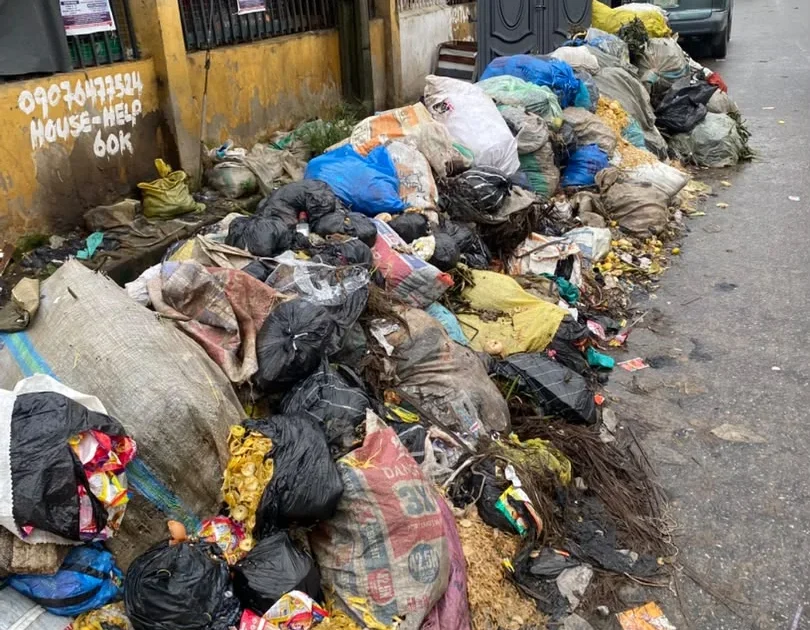
The Lagos State Government has intensified its grassroots environmental awareness campaign, urging residents to adopt proper waste disposal habits as part of efforts to tackle flooding, improve public health and create a cleaner environment.
The renewed appeal was made on Friday during a stakeholders’ environmental enlightenment campaign held in Amuwo-Odofin Local Government Area, where government officials said lasting environmental sustainability depends on the active participation of residents rather than government intervention alone.
Permanent Secretary, Office of Environmental Services, Gaji Omobolaji, said changing public attitudes towards waste disposal remains central to the state’s environmental agenda.
Represented by Director of Environmental Assessment, Olasunkanmi Sojinu, Omobolaji said the campaign was designed to strengthen public understanding of environmental responsibilities and encourage communities to take ownership of sanitation efforts.
He said despite continued government investment in waste collection, drainage maintenance, recycling initiatives and environmental sanitation, indiscriminate refuse disposal continued to undermine those efforts.
“Lagos generates huge volumes of waste every day, and government has continued to invest in environmental infrastructure.
“However, these investments can only deliver results if residents dispose of waste responsibly,” he said.
Omobolaji identified the dumping of refuse on roads, medians, drainage channels and other unauthorised locations as one of the major causes of blocked waterways and recurring floods across the state.
He warned that such practices not only damage the environment but also pose serious health risks and weaken the impact of government interventions.
According to him, maintaining a clean environment requires a collective effort involving residents, businesses, market associations, transport operators, religious bodies and community organisations.
“The government will continue to provide infrastructure, formulate policies and enforce environmental laws, but environmental cleanliness is everyone’s responsibility,” he said.
He said the state would continue to prioritise public education and community engagement alongside law enforcement, insisting that voluntary compliance offers a more sustainable solution than punitive measures.
“We would rather educate than prosecute, prevent than penalise and build a culture of environmental responsibility across our communities,” he said.
Omobolaji disclosed that environmental surveillance has been stepped up across highways, markets, transport corridors and other identified black spots, while sanitation inspections, drainage clearance and the removal of refuse from illegal dumpsites have also been intensified.
He urged local governments and Local Council Development Areas to sustain environmental awareness campaigns within their communities and mobilise residents to participate actively in sanitation programmes.
The permanent secretary also called on traditional rulers, community development associations, market unions, transport groups, the media and the private sector to support efforts aimed at promoting responsible environmental practices.
He advised residents to use only government-approved Private Sector Participation waste operators, avoid dumping refuse into drainage channels and report environmental offences through appropriate government channels.
According to him, the environmental targets contained in the state’s THEMES+ Development Agenda can only be achieved when residents recognise that protecting the environment begins with individual actions.
He encouraged participants to serve as environmental ambassadors by promoting proper sanitation practices in their homes, workplaces and neighbourhoods.
Chairman of Amuwo-Odofin Local Government, Lanre Sanusi, described a clean environment as essential for economic growth and improved living standards.
He urged residents to support government efforts by embracing proper waste management and encouraging others to do the same, stressing that environmental sustainability requires collaboration between government and the public.
Community leaders, traditional rulers, market associations, transport unions, environmental stakeholders and residents attended the sensitisation programme.