

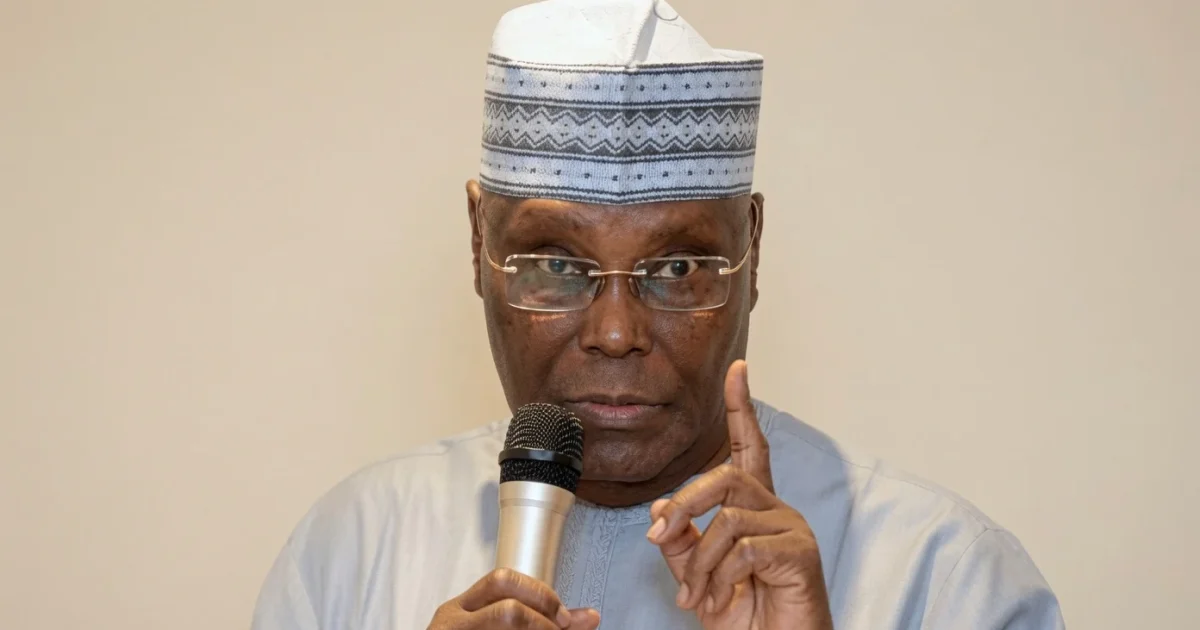
Former Vice President and presidential candidate of the African Democratic Congress, Atiku Abubakar, has criticised the President Bola Tinubu-led government over its decision to suspend the proposed increase in registration fees for the West African Senior School Certificate Examination and the National Examinations Council Senior School Certificate Examination, saying the reversal exposed what he described as a pattern of poor policy formulation.
Reacting to the Federal Government’s decision to halt the planned fee increase after widespread public criticism, Atiku welcomed the suspension but argued that the policy should never have been introduced without adequate consultation.
In a statement issued on Monday by his Senior Special Assistant on Public Communication, Phrank Shaibu, the former vice president described the government’s reversal as a victory for parents, students, labour unions, civil society organisations and other Nigerians who opposed the proposed increase.
“The suspension is welcome, but it also raises an uncomfortable question: why must this government always wait for public outrage before correcting policies that should never have been conceived in the first place?” Atiku asked.
He accused the government of repeatedly introducing policies without sufficient stakeholder engagement, only to reverse course after public backlash.
“Governing is not a laboratory for reckless experimentation. Sound governments consult before they decide, not after Nigerians have been subjected to needless anxiety and uncertainty,” he added
According to Atiku, the proposed increase in examination fees would have placed an additional financial burden on families already struggling with inflation, rising transport costs, higher electricity tariffs and declining purchasing power.
“Education should be the ladder out of poverty, not another luxury reserved for the privileged,” he said.
The former vice president commended parents, teachers, labour organisations, student groups and education stakeholders whose opposition, he said, compelled the government to suspend the proposal.
He, however, urged the Federal Government to go beyond the suspension by engaging stakeholders to develop a sustainable funding model for WAEC and NECO without shifting the financial burden to parents.
“The Federal Government must now engage stakeholders to develop a sustainable funding model for WAEC and NECO that strengthens these examination bodies without transferring the burden to struggling families,” he added.
Atiku also urged the Federal Government to embrace evidence-based policymaking rooted in dialogue and public consultation.
“A government that listens only after Nigerians cry out is a government that has stopped listening to the people it was elected to serve,” he stressed.
Looking ahead to the 2027 general election, the ADC presidential candidate said Nigerians would have a choice between what he described as an administration driven by “trial and error” and an alternative built on governance experience.
“The lesson from this latest policy reversal is simple: a nation as important as Nigeria cannot be governed like a laboratory for endless experimentation. Nigerians deserve leadership that listens before it acts, consults before it decides, and gets it right the first time,” he added.
The Federal Government had earlier announced the suspension of the proposed N50,000 increase in registration fees for the 2027 WASSCE and NECO Senior School Certificate Examination after widespread criticism from parents, students, labour unions, civil society organisations and opposition figures.
The Ministry of Education said the proposal was put on hold to allow for broader consultations with examination bodies, state governments, school proprietors, parents’ associations, organised labour and other stakeholders. It also assured Nigerians that no fee review would take effect until the consultation process had been concluded.
The proposed adjustment had been justified by the government on the grounds of rising costs associated with conducting public examinations, including logistics, security, printing of examination materials, technology deployment and quality assurance. However, critics argued that any increase would further restrict access to education for children from low-income households at a time of widespread economic hardship.