

Aldi is one of the most recognizable grocery chains in the world, known for its no-frills stores, low prices, and growing footprint. As the discount supermarket expands, many investors have started asking a common question: Does Aldi have a stock symbol, and is an IPO coming?
The short answer is that Aldi is not publicly traded, which means that there is currently no Aldi stock price or ticker symbol available on any exchange. However, the company’s massive global presence and expansion make it a frequent topic of speculation among investors who believe an initial public offering could one day happen.
This guide explains everything investors should know about Aldi’s ownership, why it is private, whether an IPO is likely, and how investors might gain exposure to the grocery retail sector in the meantime.
What Is Aldi?
Aldi is a German discount supermarket chain that founded in 1946 by brothers Karl and Theo Albrecht. The company name comes from “Albrecht Diskont,” reflecting its business model of offering high-quality products at low prices through streamlined operations.

Karl and Theo Albrecht
Today, Aldi has grown into a global grocery powerhouse with more than 13,000 stores worldwide operating across Europe, the United States, Australia, and Asia.
One of Aldi’s defining characteristics is its focus on efficiency. Stores are smaller than traditional supermarkets, product selections are limited, and many items are sold under private labels. These strategies allow Aldi to maintain some of the lowest grocery prices in the industry.
Is Aldi Publicly Traded?
No, Aldi is not publicly traded, which means there is no Aldi stock price and no ticker symbol available to investors. The company operates as a privately held business and does not list shares on public exchanges such as the NYSE or NASDAQ.
Unlike publicly listed retailers that raise capital through the stock market, Aldi has historically relied on internal funding and private ownership structures. Because of this, retail investors cannot purchase Aldi shares through typical brokerage platforms.
Why Aldi Doesn’t Have a Stock Symbol
There are several reasons why Aldi has remained private for decades.
Family Ownership and Control
Aldi is still controlled by the Albrecht family and associated foundations, which have historically prioritized maintaining long-term control of the business rather than bringing in public shareholders.
Remaining private allows the company to focus on strategic growth without the pressure of quarterly earnings reports or shareholder expectations.
Long-Term Business Strategy
Aldi’s business model places a lot of emphasis on efficiency, cost discipline, and gradual expansion. Operating privately allows management to focus on long-term investments rather than short-term market reactions.
Financial Strength Without Public Funding
Unlike many retailers that rely on capital markets, Aldi has been able to grow through internal resources. Because the company has remained highly profitable, there has been little incentive to pursue an IPO.
Understanding Aldi’s Unique Corporate Structure
Another factor that complicates the possibility of an IPO is Aldi’s unusual corporate structure.
The company actually consists of two separate businesses:
Aldi Nord (North) – Operates in parts of Europe and owns the US grocery chain Trader Joe’s.
Aldi Süd (South) – Runs the Aldi stores in the United States, the United Kingdom, Australia, and several other markets.
These two organizations split in the 1960s after a disagreement between the founding brothers and have operated independently ever since.

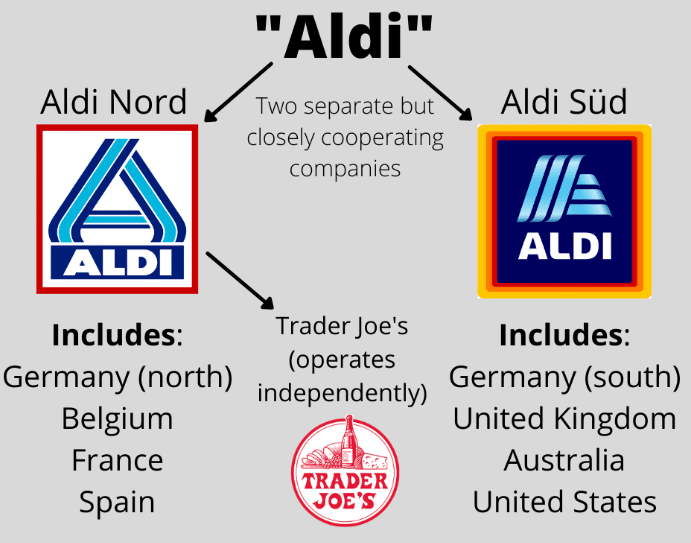
Because they function as separate private companies, an IPO would likely require structural changes before either entity could list publicly.
Could Aldi Have an IPO in the Future?
There has been occasional speculation that Aldi might eventually consider going public. However, analysts generally believe an IPO is unlikely in the near term.
Several factors suggest Aldi may continue to remain private:
The company has maintained strong profitability without public capital.
Ownership is closely tied to family foundations.
Management values operational independence.
While an IPO is always possible in the future, there are currently no official plans for Aldi to list on a stock exchange.
How Investors Can Gain Exposure to Aldi’s Market
Although you cannot buy Aldi stock directly, investors can still gain exposure to the grocery sector through publicly traded competitors.
Examples of companies operating in similar retail segments include:
Large supermarket chains
Discount retailers
Consumer staples companies
These firms compete directly with Aldi and often experience market pressure from what analysts call the “Aldi effect,” where the company’s low prices force competitors to lower their own prices.
Aldi’s Global Expansion Strategy
Even without an IPO, Aldi is still growing aggressively.
In the United States, the company has been expanding its store footprint and recently acquired multiple supermarket chains to convert locations into Aldi stores.
The company’s strategy focuses on:
Small, efficient store layouts
Private-label products
Limited inventory
Competitive pricing
This formula has helped Aldi compete with major retailers like Walmart and Costco while maintaining strong customer loyalty.
Final Thoughts
While interest in Aldi stock price and symbol grows, the reality is that Aldi remains a privately owned company with no publicly traded shares. For now, investors cannot buy Aldi stock directly.
If Aldi ever announces an IPO, it would almost certainly become one of the most anticipated retail listings in the market. Until then, investors interested in the grocery sector will need to look at publicly traded competitors for exposure.