


More Than $75B Liquidated — Why Crypto Rebounded Within 24 Hours
Crypto markets stunned investors this weekend, but the rebound was not accidental.
According to market analyst Diana, the sharp recovery wasn’t random; it was strategic positioning.
Following the sudden geopolitical escalation involving the United States, Israel, and Iran, over $75 billion was erased from the crypto market within minutes. Panic selling drove Bitcoin toward $63,000, Ethereum down to nearly $1,900, and XRP to $1.29, triggering widespread liquidations and fear across the market.
Then came the reversal no one saw coming.
In less than 24 hours, the market snapped back with force. Bitcoin surged past $67,000, now hovering near $67,941. Ethereum climbed back toward the critical $2,000 level, while XRP rebounded to $1.36, according to CoinCodex data.
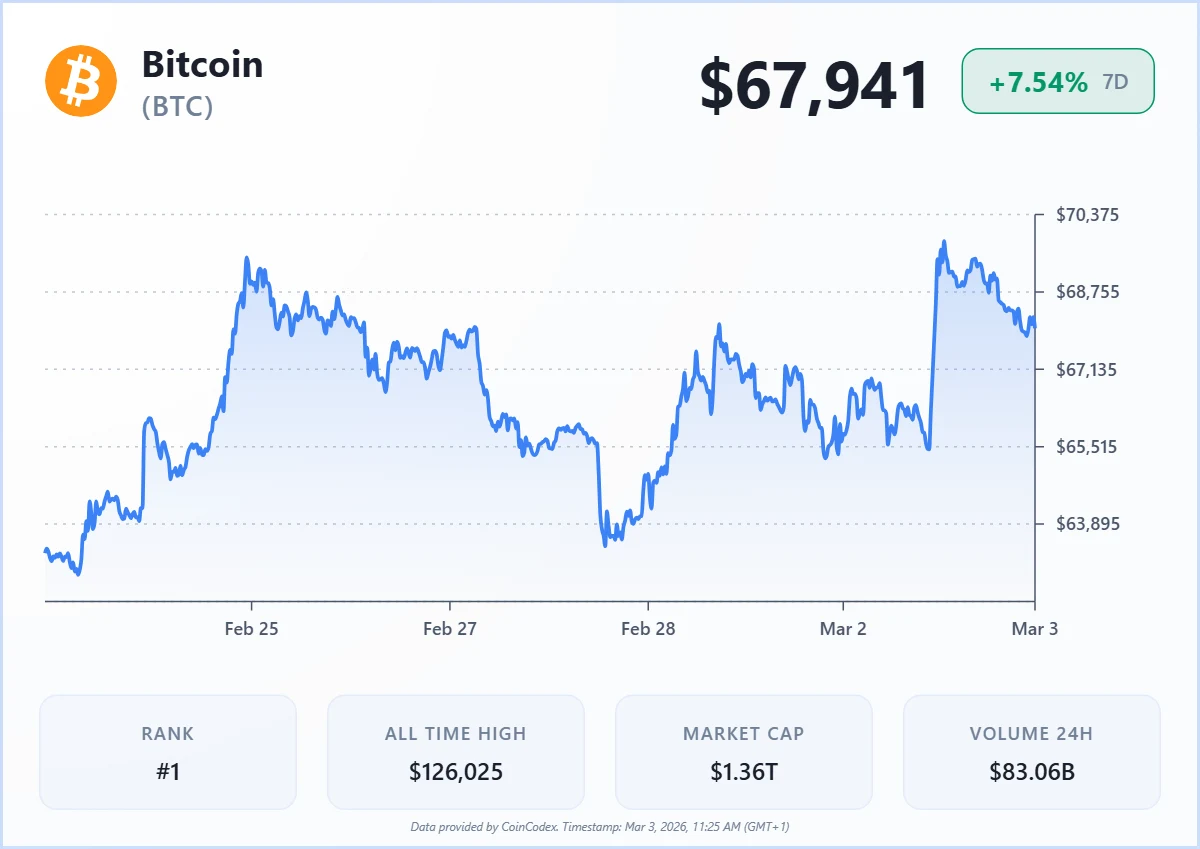
What looked like a full-blown breakdown quickly turned into a powerful recovery, signaling aggressive dip-buying and renewed investor confidence.
Markets Began Pricing a Shorter Conflict
Traders rapidly recalibrated geopolitical risk. As reports suggested Iran’s leadership was destabilized, betting markets priced in a 60–70% chance of a near-term ceasefire, shifting expectations away from a drawn-out global conflict.
The narrative flipped fast, from “World War III” fears to a contained military operation scenario. With worst-case outcomes suddenly looking less likely, risk appetite returned, and crypto responded immediately.
Big Money Bought the Fear
As retail traders scrambled to exit, institutional capital quietly stepped in.
On-chain data revealed heavy transfers into accumulation wallets, with whales and funds aggressively positioning for upside. To seasoned investors, the sell-off wasn’t structural, it was a liquidity reset. The dip became a strategic entry point.
This is a classic crypto cycle: panic wipes out overleveraged positions, weak hands fold, strong hands accumulate and price stabilizes swiftly.
Adding fuel to the narrative, Morgan Stanley is reportedly eyeing a U.S. bank charter to expand institutional crypto custody, a move that signals deepening Wall Street commitment to digital assets even amid volatility.
The Weekend Liquidity Effect
Crypto never sleeps, unlike traditional markets. Weekend liquidity is thin, so even modest institutional inflows can trigger sharp price swings. This same low liquidity magnified both the initial crash and the rapid rebound.
U.S. Leadership Signaled Containment
Donald Trump called the strikes ‘effective’ and ‘ahead of schedule,’ signaling controlled operations rather than an open-ended escalation. Markets read this as a move to contain the conflict, easing fears of a worst-case scenario.
Meanwhile, Indiana is set to require pension funds to offer cryptocurrency investment options by 2027, reflecting growing institutional crypto adoption.
Conclusion
Notably, the crypto market didn’t ignore the war, it repriced it. Digital assets are now macro-sensitive, lightning-fast markets. Uncertainty sparks volatility, but stability attracts capital just as quickly. In crypto, fear is fleeting, but liquidity and conviction endure.