
Nigeria’s AI readiness and insights from India’s Seven Chakras, by Jimeh Saleh — Daily Nigerian

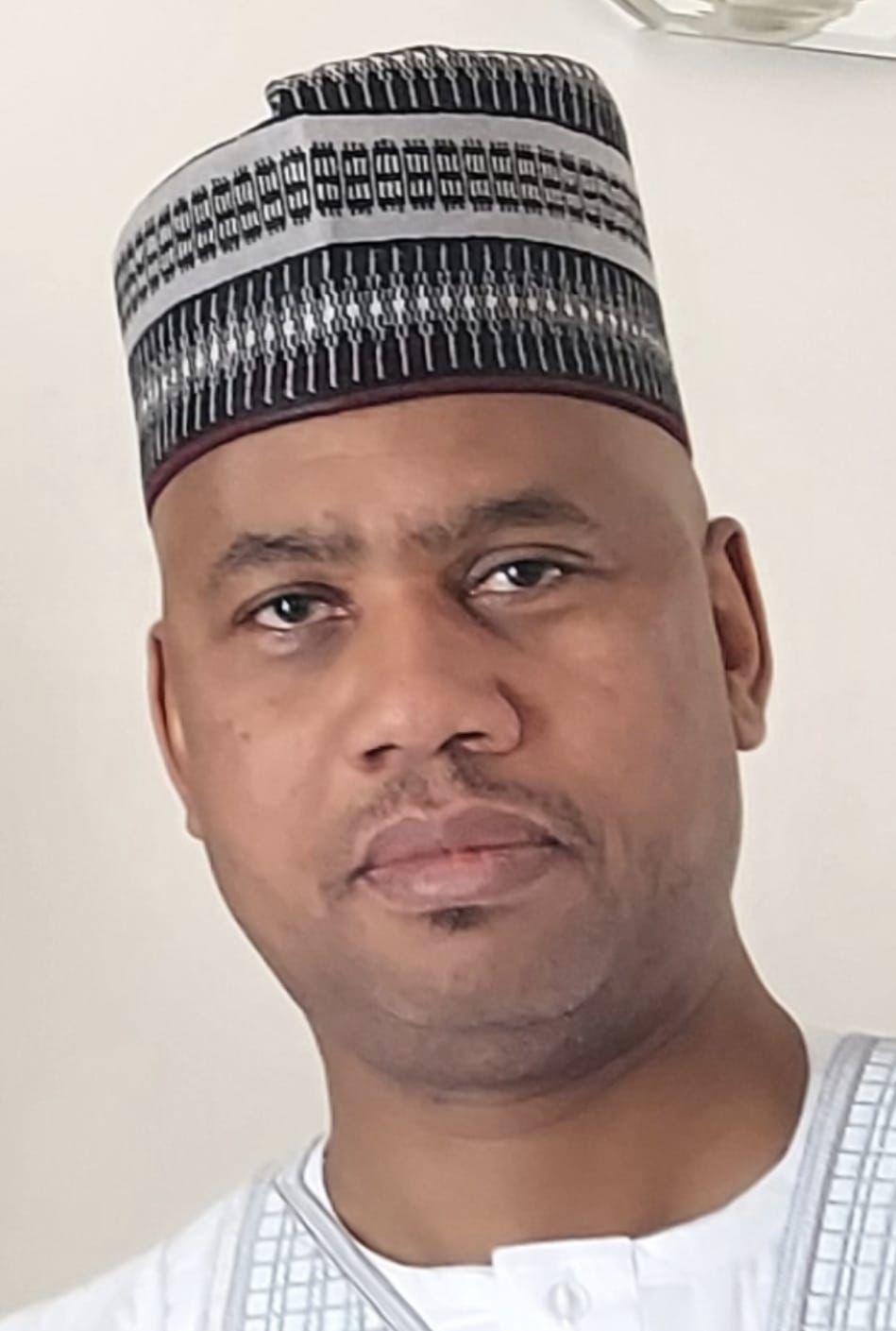
From cutting edge AI tools that support medical diagnosis to digital solutions helping farmers save time and increase yield, some of the world’s most advanced Artificial Intelligence innovations were on display in New Delhi at the recently concluded Global AI Impact Summit. Among the Nigerian delegates was Jimeh Saleh of Amana Inclusive Technology Initiative. He reflects on what the experience reveals about Nigeria’s readiness for the AI revolution and the lessons the country can draw from India’s impressive AI ecosystem.
For one week, the global technology community converged on New Delhi, with major IT companies showcasing their latest innovations. Real, Artificial Intelligence was everywhere. Yet, beyond the expert sessions and tight security, what struck me most was not the flashy tools from Meta, Google, or Cisco. It was the overwhelming, homegrown Indian AI ecosystem powered by healthy competition among states and ministries, each proudly displaying locally built solutions.
The Department of Rural Development, for instance, has quietly solved a challenge that continues to elude many countries, including Nigeria. Its AIsupported system for cash transfers under the National Social Assistance Programme (NSAP) uses face authentication for secure beneficiary verification, unified digital payments, and realtime monitoring for accountability. Officials told me that over $700 million has been successfully disbursed to vulnerable groups such as widows and persons with disabilities.
The Ministry of Agriculture and Farmers’ Welfare is another standout. Its AIpowered chatbot, Bharati, provides farmers with loan information, advisories, and support in local languages. Bharati is accessible even on basic feature phones without internet access. Farmers simply dial a number, ask a question, and receive instant guidance.
Nigeria and India share similarities in climate, linguistic diversity, and social inequality. Even our education systems bear the imprint of a common colonial history. But India’s AI revolution is anchored in its Seven Chakras, a set of principles rooted in ancient philosophy and aligned with the human body’s energy centres. These Chakras guide India’s AI governance: ensuring safety, trust, inclusion, economic development, and people-centred innovation.
I met developers who spoke little English and yet they were behind some of the most impressive tools on display at the summit. This reinforces the importance of linguistic inclusion which Nigeria should take seriously. With millions of techsavvy young people outside the formal school system, translating learning materials into major local languages could unlock enormous potential. Our rigid insistence on “five credits and above” or the ability to speak flawless English continues to exclude brilliant minds who could otherwise build local solutions.
True AI inclusion is impossible when language itself is a barrier.
India’s success is also rooted in strong foundations in science and mathematics often also taught in local languages like Hindi or Tamil. My visit coincided with board examinations – India’s version of WAEC or NECO. Students spoke passionately about mathematics and physics, and expressed confidence in the integrity of their exams. In contrast, Nigeria’s compromised standards have eroded trust to the point where parents no longer fear failure because they know there ways of beating the system.
At the heart of India’s AI leap is a robust public AI infrastructure consisting of over 50,000 Nvidia Graphics Processing Units (GPUs) made accessible to individual developers, and not just big corporations or so called tech start-ups which are mostly profit driven.
True to one of its Seven Chakras, India has lowered entry barriers by massively crashing the cost of access to GPUs to about 65 Rupees ($0.7) per hour through its national AI portal. The country also launched AI Kosha – more than 300 ready-to-use data sets across agriculture, healthcare, logistics, etc. This is certainly a developer’s dream and a goldmine for the country’s coders who get localised and usable data for free! AI servers are also being deployed in public spaces to ensure fast responses even with slow internet.

This progress is enabled by reliable security and steady electricity which are two major areas where Nigeria continues to struggle. In Old Delhi (where I stayed) despite the visible poverty, I did not hear of a single mugging or pickpocketing incident, and the electricity never blinked, not even for a minute.
Even by sub-Saharan African standards, erratic power supply is becoming a thing of the past.
Rwanda and Ethiopia are embracing technology as a cornerstone for national development. Both countries are successfully deploying AI in agriculture, healthcare and education. Prime Minister Abiy Ahmed of Ethiopia has even announced his most ambitious AI bet yet: a dedicated AI university which is scheduled to open soon.
Nigeria cannot build a meaningful AI ecosystem without reliable national datasets, linguistic inclusion, and a deliberate AI literacy drive. Basic AI literacy training should be mandatory for senior government officials, who must understand AI’s potential to transform governance, improve efficiency, and strengthen accountability.
It is contradictory for AI tools to be good enough for banking security but suddenly inadequate for transmitting election results.
During a visit to the exhibition stand of one of the ministries, I was discussing the possibility of adapting one of the open‑source tools for deployment in Nigeria when one of the Indian officials mentioned that some very high‑profile representatives from a particular Nigerian ministry had visited them last year and were equally impressed with the tool. According to the officials, they offered the product to the Nigerian delegation and even promised free technical support to help the ministry deploy it. The Nigerian officials excitedly promised to get back, but they never did.
Despite its challenges, Nigeria still attracts significant interest from global investors. At the Nigeria AI Collective exhibition stand, I witnessed genuine enthusiasm from international stakeholders. But progress requires alignment: state governments and ministries must key into the federal government’s AI vision championed by the Minister of Communications and Digital Economy, Bosun Tijjani. Elevating AI to a cabinetlevel portfolio could accelerate investment, localisation of data, and national coordination.
However, these ambitions will remain difficult without a strong legal framework and consistent budget implementation. Given Nigeria’s status as a top destination for big tech, I propose a 2% annual levy on the profits of major technology companies operating in the country. This could sustainably fund AI education and workforce development at scale.
Nigeria stands at a pivotal moment because it has the talent, the market, and the ambition to become a continental AI leader, but it must build the right foundations, reliable data, inclusive education, strong infrastructure, and a governance philosophy rooted in trust and accountability. India’s Seven Chakras show that progress is possible when innovation is guided by commitment and clear values.
Jimeh Saleh is the Executive Director of Amana Inclusive Technology Initiative – a nonprofit dedicated to AI literacy and making AI tools accessible and beneficial to marginalised communities.
jimeh@amanatech.org