


Brent crude surged between 10% and 13% in early trading, briefly climbing above $82 per barrel before easing near $78–$79 as of writing. West Texas Intermediate rose more than 8% to around $72 per barrel. The sharp move followed U.S.-Israeli strikes on Iran and retaliatory Iranian attacks near the Strait of Hormuz.
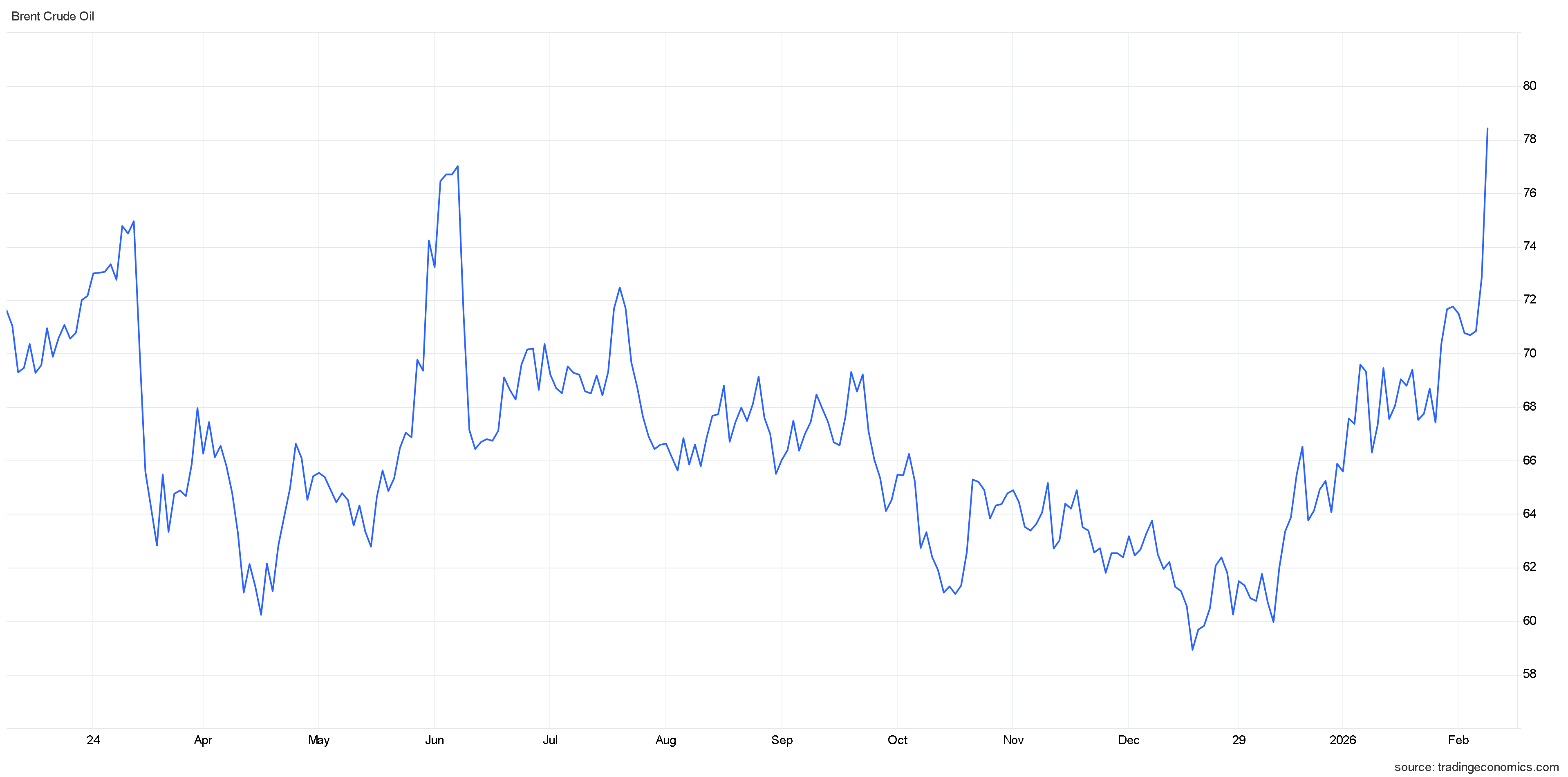
Source: Trading ECONOMICS
Reports confirmed that at least three vessels came under attack near the critical waterway. The UK Maritime Trade Operations center said projectiles struck two ships and exploded near a third. Iran’s Islamic Revolutionary Guard Corps claimed responsibility for targeting U.S.- and U.K.-linked tankers.
How significant is this chokepoint? The Strait of Hormuz handles roughly 15–20 million barrels of oil per day, about one-fifth of global consumption. It also carries nearly 20% of global liquefied natural gas shipments. Any disruption there immediately tightens supply expectations.
Shipping Routes Face Sudden Disruption
Major shipping firms reacted quickly. German carrier Hapag-Lloyd halted transits through the strait. Dozens of very large crude carriers idled inside the Persian Gulf or anchored outside the passage. Ship-tracking data showed a steep drop in traffic, with more than 150 tankers holding position.
Insurers raised war-risk premiums, while some withdrew coverage altogether. That decision slowed maritime flows even without a formal closure. Analysts described the situation as an “effective disruption” driven by security fears rather than physical blockades.
Iran stated that it has not declared a full closure of Hormuz. However, Tehran warned that continued military operations would carry consequences for regional stability. When commercial operators pause movement, energy markets react first and ask questions later.
Dow Futures Slide As Risk Appetite Fades
Dow Jones Industrial Average futures fell 559 points, or 1.15%, in early trading. S&P 500 futures dropped 1%, while Nasdaq 100 futures slid 1.6%. Investors weighed the risk of prolonged conflict and higher energy costs.
Gold futures jumped 3% to trade above $5,400 as traders shifted toward safe-haven assets. Bond yields dipped, reflecting broader economic caution. Could sustained oil prices reignite inflation pressures just as economies attempt to stabilize growth?
Barclays strategist Ajay Rajadhyaksha noted that tail risks now exceed those seen in previous years, though he stopped short of predicting a dramatic shift in the U.S. outlook. Citi strategists warned that markets now juggle geopolitical shocks alongside concerns about artificial intelligence-driven disruption and slowing equity momentum.
Limited Spare Capacity Raises Stakes
OPEC+ agreed to increase output by 206,000 barrels per day in April, ending a production pause. Analysts described that increment as modest relative to potential Hormuz disruptions. Spare capacity remains concentrated in Saudi Arabia and the UAE.
Iran accounts for roughly 4.5% of global oil output. Any sustained interruption to its exports could tighten global balances quickly. Energy analysts at Wood Mackenzie suggested that crude could exceed $100 if tanker traffic fails to resume soon. Goldman Sachs estimated an $18 per barrel geopolitical premium, while Citi projected Brent between $80 and $90 in the near term.
The International Maritime Organization urged caution and stressed the need to protect civilian crews after injuries and at least one fatality occurred during the attacks. Now, we monitor every headline. Will diplomatic channels cool tensions, or will further strikes amplify volatility? Oil traders, equity investors, and policymakers now watch the Strait of Hormuz as the focal point of global risk.