
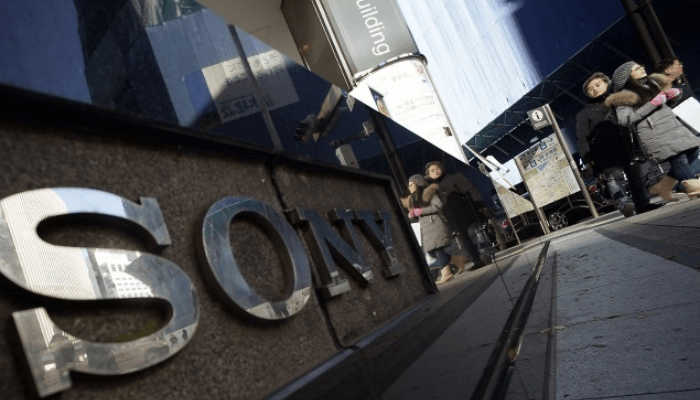
The recent unveiling of a new Sony Group AI system, capable of measuring the use of copyrighted material in tracks created by artificial intelligence, has brought Nigeria’s legal framework into sharp focus, highlighting the urgent need for updated copyright protection.
Developed by Sony AI, the tool aims to equip rights holders, including vulnerable Nigerian artists, with the ability to prove unauthorised use of their work and claim a share of revenue. However, industry experts warn that the country’s Copyright Act of 2023 says “little or nothing” about artificial intelligence, creating a clear enforcement gap.
The tool, developed by Sony AI, works in two ways. If the AI company cooperates, it checks the model’s training data directly. If not, it compares the finished track with existing music catalogues. The aim is to allow rights holders claim a share of revenue if unauthorised use is proven.
Read also: Nigerian music industry risks billions in lost royalties amid copyright levy dispute
In Nigeria, where Afrobeats has become a global force, such detection matters. Artists like Fave saw an unauthorised AI choir version of her 2025 song ‘Intentions’ go viral on TikTok under the name Urban Chords. She later released her own version with the AI elements, but many creators lose streams and income before they even notice.
This is not only in Nigeria, but a global issue, as most copyright laws were signed and passed before the launch of new AI tools. As of early 2026, the music industry is grappling with a “flood” of AI-generated music (roughly 50,000+ new tracks daily on some platforms) and navigating legal challenges regarding unauthorised training data, with major labels seeking compensation for the use of their catalogues.
Record labels (Universal, Sony, Warner) are heavily litigating against AI platforms like Suno and Udio, arguing that training AI models on copyrighted songs without consent constitutes “mass copyright infringement.”
Joseph Abiagom, former president of Aristokrat Records and current founder/CEO of Run Am Projects, emphasises that Nigeria’s music ecosystem must first fully embrace AI before addressing tools like Sony’s detection system. He describes the current landscape as fragmented: the saturated industry has only a small niche audience accepting AI’s presence, with even fewer actively using it in music creation.
Abiagom says that while many still debate its merits locally, discussions that ended internationally years ago, others who accept it lack clear guidance on application.
Nigeria’s main law is the Copyright Act, signed on 17 March 2023. It repealed the older Copyright Act of 2004 and added some updates, but it says little or nothing about artificial intelligence. The Act protects works created by humans. It does not clearly say whether using songs to train AI models counts as fair use or infringement. It also does not explain who owns music made mostly by machines.
The Nigerian Copyright Commission (NCC) can ask for access to AI systems if it suspects a breach, but enforcement remains difficult without reliable ways to prove what the AI used.
Henry Ezikeoha, an entertainment and intellectual property lawyer, says music companies cannot wait for the government. “I’m of the view that generally the first responders to a disadvantage of technology are largely those who are affected. The music companies are in the business to make money, so protecting their IP is the way out. If not, they’ll run out of business.”
Ezikeoha also mentioned that the Nigerian regulatory bodies are slow in catching up with the advanced nations, citing how long it took for the government to repeal the Copyright Act of 1988, which was just signed in 2023.
“I always see more private institutions, looking for ways to tackle AI, doing legal use of AI in the music industry, just so that they stop losing money and people are not reaping where they didn’t sow. If you’re a publisher, a composer, or a record label, and you’re waiting on the government to help you find an AI tool to fight this, you might just be out of business before the government comes to your aid,” Ezikeoha said.
Ezikeoha adds that existing law already bans illegal use of copyrighted material, but the real barrier is detection. “With that foundation, anyone who tries to use AI illegally can always be nailed down on one or two sections of the law. That one is for sure. Because everything still borders on illegal use of a copyrighted work.”
He believes tools like Sony’s AI could fill that detection gap immediately. Labels and publishers could use them now while waiting for new rules. This private-sector approach, he says, has already started in other countries.
Excel Umeh, Nigerian Music analyst, sees the Sony development as a sign that big players are watching Nigeria, but still doubts the level of effectiveness in the Afrobeats space.
“My initial thought is that it’s a positive sign. It shows that major labels like Sony Music Entertainment are paying attention to the Nigerian market and investing in infrastructure. That said, I still have reservations about how effective this tool will be in the Afrobeats space. We already have a serious metadata problem in this part of the world, and unless there’s proper education and enforcement around credits and data entry, adoption could be a challenge,” Umeh said.
Umeh appealed for DSPs like Spotify, Apple Music, and Tidal to implement stronger AI detection and authentication systems before approving uploads. He adds that there needs to be clear labelling of AI-generated content and stricter verification of ownership.
The NCC already holds powers to inspect databases and demand information from AI creators when infringement is suspected. Experts suggest the commission could go further: test Sony-style detection systems on Nigerian catalogues, set standards for local developers to build similar tools, or partner with international firms to scan Afrobeats works. Such steps would not require a full rewrite of the law.
Local tools could also emerge. Nigerian tech firms or universities could adapt the methods to focus on Afrobeat rhythms, pidgin vocals, and highlife samples that global AI models often scrape from public platforms.
To compete globally, Abiagom identifies core fundamentals that Nigeria must resolve first. He calls for licensed African music datasets to train local or adapted AI models, noting that major players like Sony, Suno, and Udio rely on licensed catalogues while much of Nigeria’s scene still operates informally, “most things are still run on vibes,” he said.
Read also: Is AI using Afrobeats lyrics without artists’ permission?
He highlighted the need for deep AI-tech startups focused on royalty tracking, prediction, and related systems, alongside greater capital availability to fuel rapid development.
Without action, the gap widens. AI companies based outside Nigeria train on vast libraries that include Nigerian hits. The resulting tracks earn money on global platforms while original creators see little or no return from such generated music.
Streaming services sometimes fail to catch AI uploads that mimic real songs, hurting both revenue and data accuracy. For example, Stromae’s ‘Papaoutai’, which had an AI version that was popularised during the 2026 AFCON, could see the artist unlikely to directly earn royalties from AI-generated covers of his song, despite the original composition being his copyrighted work, according to reports.
Sony has its own operations in Lagos through Sony Music West Africa and Sony Music Publishing Nigeria. With artists such as Davido (signed via RCA Records since 2016), Wizkid, Tems, Lojay, 1da Banton, Odeal, and, most recently, Bright Chimezie, a highlife legend, and Ric Hassani, the company’s global move adds weight to calls for local readiness.
If the NCC adopts or encourages matching technology, it could give Nigerian artists the same tools that major labels now hold. For now, the message is clear. Detection technology exists. Nigeria’s laws provide a foundation to act on what is found. The missing piece is speed – from the commission, from the Senate, and from the industry itself. Creators who wait for perfect legislation risk losing ground in a market that moves faster than regulators.