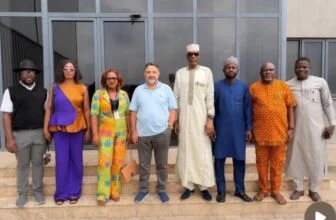

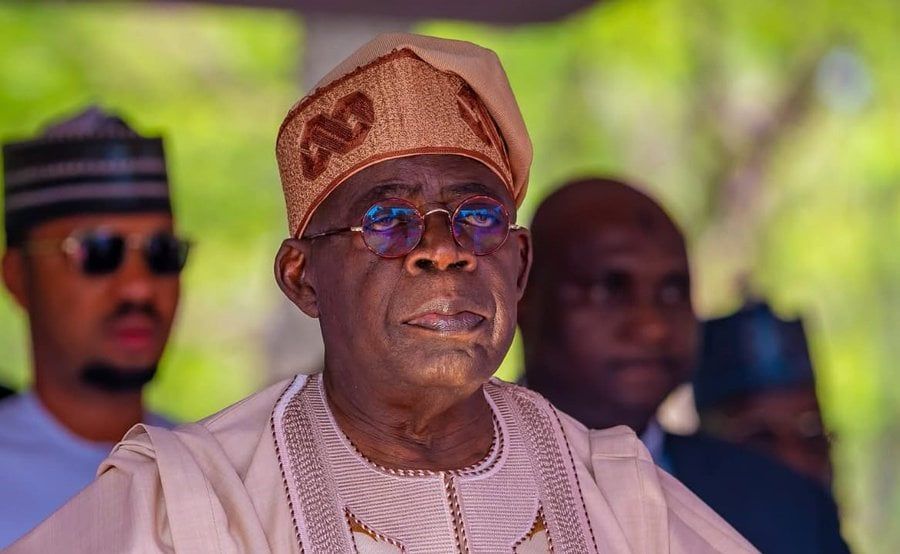
Political activity ahead of the 2027 general elections intensified on Monday as President Bola Tinubu joined governors under the Progressive Governors Forum (PGF) in a high-level meeting with the leadership of the Nigeria Labour Congress (NLC) at the Presidential Villa, Abuja.
The summit, hosted by the PGF at the State House Banquet Hall, began at 11:00 a.m., with President Tinubu serving as Special Guest of Honour.
Observers describe the gathering as a strategic effort to strengthen dialogue between the Federal Government, state executives, and organised labour amid mounting economic pressures and political recalibration ahead of next year’s elections.
Sources within the NLC told Vanguard that the labour leadership planned to present its charter of demands directly to President Tinubu. Key items on the charter include wage adjustments, job security, and protection of workers’ livelihoods, particularly as Nigeria navigates economic and climate transitions.
The charter also proposes the creation of a dedicated Just Transition Fund, massive green job creation, reskilling programmes, strengthened social protection, and institutionalised tripartite dialogue between government, employers, and labour.
Labour insiders noted that the summit could be pivotal given recent tensions over wage negotiations, inflation, and economic reforms.
They emphasised that the outcome would test the government’s commitment to translating dialogue into concrete action rather than symbolic gestures.
“Wage debates, fuel subsidy removals, and inflation have tested labour-government relations,” a labour leader said. “Direct engagement at Aso Rock signals an attempt to reset the narrative — or prevent escalation.
Labour is a decisive political force heading into the 2027 elections. The summit could reset relations amid economic pressures.”
The NLC also highlighted priorities such as government-backed training programmes for emerging sectors, expanded pensions and healthcare access, unemployment safety nets, and strengthened participation in policy and economic reforms through tripartite mechanisms.
Analysts note that the governors’ involvement signals coordinated political alignment, and the outcomes of the summit may determine whether negotiation replaces public protests as labour’s primary channel of influence.
With millions of members across strategic sectors, the NLC remains a critical mobilisation bloc capable of shaping public opinion in a challenging economic environment.