

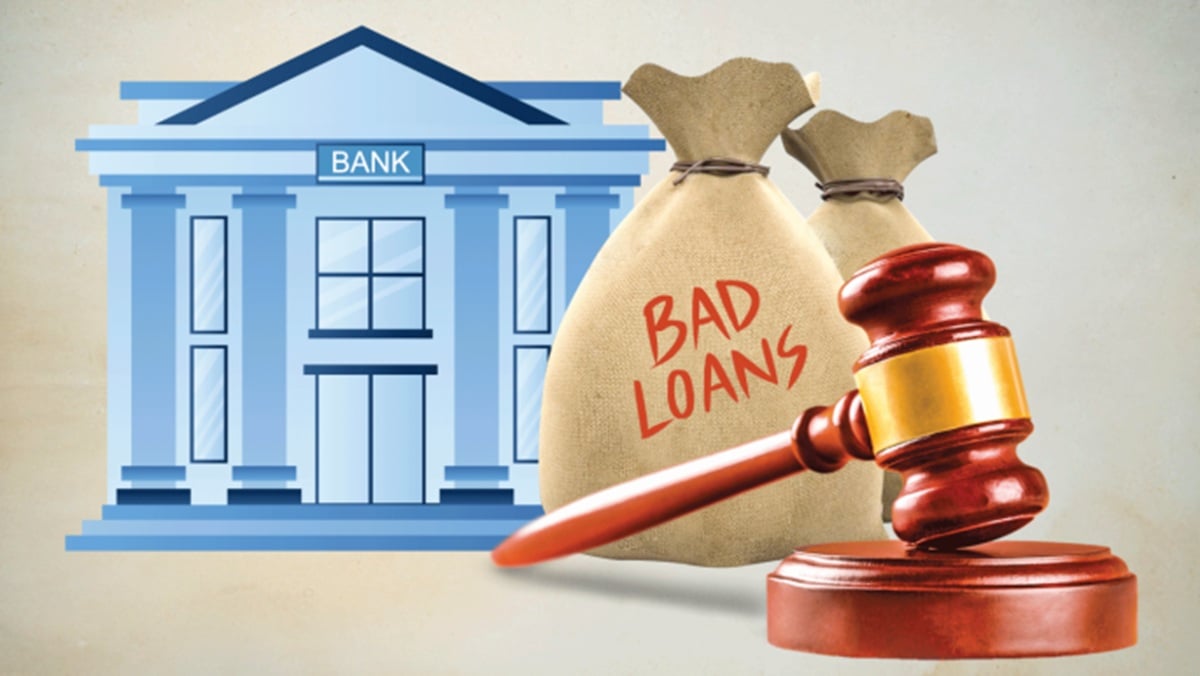
Nigerian banks are facing renewed scrutiny as aggressive clean-up of legacy bad loans from past years weighs heavily on profitability, sparking debate among investors, regulators and customers about the true health of lenders’ balance sheets and the long-term implications for the financial system.
The spotlight has fallen sharply on First HoldCo Plc, which reported a massive ₦748 billion loan impairment charge in a single quarter, one of the largest write-offs in the history of Nigeria’s banking industry. The move contributed to a sharp plunge of about 92 per cent in the group’s headline profit, triggering mixed reactions across the market.
First HoldCo’s action is not isolated. Data from financial disclosures show that 10 leading deposit money banks declared a combined ₦1.99 trillion in loan impairment charges in the nine months ended September 2025, representing a 44.5 per cent increase over the ₦1.37 trillion recorded in the corresponding period of 2024.
The banks involved include Access Holdings Plc, Guaranty Trust Holding Company Plc (GTCO), First HoldCo Plc, Zenith Bank Plc and United Bank for Africa Plc (UBA). Others are Ecobank Transnational Incorporated, Wema Bank Plc, Fidelity Bank Plc, Stanbic IBTC Holdings Plc and Sterling Financial Holdings Company Plc.
This is coming after top Nigerian lenders recorded N3. 722 trillion in Loan Provisioning between 2020-2025 according to data from Renaissance Capital Africa.
Analysts say a key driver of the elevated provisioning was the industry-wide wind-down of the Central Bank of Nigeria’s (CBN) forbearance regime, which had allowed banks some flexibility in classifying and provisioning for stressed loans. With the regulator now insisting on stricter recognition of impaired assets, lenders have been forced to confront long-standing non-performing loans head-on.
In explaining First HoldCo’s exceptional charge, Chairman Femi Otedola said the group deliberately chose to “clean house properly” rather than continue to carry toxic assets on its books.
“At First HoldCo we decided to clean house properly. We took a huge one-time hit of ₦748bn to admit old bad loans instead of pretending they do not exist. That is why profit looks like it crashed by 92 per cent. Painful headline, but it is a serious long-term move,” Otedola wrote on his verified X handle.
According to him, the decision was taken in response to pressure from the CBN for banks to stop deferring problems and to improve transparency across the sector. “Why do this now? Because the central bank is pushing banks to stop kicking problems down the road. So First HoldCo basically closed the chapter on messy loans from past years, which sends a clear message that borrowing has consequences and helps rebuild trust,” he stated.
Otedola stressed that despite the hit to profit, the group’s underlying business remains strong. He disclosed that First HoldCo generated ₦2.96 trillion in interest income and ₦1.91 trillion in net interest income during the period, giving it the capacity to absorb the clean-up without threatening its stability.
“The key point is this: our business itself is still strong. Bad loans cleared plus a strong income engine plus long-term thinking equals real value creation. We go into 2026 lighter, cleaner and better prepared for the recapitalisation era and serious growth,” he added.
Some industry watchers have praised the move as a necessary reset. One analyst described FirstBank’s approach as “a difficult but commendable strategy that prioritises long-term sustainability over short-term optics.”
“The combination of a strong income engine, cleared bad loans and long-term thinking shows commitment to building a healthier institution,” the analyst said.
However, the large-scale write-offs have also reignited public criticism about credit culture in Nigeria and who ultimately bears the cost of failed loans. Critics argue that many of the impaired facilities were extended to large corporates and politically exposed individuals, not small businesses, raising concerns about weak risk management and accountability.
Some commentators have gone further, warning that although banks record the losses on their books, customers may eventually feel the impact through higher lending rates, increased fees or tighter credit conditions. “When banks say they are taking a hit, it rarely ends with shareholders alone. One way or another, the cost is often passed on to customers,” one market observer noted.
Despite the controversy, banking sector analysts broadly agree that the current wave of impairments, while painful, could strengthen the industry if it leads to cleaner balance sheets, improved governance and more disciplined lending practices.
With the CBN pushing ahead with recapitalisation plans and tighter supervision, banks are expected to continue recognising legacy losses, even at the expense of near-term profitability. The consensus among experts is that the true test will be whether the clean-up translates into a more resilient banking system that supports sustainable economic growth, rather than a repeat of past excesses.
ALSO READ: Tinubu yet to redeem pledge on power stability — Peter Obi
For now, the sharp impairment charges serve as both a reckoning with old sins and a signal of a tougher regulatory era for Nigerian banks—one where transparency and balance sheet strength take precedence over headline profits.
WATCH TOP VIDEOS FROM NIGERIAN TRIBUNE TV