
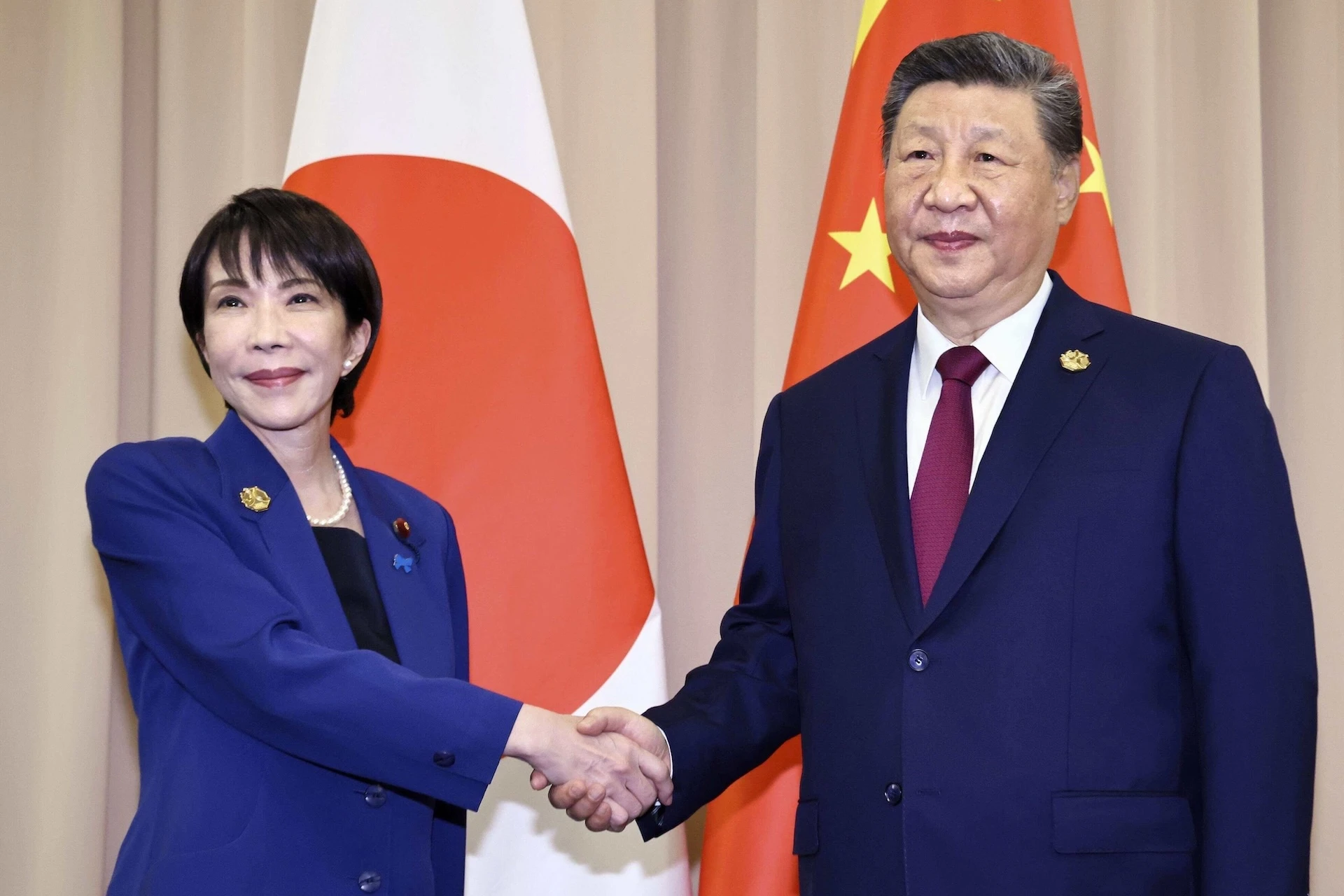
Japanese Prime Minister Takaichi Sanae triggered her country’s worst spat with China in recent memory last month when she told lawmakers that a Chinese attack on Taiwan could, in the worst-case scenario, “constitute a survival-threatening situation” for Japan. Given that language would allow the deployment of troops to protect the Japanese homeland, China responded vociferously, with one Chinese diplomat appearing to threaten Takaichi’s life. The Ministry of Foreign Affairs in Beijing accused Takaichi of interfering in its internal affairs and urged Tokyo to “to refrain from going further down the wrong path.”
Since then, Takaichi has chosen a conciliatory route, seeking a return to the stable ties that she and Chinese leader Xi Jinping pledged to maintain during their meeting in October on the sidelines of the APEC summit. But Beijing refuses to let her off the hook. She has consistently called China “an important neighbor” and left the door open for dialogue. But Beijing has responded by demanding a full retraction of Takaichi’s Taiwan comments. “On key issues, Japan is still ‘squeezing toothpaste’ and ‘burying nails,’ attempting to obfuscate and muddle through,” a Chinese Ministry of Foreign Affairs spokesperson complained earlier this month, using Chinese idioms to accuse her of making inadequate or insincere gestures.
Beyond the florid rhetoric, Beijing has also taken concrete countermeasures. On Dec. 14, it imposed sanctions against Iwasaki Shigeru, a former chief of staff of Japan’s Self Defense Forces who serves as a consultant to Taiwan’s Cabinet, for his actions that Beijing says “seriously interfered” with and violated the “One China” principle. Penalties include visa restrictions, a freeze on his Chinese properties and prohibition on transactions or cooperation with Chinese individuals and organizations.