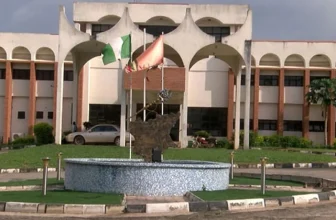


The federal government and the Niger state government have entered into a partnership to develop large-scale integrated housing and agricultural settlements aimed at boosting food security, rural stability, and inclusive economic growth, in line with President Bola Ahmed Tinubu’s Renewed Hope Agenda.
The agreement was formalised through a Memorandum of Understanding between the Niger State Government and the Ministry of Finance Incorporated, with senior federal and state officials describing the initiative as a practical response to Nigeria’s intertwined challenges of housing deficits, food insecurity, unemployment, and rural underdevelopment.
Under the arrangement, Niger State will provide 100,000 hectares of land as a pilot for the project, which combines structured farming estates with purpose-built housing and supporting infrastructure.
Governor Mohammed Umaru Bago said the concept is designed to allow farmers live within secure, functional communities that enable them to concentrate on productivity while improving safety and living standards.
“This project integrates housing into farming settlements so that our farmers are no longer displaced or forced to commute long distances to their farms,” Bago said. “By creating permanent, secure communities, we are addressing food production, security, and rural–urban migration at the same time.”
The governor explained that Niger State’s vast arable land, water resources, and existing mechanisation capacity make it well-suited for the initiative, which will be driven largely by private capital using an asset-backed financing structure. He added that the model would ease pressure on public finances while accelerating delivery.
“We are not relying on government budgets alone,” Bago said. “This is a private-capital-led initiative supported by public assets, and we are committed to fast execution, including the immediate provision of land titles to demonstrate seriousness to investors.”
The settlements are expected to feature roads, potable water, renewable energy, healthcare facilities, schools, and agro-processing centres, while also incorporating designated grazing reserves to reduce tensions between farmers and pastoralists.
Minister of State for Finance, Dr. Doris Uzoka-Anite, said the MoU reflects strong alignment between the federal and state governments in translating policy into tangible outcomes for citizens.
She described housing as more than a social intervention, noting that it plays a critical role in productivity, food systems, and economic resilience.
“This initiative recognises that housing, agriculture, and infrastructure must work together,” Uzoka-Anite said. “When farmers live in organised communities with access to power, water, roads, and markets, productivity improves, post-harvest losses decline, and rural economies become more attractive to young people.”
She said the Ministry of Finance Incorporated is central to structuring the project and mobilising private investment by optimising public assets and ensuring transparency and sustainability. According to her, the financing approach blends public land with private funding to reduce risk and deliver long-term value.
“This is about using public assets more intelligently to unlock private capital,” she said. “The result is shared risk, accountability, and projects that can be sustained beyond political cycles.”
Uzoka-Anite added that the housing units will be affordable and designed around the income realities of farmers and low- to middle-income earners, while renewable energy solutions, particularly solar power, will be integrated to lower costs and support agro-processing activities.
Managing Director of the Ministry of Finance Incorporated, Dr. Armstrong Takang, said the initiative reflects a shift toward holistic rural development that connects agriculture, housing, and energy into a single economic ecosystem.
“You cannot grow agriculture sustainably if farmers lack decent housing, power, water, and access to markets,” Takang said. “This programme is about building complete communities, not isolated projects.”
He explained that farmlands within the settlements will be organised by crop type, supported with mechanisation, irrigation, fertiliser, and improved seedlings, alongside structured off-take arrangements to guarantee market access. According to him, large contiguous farming areas will improve efficiency and maximise the impact of mechanised agriculture.
Takang also said affordable housing will be delivered using alternative building technologies to reduce costs without sacrificing quality, while each housing unit is projected to generate significant employment across construction, farming, logistics, and agro-processing.
“Our estimates show that every housing unit can create at least 12 direct jobs, with many more indirect jobs across the value chain,” he said. “This is how development becomes inclusive and scalable.”
He added that the programme is structured to attract investment from the private sector, pension funds, and development finance institutions, stressing that execution and visible results will ultimately determine its success.
As implementation begins, officials said the project is expected to serve as a model for other states, demonstrating how coordinated planning, private capital, and asset optimisation can deliver food security, jobs, and improved living standards simultaneously.
“This is about doing development differently,” Bago said. “Not promises, but practical solutions that change lives.”