

Last updated: 13 October 2026. “No capital” never means no cost: you will spend data, time and effort, and income is never guaranteed. We expanded this guide and removed claims we could not source.
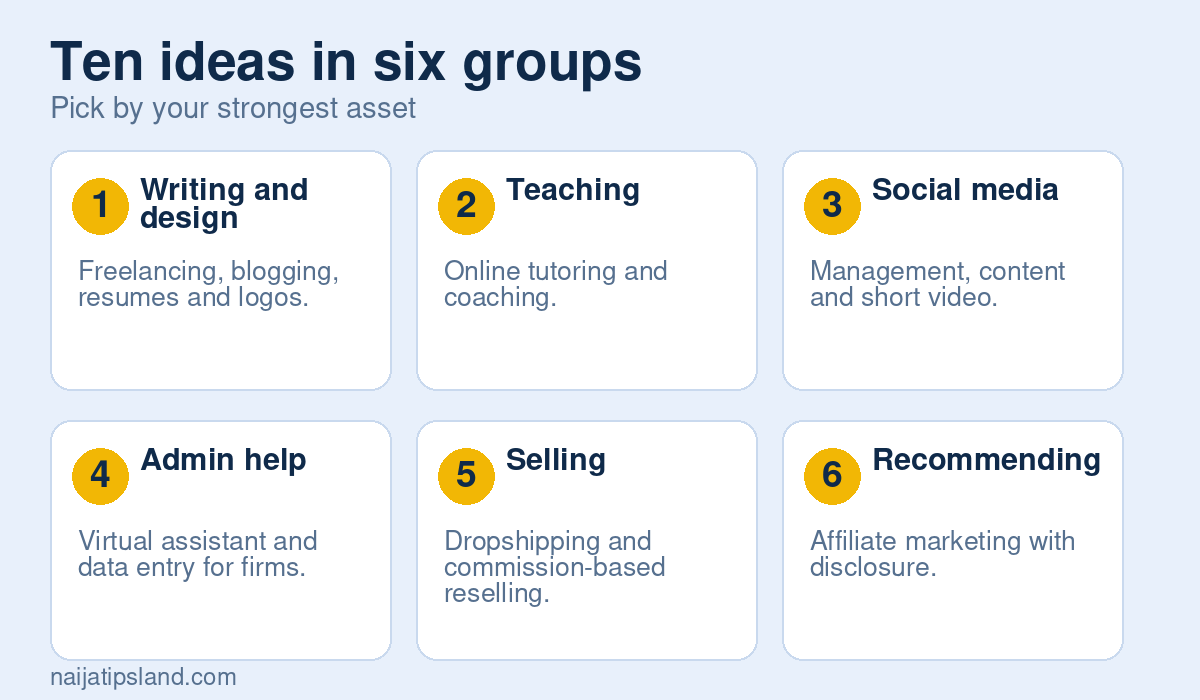
You do not need a shop or a loan to begin earning online, but you do need a skill someone will pay for and the patience to find the first customer. These ten ideas can start with a phone and little or no cash. Which suits you depends on what you already know.
1. Freelancing
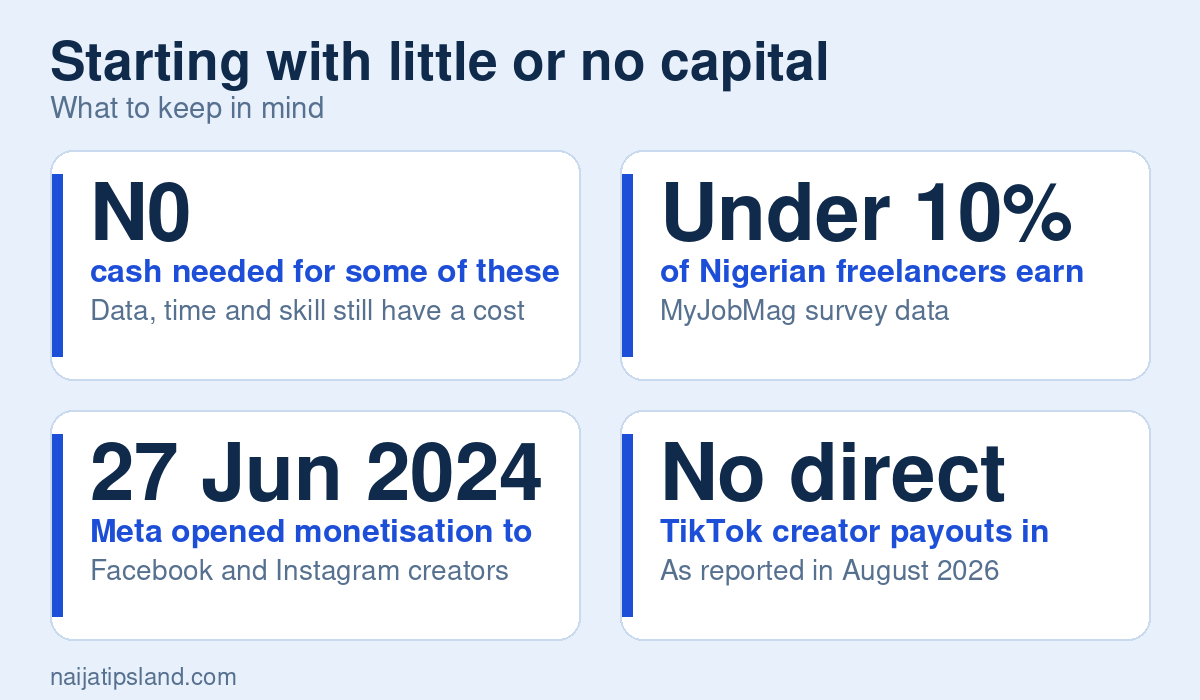
Offer writing, design, video editing, proofreading, translation or simple coding to businesses. Start with local small firms and people you know, then widen out. Fewer than 10% of Nigerian freelancers reportedly earn above ₦350,000 a month, so build skill and reviews before you expect a full income. See our guide to earning money online.
2. Blogging
A blog on a subject you know can earn from ads, affiliate links and your own services, but it takes months to grow. Free platforms let you start without paying. Write for real readers and cite your sources.
3. Affiliate marketing
You earn commissions by recommending products. It needs an audience first, and you must disclose that you earn a commission. Avoid programmes that pay mainly for recruiting others.
4. Social media management
Many small businesses need someone to post, reply and design simple graphics. Offer a low-priced trial month to one business, show results and ask for referrals. See our guide on social media growth.
5. Creating videos and content
Short videos and tutorials can earn from platforms and sponsors, but rules differ. Meta made Nigeria eligible for monetisation in June 2024, YouTube is to double entry thresholds for new creators from 1 February 2027, and TikTok was reported not to offer direct creator payouts in Nigeria in August 2026. Treat platform money as a bonus, and look for brand deals and your own products.
6. Online tutoring and coaching
If you are good at a school subject, a language, music or a professional skill, you can teach online. Start with students you know, set a clear schedule and agree payment in advance for each month.
7. Dropshipping and commission selling
In dropshipping, you list a product and a supplier ships it after you take the order, so you hold no stock. It sounds risk-free, but your reputation is on the line for late deliveries and poor quality, margins can be thin, and delivery is hard in Nigeria. Test with one reliable local supplier and be honest about timelines. See our e-commerce guide.
8. Virtual assistance
You handle emails, scheduling, research, data entry and customer replies for a busy owner. Reliability and clear communication matter more than fancy skills. Agree hours, tasks and payment dates in writing.
9. CV, cover letter and LinkedIn help
Job seekers pay for well-written applications. Start with friends and graduates you know, and build a small portfolio with their permission.
10. Selling digital items
Templates, planners, study guides and photo presets can be made once and sold repeatedly. Check that you own the content you sell and use a payment page that works in Nigeria.
The hidden costs
- Data and power: budget for calls, uploads and charging.
- Time: most ideas pay little for the first months.
- Payment fees and delays: factor them into your prices. See our fintech apps comparison.
- Tax and registration: the first ₦800,000 of annual taxable income is taxed at 0%, but keep records and consider registering. See business structures and registering a business name.
Scams that target people with no capital
- Pay-to-start schemes: a real client or employer never charges you a fee, deposit or “training” to give you work.
- Click-to-earn and task apps: small payouts that never arrive, or demands for deposits.
- Fake dropshipping and investment gurus: selling expensive courses with income screenshots.
- Overpayment tricks: a “client” sends too much and asks for a refund before the first payment fails.
Read our guides on internet scams and side hustles, and our financial literacy checklist.
How to Land Your First Customer
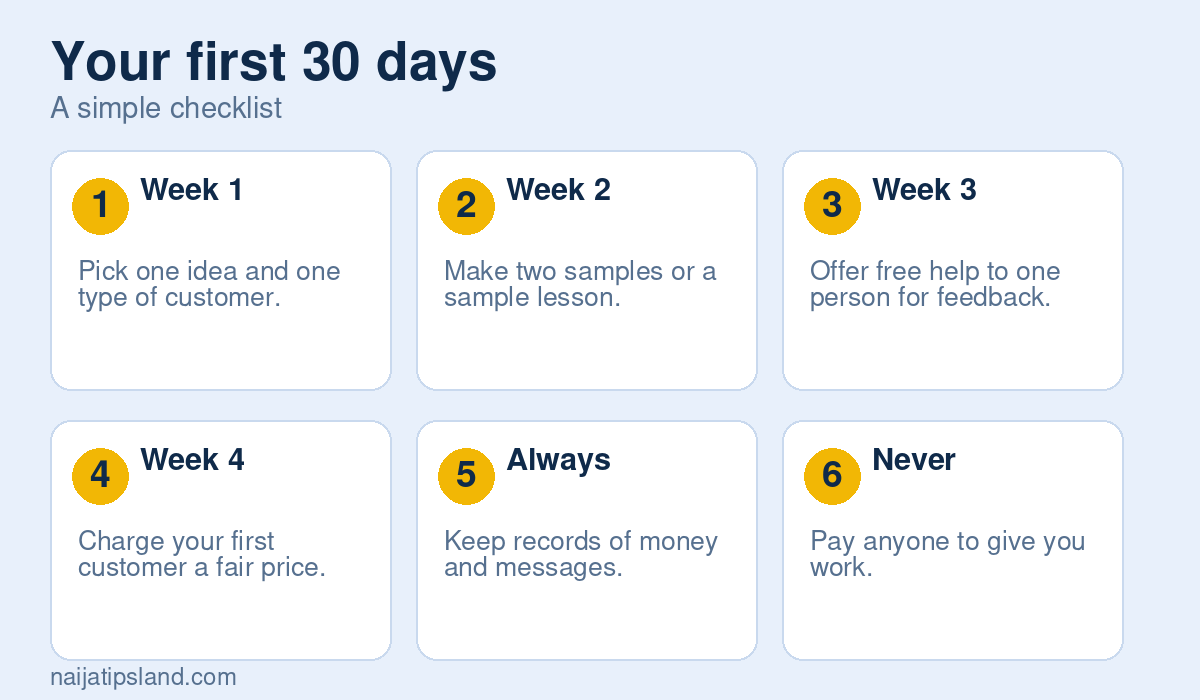
- Start with people you know. Tell friends, relatives, former colleagues and classmates exactly what you offer and who it is for.
- Make it easy to say yes. Offer one clear service with a price and a delivery date, rather than a long menu.
- Do one job for free or at a low price in return for an honest review and a referral, but only once.
- Show your work. Share before-and-after results, sample lessons or a short case study.
- Follow up politely. Many sales come after a second or third message.
Free Tools to Start With
- A free email account and a free cloud folder for your samples.
- Free design and document tools for graphics, resumes and price lists.
- A business messaging profile with a catalogue or quick replies, if you sell or take bookings.
- A simple spreadsheet or notebook to record every payment and expense.
Pricing Your First Service (Hypothetical)
Say you want to earn ₦3,000 for each hour of work, and each project involves two hours of writing and one hour of messages, revisions and data costs. A fair first price is about ₦9,000, not ₦2,000. Starting too cheap makes the work feel not worth doing and hard to raise later, so charge enough to cover your time, cost and any tax, and raise prices as you collect reviews.
When to Stop, Switch or Keep Going
- Give an idea at least eight to twelve weeks of steady effort before judging it.
- Switch if you cannot find paying customers after you have made real offers to at least twenty people.
- Keep going if you are getting replies, referrals and repeat work, even if income is small.
- Protect your stable income until the new income has been steady for several months.
Related guide (updated 21 November 2026)
How to sell on Amazon from Nigeria covers the seller plans, fees, payout accounts, shipping from Nigeria and the scams to avoid.
Related guide (updated 21 November 2026)
How to sell on Etsy from Nigeria explains why Nigeria is not on Etsy Payments, the fees and the legal alternatives.
Frequently Asked Questions
Can I really start an online business with no money?
Some service ideas need only a phone and a skill, but you will still spend data and time, and you must be paid for your work, not for a promise.
Which idea is easiest?
The easiest is whichever uses a skill you already have, such as writing, tutoring or social media help for a local business.
How long until I earn?
Services can pay within weeks, while blogging, video and affiliate income can take months.
How do I avoid scams?
Never pay to get work, confirm payments in your own account and ignore guaranteed-income claims.
Sources
- MyJobMag: Remote work statistics 2026
- NaijaSabi: How to make money as a freelancer in Nigeria in 2026 (scam warnings)
- Techpoint: Meta approves monetisation for content creators in Nigeria and Ghana
- Brandspur: YouTube to double monetisation entry requirements from February 2027
- Brandcom: YouTube raises the bar for incoming creators
- Safeguard Global: Nigeria Tax Act 2025 goes into effect on 1 January 2026
Join the discussion
Have you tried this, or do you have a question we did not answer? Be the first to share your experience. Leave a comment below. Every comment is read by the editor before it appears.