

Last updated: 13 October 2026. Leadership and membership change through defections, court rulings and by-elections, so verify names on the official National Assembly websites. We replaced an earlier version with updated figures.
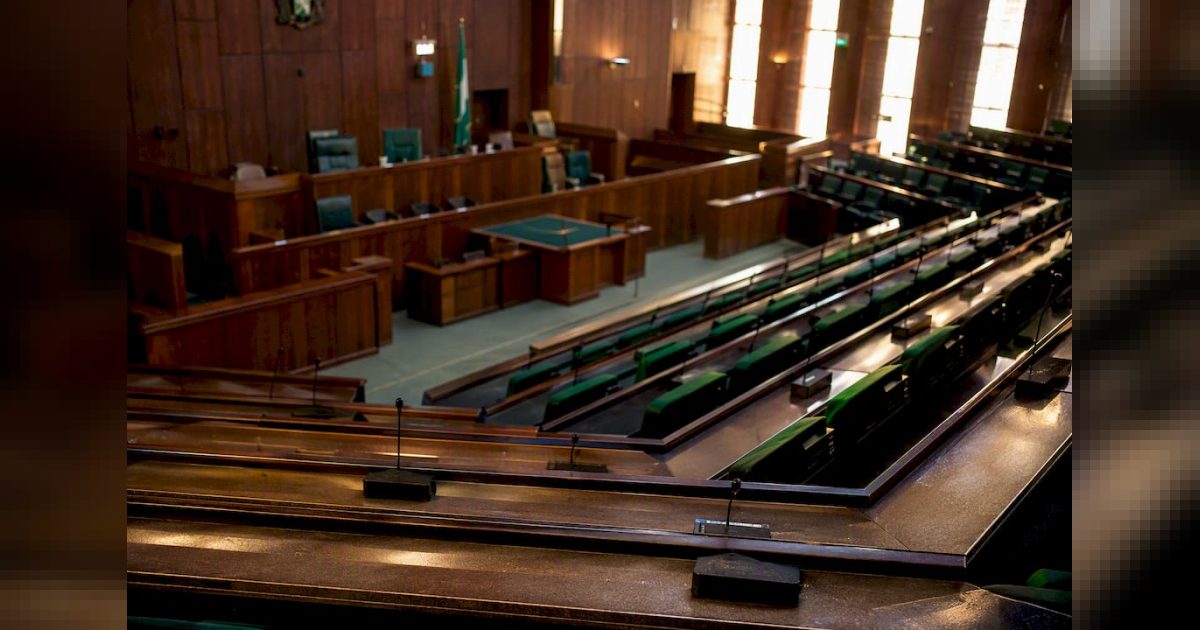
The National Assembly is Nigeria’s federal legislature. It makes national laws, approves the federal budget, oversees the executive and takes part in amending the Constitution. Understanding how it works helps you judge what your senators and representatives can and cannot do.

Two chambers
The National Assembly has two houses, with 469 members in all:
- The Senate has 109 members: three senators from each of the 36 states and one from the Federal Capital Territory, so each state has equal weight.
- The House of Representatives has 360 members, one for each federal constituency, so larger populations get more seats.
Members serve four-year terms. The present body is the 10th National Assembly, inaugurated on 13 June 2023, and the next general elections are due in early 2027. See our 2027 election hub and guide to voter registration.
All 109 Senate seats are on the ballot on 16 January 2027. See which Senate seats are up in 2027 for every senatorial district by zone.
Who leads it
- Senate President: Godswill Akpabio, elected on 13 June 2023, with Jibril Barau as Deputy Senate President.
- Speaker of the House: Tajudeen Abbas, elected on 13 June 2023, with Benjamin Kalu as Deputy Speaker.
Both leaders were backed by the ruling APC and by the President before the vote, which fed debate about the independence of the legislature, since the Constitution says presiding officers are elected by members of each house from among themselves. Always check for current office holders, since leadership can change.
What the National Assembly does
- Makes laws on subjects in the exclusive list and, with state assemblies, shares power on the concurrent list.
- Approves budgets. The President proposes the budget, and the Assembly reviews, amends and passes it. A delayed budget can hold up spending, as the late 2026 budget did for the implementation of new salary structures in some institutions.
- Oversees the executive through committees, hearings and investigations, and confirms nominations such as ministers and ambassadors.
- Reviews the Constitution. The House committee on constitution review is chaired by Deputy Speaker Benjamin Kalu, who said public consultations were completed before the drafting of amendment bills. Constitutional changes need a two-thirds vote in both chambers and approval by at least two-thirds of the 36 state houses of assembly.
- Represents citizens, including through constituency projects.
How a bill becomes law
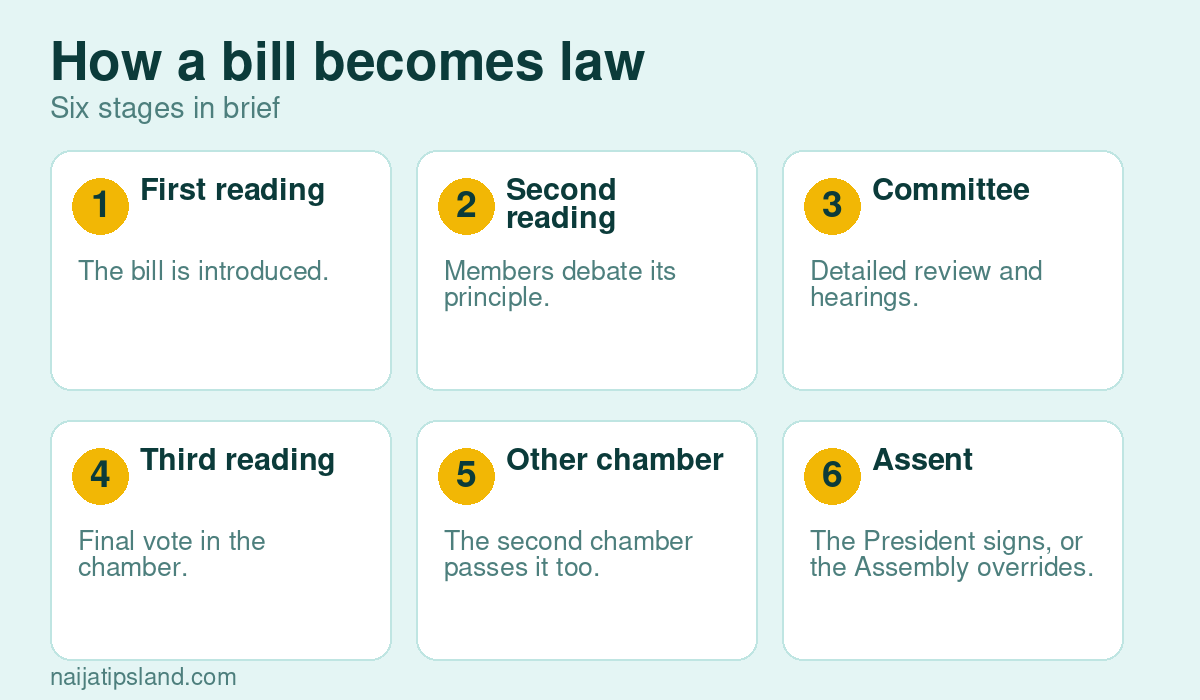
- A bill is introduced by a member or sent by the executive, and gets a first reading.
- It receives a second reading and debate on its principles.
- A committee reviews it, often with a public hearing.
- The chamber considers the report and votes at the third reading.
- The other chamber must pass the same bill, and differences are resolved by a conference committee.
- The President signs it into law, or withholds assent. The Assembly can override a veto by a two-thirds vote in both chambers.
The representation gap
Women make up around 4.5% of National Assembly members, according to the Inter-Parliamentary Union, well below their share of the population. Young people are also under-represented, and many civil society groups campaign for better inclusion.
How to engage your lawmakers
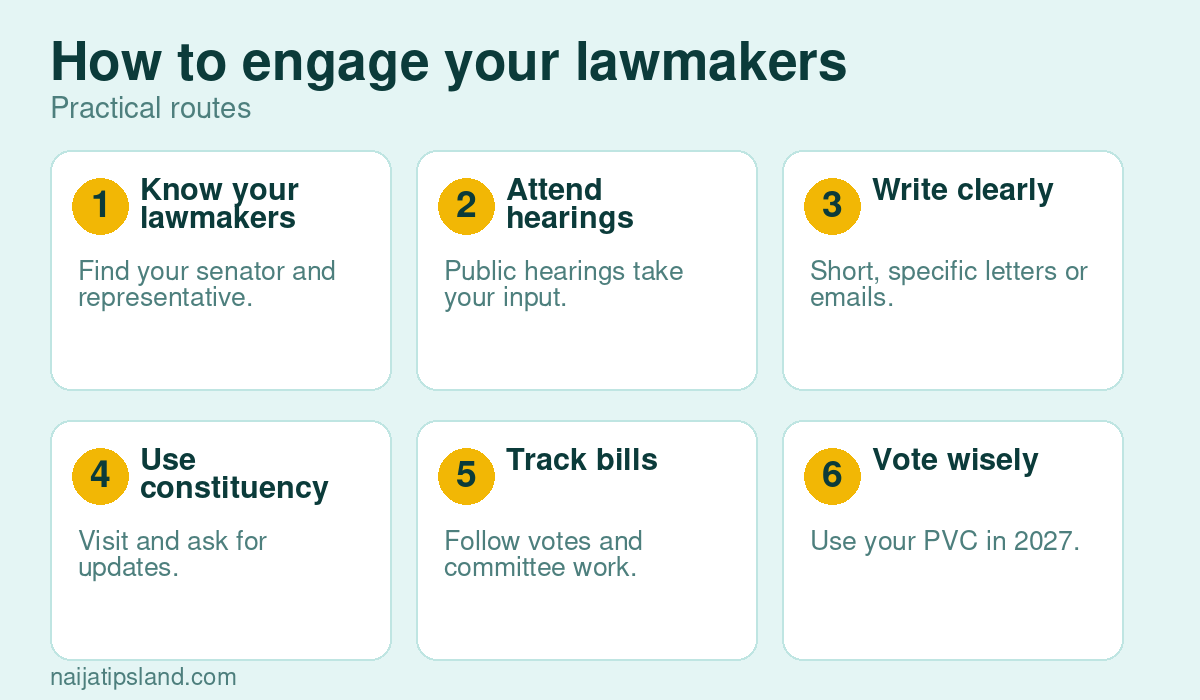
- Find out who represents you. Search for your senator and your federal constituency member by name.
- Attend public hearings or submit memoranda on bills that affect you.
- Write short, specific letters that explain the problem, the change you want and your contact details.
- Visit constituency offices, and ask for reports on projects and spending.
- Follow votes and attendance through official websites and reliable news, and share facts, not rumours. See our guides to following the news and political commentary.
- Vote. Collect your PVC and learn about the registered parties.
For the bigger picture, read our guides to Nigerian democracy and politics and national development.
How a Bill Becomes Law
- Introduction: a member or the executive introduces a bill, which is read for the first time.
- Second reading and committee: members debate the principles, then a committee holds hearings and proposes changes.
- Third reading: the chamber votes, and the bill must pass in both the Senate and the House.
- Assent: the President can sign the bill, or withhold assent, in which case the Assembly can try to override by a two-thirds vote.
Oversight and Constituency Work
- Committees summon ministers and agency heads to explain spending.
- Members run constituency offices and projects, and you can contact them with local concerns.
- The Assembly screens presidential nominees and approves budgets.
Constitution Review
The Assembly is reviewing the constitution under a committee chaired by Deputy Speaker Benjamin Kalu. Under the constitution, amendments need a two-thirds vote in each chamber and approval by the Houses of Assembly of at least two-thirds of the states, so follow public hearings and make your views known.
How to Follow and Contact Your Representatives
- Find your senator and member of the House on official sites, and note their constituency offices.
- Follow plenary and committee schedules and read bills before they pass.
- Write short, specific requests, and keep records of responses.
See our guides on how politics shapes development and political parties.
Frequently Asked Questions
How many members does the National Assembly have?
469: 109 senators and 360 members of the House of Representatives.
Who is the Senate President?
Godswill Akpabio, since June 2023. Check for any change.
What is the difference between the Senate and the House?
The Senate gives each state equal representation, while the House allocates seats by constituency and population. Both must pass a bill.
Can the National Assembly remove the President?
The Constitution provides an impeachment process involving both chambers, with strict conditions and high vote thresholds.
Sources
- Wikipedia: National Assembly (Nigeria)
- Nigeria Housing Market: How many senators in Nigeria
- NALTF: House of Representatives of Nigeria
- News Central: Lawmakers to tackle constitution review and the 2026 budget
- Daily Trust: Tinubu urges lawmakers-elect to support Akpabio and Abbas
- 21st Century Chronicle: Revealed, the new NASS leadership